


On Our Nightstand, Summer 2024: Books that Dispel Ageism
Whether it’s a meme on your Instagram account or one of the myriad advertisements we’re bombarded with daily, aging “well” is in our collective zeitgeist. Underlying this concept is ageism, the implication — direct or covert, depending on the message source — that getting older is one big slippery slope that you — yes, we’re talking to you, person-over-50 — need to desperately avoid sliding down.
Enter articles about building your core, word games you must play daily to offset the inevitable cognitive decline and “dressing your age” (whatever that means). It can feel more than a bit overwhelming and, on days in which we directly encounter ageist behavior, depressing. These three books offer advice and suggestions in bite-size pieces to help you make your next chapter the one you want — and maybe help you educate the people you love not to perpetuate aging myths unintentionally.
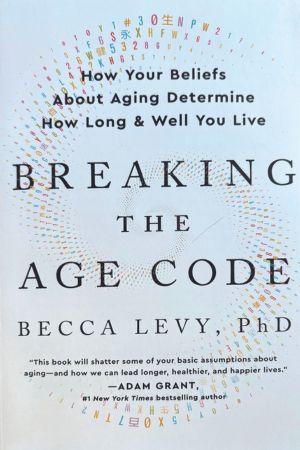
Breaking the Age Code: How Your Beliefs About Aging Determine How Long & Well You Live
by Becca Levy, Ph.D.
If you want to understand how you might be your own worst enemy as you age thanks to unconscious internal ageist beliefs that impact your behavior and health, this is the book to read. Becca Levy is an award-winning professor of epidemiology at Yale School of Public Health and a psychology professor at Yale University who has done decades of research on aging. Her book offers solid science about how believing negative aging ideas can literally reduce your longevity and negatively impact your health. Written in a conversational style, the book offers suggestions for how to change that behavior in yourself, and how that change ripples out to help combat the rampant ageist messages people over 50 receive daily.
Still not sure this matters? Here are just a couple of facts Levy notes in her book:
- On average those who have more positive age beliefs live 7.5 years longer than those who harbor negative age beliefs.
- Those with positive age beliefs score higher on basic memory tasks than those with negative age beliefs.
- Those carrying the gene putting them at a higher risk of developing Alzheimer’s disease are 47% less likely to develop dementia if they have positive age beliefs.
Breaking the Age Code: How Your Beliefs About Aging Determine How Long & Well You Live by Becca Levy, Ph.D. Published by William Morrow. 294 pages.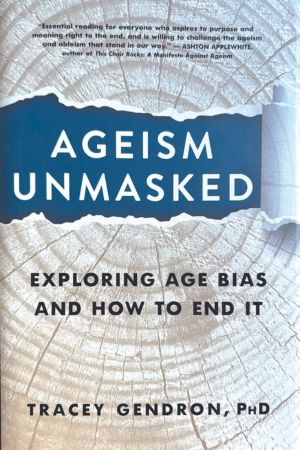
Ageism Unmasked: Exploring Age Bias and How to End It
by Tracey Gendron, Ph.D.
Tracey Gendron also wants to unmask ageism — what many have labeled the last acceptable prejudice — in the hopes of ending the many ways in which age bias hurts both individuals and society at large. Her book, like Levy’s, is simultaneously conversational and scientific. She examines the roots of ageism in history, looks at the pervasiveness of various (mostly negative) ageist beliefs, and, finally, offers solutions for change.
Once we all have a better awareness and understanding of ageism, she posits, we can make more conscious decisions about how we experience aging ourselves and how we regard aging if we are still not officially over 50. She suggests using the term elderhood to describe the developmental stage that includes older age. Doing that, Gendron suggests, enables us all to regard the many facets that include physically getting older without lumping all older people into one homogeneous group.
Ageism Unmasked: Exploring Age Bias and How to End It by Tracey Gendron, Ph.D. Published by Steerforth Press. 180 pages.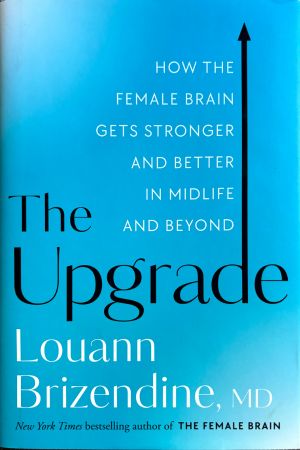
The Upgrade: How the Female Brain Gets Stronger and Better in Midlife and Beyond
by Louann Brizendine, M.D.
Published by Harmony Books/310 pages
Imagine if menopause — a term filled with negative stereotypes and realities about the inevitable changes that hormonal phase brings — were instead called the “Upgrade.” You’re already feeling better about it, right? Well, that is precisely the intent behind Brizendine’s new book.
A New York Times best-selling author of The Female Brain and The Male Brain, Brizendine started this book as she entered the second half of her life and began to experience “the invisibility uniquely experienced by women of a certain age.”
“This was not a slow decline toward the end,” she writes. “I was staring down the most vital, confident and wise phase of my life.”
The book is a primer on how to become your best self in this life phase. Brizendine clearly and succinctly describes terminology every woman should understand during this phase, which includes perimenopause (now called “the transition”) and menopause (which also has phases). She outlines the potential benefits that occur during the Upgrade, from developing directness (thanks to the decrease in estrogen, which literally changes how women handle anger and disappointment) to the return of fearlessness (now that women’s brains are not being hormonally altered by 25 percent each month during periods).
This book should be required reading for everyone of every age. Full stop.
The Upgrade: How the Female Brain Gets Stronger and Better in Midlife and Beyond by Louann Brizendine, M.D. Published by Harmony Books. 310 pages.
Top image by halfpoint, via Canva.com