
It (Still) Takes a Village
Did you know the biggest factor in health and happiness is … your friends?
“Contrary to what many people think, it’s not career achievement, or exercise, or a healthy diet,” wrote the authors of the Harvard Study of Adult Development, a decadeslong study of what makes us happy. “One thing continuously demonstrates its broad and enduring importance: good relationships.”
As members of the baby boom generation enter their golden years, the importance of community and support has never been more visible. With an increasing proportion of the population reaching retirement age and beyond, the question of where we’ll all live — and how — is more urgent. Thriving in your later years isn’t just about physical health, but also about maintaining a sense of belonging, purpose and connection to others.
In the Capital Region, some folks over 55 are establishing their own networks, converting neighborhoods into de facto retirement(ish) communities. The Albany Guardian Society, which has been serving the region for nearly 175 years, is a major facilitator of (and occasional benefactor to) these communities, which the society calls “the village movement.” (The agency also offers a range of services and programs designed to promote the well-being and independence of older adults, including a comprehensive housing directory that spans the entire Capital Region and includes a wide range of types of housing. This directory, broken down by county and type of service, helps seniors and their families find the most appropriate living arrangements for their unique needs and circumstances.)
The Guardian Society has helped develop five villages in the Capital Region, each tailored to the specific needs of the community. Mary Moller, who’s led the organization as its executive director for three years, describes the village movement as a “wonderful model” for senior living: “It’s a neighbor-helping-neighbor model,” she says. “Sometimes it’s just a group of people that live near each other and they come together and they decide to develop a village to help each other age in place.”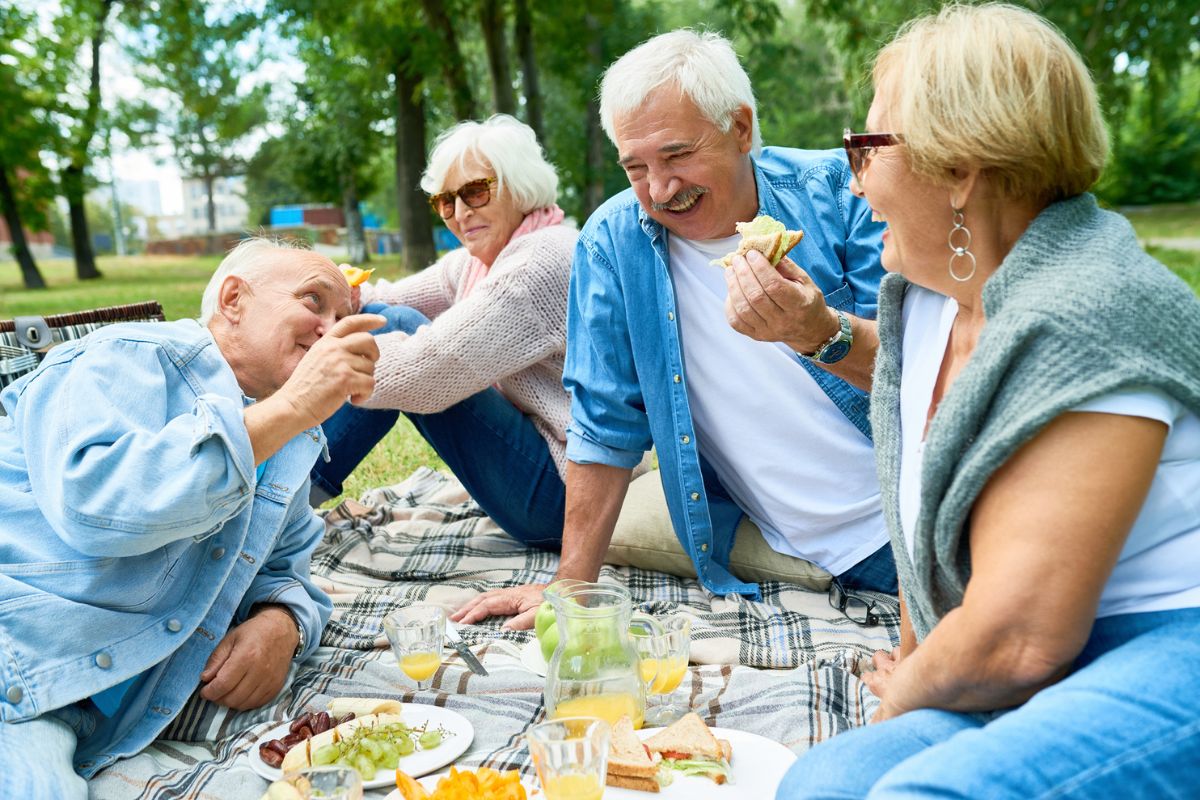
One such village is Bethlehem Neighbors, initially formed in 2014 by residents of the hamlet of Glenmont. “There was this initial group and they thought it was a great idea to have a village,” says Gail Myers, 67, the current president of Bethlehem Neighbors. So in 2019, Myers and a few others who had been involved in aging-related organizations recognized the potential of Bethlehem Neighbors and decided to take action. “We took it over and expanded it to the entire township,” she says. By 2020, they were ready to start collecting membership dues of $25 a year, but the COVID-19 pandemic hit, forcing them to adapt.
“We got Zoom (videoconferencing) going and built a community that way in the town,” Myers explains. As the pandemic risks decreased, they implemented volunteer activities and now provide social programming and assistance to members more than 100 times a year.
In closer quarters, where rents are high and real estate is hard to come by, New York City has a popular program that pairs seniors aged 65 and over with a roommate. This home-share program has been supported by the New York Foundation for Senior Citizens for four decades.
“It’s the original dating service,” says Linda Hoffman, president of the foundation. Over the years, the organization has matched more than 2,500 people with a “99 percent success rate,” Hoffman says proudly.
This unique initiative matches people who have extra space in their homes with renters who are looking for affordable housing — the match can happen between any two people as long as one of them is age 65 or older. By carefully screening potential matches and providing ongoing support, the program ensures that both hosts and guests benefit from the arrangement.
“When we first started back in the 1980s, people were more interested in relieving feelings of depression and loneliness,” Hoffman says. “As time has gone on, there’s much more of a need to help themselves financially and to maintain and remain in their homes.”
The program not only addresses the practical needs of affordable housing and financial stability but also provides a powerful antidote to the social isolation faced by many older adults. By bringing people together based on common interests and compatible lifestyles, the program creates opportunities for meaningful connections and friendships to develop.
“The thing that we learned, and maybe it wasn’t a surprise, is that common interests are the No. 1 reason that people seem to be a good match,” Hoffman says. “It has nothing to do with age or background. It’s shared interests.”
Moller, of the Albany Guardian Society, agrees that shared interests and connections are what bond members of the “village movement” here in the Capital Region.
The villages — a collection of homes in about a six-mile radius — are self-governing, built on the principle of “neighbors helping neighbors.” At the heart of each village is a network of volunteers, often village members themselves, who provide transportation, friendly check-in calls and visits, light home maintenance and repairs, and assistance with shopping and technology. By leveraging the skills and expertise of its members, the villages create a supportive environment in which seniors can both give and receive help, fostering a sense of purpose and reciprocity, social engagement and community building. Members have access to social and educational events, such as book clubs, fitness classes, museum visits and group meals.
“When you’re younger and you have children, you often make friends through your kids’ activities,” Myers says. “That’s where your network besides work friends comes from. When your children grow and (you) retire, you don’t have all those opportunities … The village is a natural, welcoming entity.”
The success of the village model lies in its adaptability and responsiveness to the unique needs of each community. Villages in the Capital Region, like Bethlehem Neighbors and another similar group, the Shenendehowa Neighbors in southern Saratoga County, are geographically defined, serving areas ranging from a few blocks to entire neighborhoods, towns or regions. This local focus allows villages to tailor their services and programs to the preferences and requirements of their members, ensuring that the support provided is relevant and effective.
Myers, who works full time in addition to her responsibilities at Bethlehem Neighbors, is deeply committed to the organization’s future. “I am really paying this forward,” she says. “I spend a lot of time thinking about where the organization will be in five years or 10 years or 15 years because I’m hoping that I’m up and active enough that I don’t need help, but want to make sure that when I do need help, there are folks that I have a relationship with through Bethlehem Neighbors and get the help myself.”
Looking ahead, Myers hopes to see more villages like Bethlehem Neighbors emerge in the 518 area. “We’re relatively young and we’re ready to mentor people along,” she says.
Ultimately, the success of programs like those offered by the Albany Guardian Society and the Foundation for Senior Citizens underscores the importance of community and social networks in promoting the well-being of older adults.
“Having this program is like finding gold in the street,” says Hoffman of the New York Foundation’s home-share program. “We’ve seen so many beautiful friendships blossom.”
“The number of things we’re doing is quite amazing,” Myers says. “We started out with just a handful of people needing a handful of things and now we’re becoming essential.”
Another Living Model: Albany’s “NORC”
For some 20 years, Albany’s Whitehall section has been home to a unique naturally occurring retirement community, or NORC, a roughly three-square-mile neighborhood where care for aging adults goes above and beyond. The community, formed with the goal of supporting older residents, is one of several throughout the state and part of a senior housing movement that got its start in New York City in the 1980s.
The key words here are “naturally occurring.” These aren’t retirement homes, nursing facilities or preplanned villages created for the purpose of housing older adults. Rather, they are already existing areas — a building or group of buildings or a geographically defined neighborhood — with a growing population of seniors who have sought the formal NORC designation.
NORCs are created through a partnership of residents and organizations such as a lead nonprofit social service agency (Albany’s neighborhood NORC is administered by Jewish Family Services of Northeastern New York), housing associations and owners, building managers and other community leaders. They receive local or state funding for things like free care management, health-care assistance and advocacy, and a full calendar of social and cultural events and programs to help residents stay connected with their neighbors and age in place.
Albany’s is one of 43 similar NORCs throughout the state serving thousands of residents. To learn more or to get involved, call 518-516-1114 or email nnorc@jfsneny.org. New York’s Office for the Aging can provide more information about NORCs throughout the state and whether your neighborhood or building qualifies for designation. Call 800-342-9871 or email NYSOFA@aging.ny.gov.
Healthy Aging, Studied
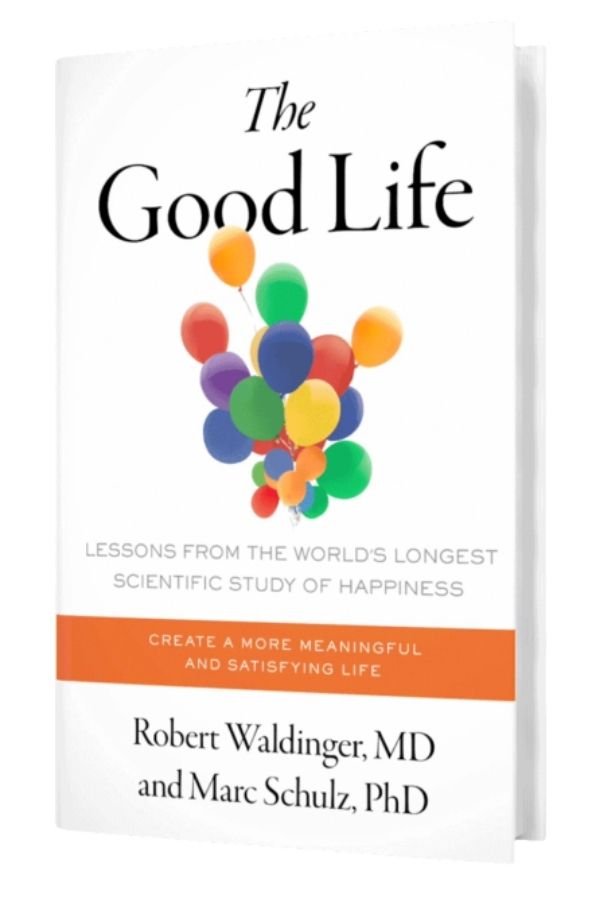
The Harvard Study of Adult Development, the world’s longest study on adult development, began in 1938 following two groups of men — 268 Harvard graduates from the classes of 1939-1944, and 456 men who grew up in Boston’s inner city. The men filled out surveys every two years, had physicals every five years and were interviewed every five to 10 years with the goal of identifying the psychosocial predictors of healthy aging, including:
- what psychosocial variables and biological processes from earlier in life predict health and well-being in late life (80s and 90s),
- what aspects of childhood and adult experience predict the quality of intimate relationships in late life, and
- how late-life marriage is linked with health and well-being.
Harvard has also recently begun studying as many as 2,000 descendants of the original participants for its G2, or second generation study to determine the effects of childhood experiences on midlife health.
The study’s directors Robert Waldinger, M.D., and Marc Schulz, Ph.D, released their book, The Good Life: Lessons from the World’s Longest Scientific Study of Happiness in 2023 detailing the study and its findings as well as some wisdom on how to have a fulfilling and healthy life.
At top: Photo by iStockphoto.com/SeventyFour.