

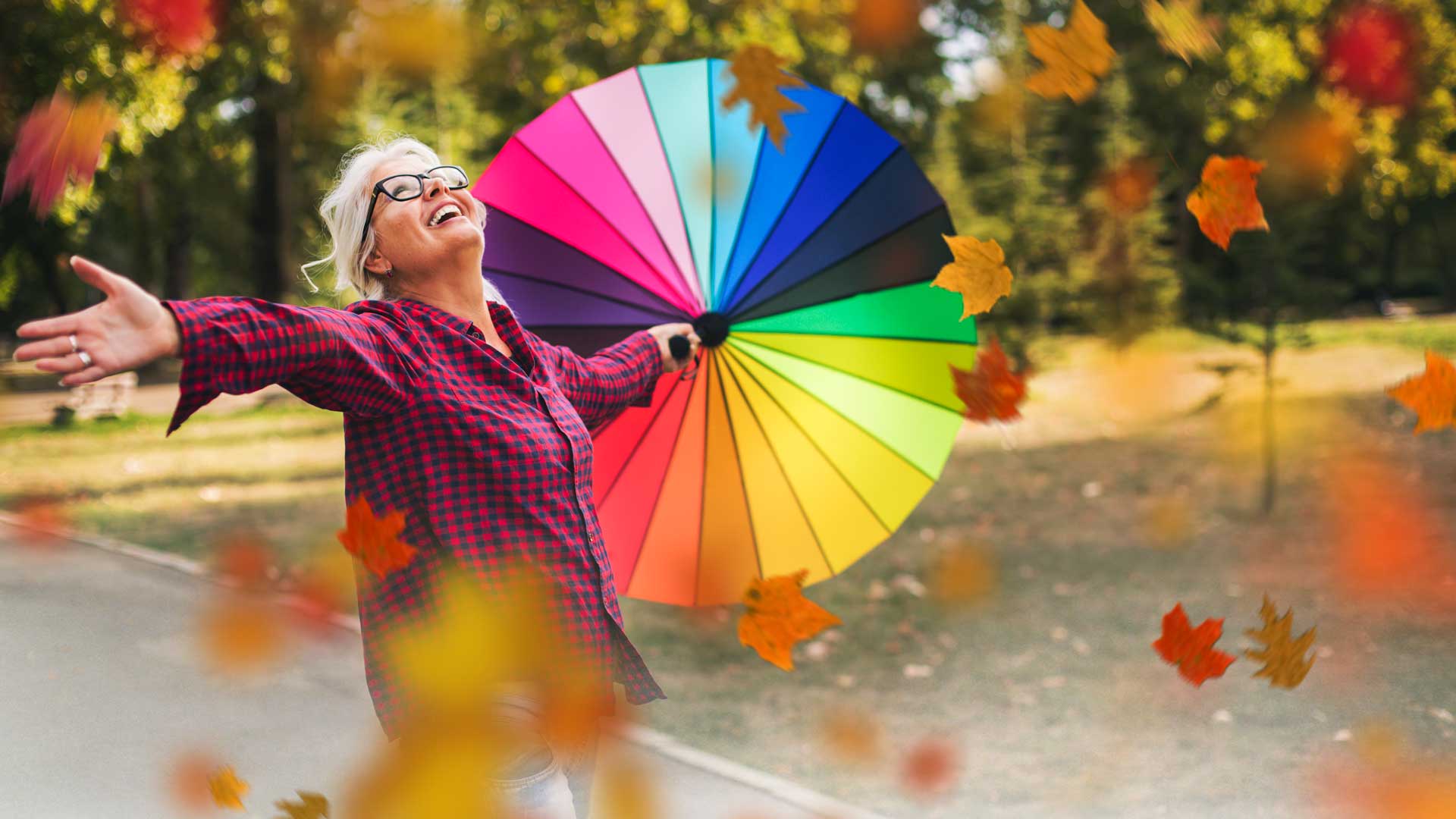
Learning to Play May be One of the Healthiest Things You Can Do
Very few children need to be asked twice to play. Many adults, on the other hand, see play as something they gave up when they got their high school diplomas, maybe even before.
And it’s not hard to see how and why that happens. Work, kids, relationships — who has time to consider adding play into a 24-hour day that already feels 36 hours long by the time your head hits the pillow? Add to that a general puritanical belief that our worth is measured by what we produce and you’ve got an entire segment of society for whom play is only a distant memory.
“We’ve internalized the cultural narrative that equates work with productivity,” says Lauren Sundstrom, chief operating officer of the National Institute for Play, a nonprofit that promotes play as a public health necessity. “Play is seen as purposeless. It sits in tension with the narrative of productivity. Children absorb the message and think play has to be earned, so as they move ahead in their lives and there are more demands, it’s easy to let go of.”
The problem is that a life without play is actually unhealthy. Research aplenty indicates that play is important for our physical, mental and spiritual health, and that this need only becomes more, not less, vital as we age.
Sundstrom ticks off studies that indicate how play can increase neuroplasticity, helping to create new neural pathways and reinforce those that are already there. Playing can also increase curiosity and problem-solving skills and, depending on the activity, decrease feelings of loneliness and isolation.
Dr. Kerry Burnight, a gerontologist and author of Joyspan: The Art and Science of Thriving in Life’s Second Half, a book about the importance of living with more joy as we age, echoes Sundstrom’s analysis. “Neurologically, when we do things that are unexpected or frivolous or music-related … it stimulates a different part of our brains and can cause connections and continue our neurological expansion, rather than a retraction,” she says.
“We live 7.5 years longer just with the recognition that life is continued growth,” she continues, noting that this mindset can positively impact inflammatio
n and biomarkers. The same is true with play. “The recognition that not everything is all downhill and that it’s not too late [to try new things] will keep us in the game,” she says, “and keeping in the game is what helps you live longer and live better as you do age.” No wonder the proverb “all work and no play makes Jack a dull boy” has been around for centuries.
So what exactly is play? Well, like beauty, it is to some extent in the eye (and spirit and mind) of the beholder.
Sundstrom advises not getting stuck on a specific definition. “Once you start to define it, you can mess it up,” she says, adding it’s a little like trying to define love. “Play is an experience before it’s a concept. What constitutes play for one may feel like work for another.”
The Institute for Play defines play as a “biological state that arises when we are freely engaged, curious and absorbed in an activity for its own sake. It is defined not by what we are doing, but by how and why we are doing it. When we are playing, the experience itself becomes the reward — attention deepens, effort feels enlivening, and time may seem to recede.”
Catherine Price, author of The Power of Fun: How to Feel Alive Again, defines fun — play’s inevitable partner — as a confluence of playfulness, connection and flow. “We need to get over the idea that playing and fun are frivolous, or that it has to cost a lot,” she says. “We have to recognize that it’s a feeling rather than an activity.”
“If you were to try improv or dance by yourself in your living room — these are forms of play,” echoes Burnight. “I think a wide definition makes us realize that play includes things like lying on the grass and looking at the sky.”
Given this broad definition, it would seem that incorporating more play in our lives is more of a question of commitment to fun in general rather than, say, taking up a specific sport or hobby. “Rediscovering play requires a kind of self-archaeology that most people have never been invited to do,” Sundstrom says.
The good news is that it doesn’t take much to reactivate our playful side. “The play drive doesn’t disappear,” Sundstrom says. “What most people need is not more time or more permission from the outside. They need to give it to themselves. That is, in the end, the whole work.”
Getting Started
- Recognize that it’s OK to play, whatever that means for you. “What gets in the way is usually not the calendar,” says Lauren Sundstrom of the National Institute for Play. “It’s the quiet persistent belief that play is something you earn, or something you grew out of, or something that belongs to other people and stages of life. The good news is that play doesn’t require a plan so much as a permission slip.”
- Understand that play doesn’t have to be complicated or only encompass one idea. Catherine Price, author of The Power of Fun, advises identifying your “fun magnets,” the kind of activities you already enjoy doing and how they can lead to either similar activities tor variations on what you’re already doing. Price, for instance, loves to play music, so she’s building more of that into her life. “Having friends over for 90 minutes of play nourishes and energizes me for the rest of the day,” she says. “Think back to times you were having fun and ask yourself, ‘What was I doing? Who was I with?’”
- Start by paying more attention to the moments when time disappears. Maybe it’s a chess game with a friend, an afternoon spent gardening or a walk that turned into exploration. “Those moments are not accidents,” says Sundstrom. “They are your play nature showing up. The first step is noticing them.”
- Don’t underestimate or ignore the value of spontaneity. “Look for more opportunities for possible moments of playfulness of flow,” says Price.