
Fueling your body the right way before a workout becomes even more important as you get older. What — and when — you eat can make the difference between enjoying your exercise and feeling as if you’re participating in a form of self-inflicted torture. Particularly for people 50 and up, a good pre-workout snack is helpful for boosting energy, supporting muscle health, and recovering faster. The right combination of healthy carbohydrates, protein, and hydration can help you get the most out of your workouts.
Basic Guidelines
Exactly how much and what to eat before a workout will vary depending on the time of day, how much energy you need, and the style, intensity, and duration of your workout. In fact, many people don’t need to eat a pre-workout snack if they’re fueling themselves properly during meals and timing their exercise accordingly. But in general, you’re looking to optimize the balance of macronutrients — proteins, carbohydrates, and fats — to support your fuel requirements and have a little something left over to aid in recovery.
Each macronutrient plays an important role before, during and after a workout:
- Carbohydrates: Most people know that carbs are one of your body’s primary sources of energy, hence the ritual of “carbo-loading” before a road race or sporting event. Essentially the process of digestion breaks carbohydrates down into glucose, which is stored in muscle tissue and the liver as glycogen. During exercise, especially short and/or high intensity exercise, the glucose stored in our muscles is used as fuel. By eating the right kind of carbohydrates before a workout, you can maximize your glycogen stores and reduce the chances of early fatigue or decreased endurance and power.
- Proteins: Protein contains amino acids that help repair, maintain, and build muscle, so adequate protein intake is necessary for increasing strength and improving muscle recovery.
- Fats: Fat is often the main fuel source for longer and moderate to low intensity exercise. However, the closer you eat to your workout, the less dietary fat is of importance as it has not been shown to directly improve or diminish performance. (Although in some cases, too much fat can certainly lead to digestive discomfort during a workout.)
For most people, the best pre-workout snack will be some combination of healthy carbs, a little protein, and plenty of hydration.
When to Eat Before Exercise
Most experts agree that the timing of your meals is just as important as what you are eating: In order to put all those nutrients you’ve consumed into good use, they need to be mostly digested by the time you get moving. Guidelines from the International Society of Sports Nutrition suggest that the optimal time to exercise is 3-4 hours after a large meal, 1-2 hours after a small meal, or 30-60 minutes after a light snack. (One 2020 review noted that many studies suggest eating around 1 hour before a workout, but other studies have found that eating a full, balanced meal up to 4 hours before exercising can have similar positive effects.)
Pre-Workout Snack Recommendations
The closer you are to your workout, the more important it is to eat easy-to-digest carbs and limit the consumption of proteins, fats, and fiber (as they take longer to digest and can cause discomfort.) If you’re planning on exercising within an hour, the time to eat complex carbohydrates (such as whole grains, potatoes, beans and lentils) has passed; instead you need to opt for simple carbs like fruit, granola bars, or honey. You can make things even easier on your system by eating them in liquid form, like a smoothie.
Snack Ideas:
Here are a few suggestions for healthy, pre-workout snacks, from nutritionist Stephanie Kay and Healthline:
2 or more hours before exercise:
- Sandwich with sliced chicken, lettuce, and tomato on whole grain bread
- Half a sweet potato with a piece of salmon and grilled vegetables
- Lean ground beef with brown rice and vegetables
- Turkey wrap with hummus, peppers and tomatoes
1-2 hours before exercise:
- Egg omelet and whole grain toast with a cup of fruit
- Cup of oatmeal with a banana and sliced almonds
- PB&J sandwich using whole grain bread, almond butter, and fruit preserves
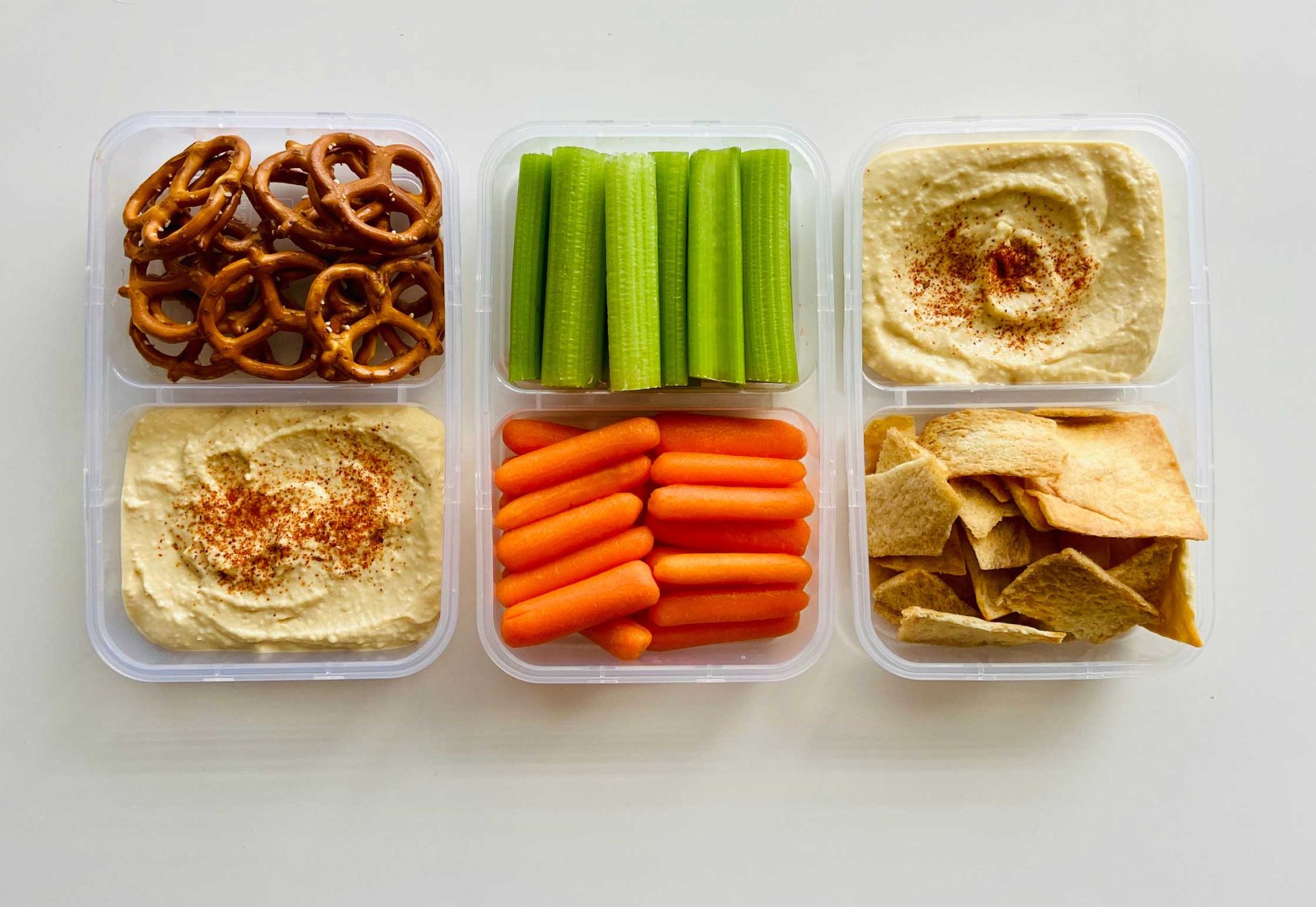
- Pita and hummus
- Bagel and cream cheese
Less than 1 hour before exercise:
- Banana, apple, or other fresh fruit
- Yogurt
- Fruit smoothie
- Apple sauce
- Low-fat granola bar
- Raisins
- Oatmeal
- Crackers or pretzels
Top image source: Bora C from Pexels, via Canva.com