

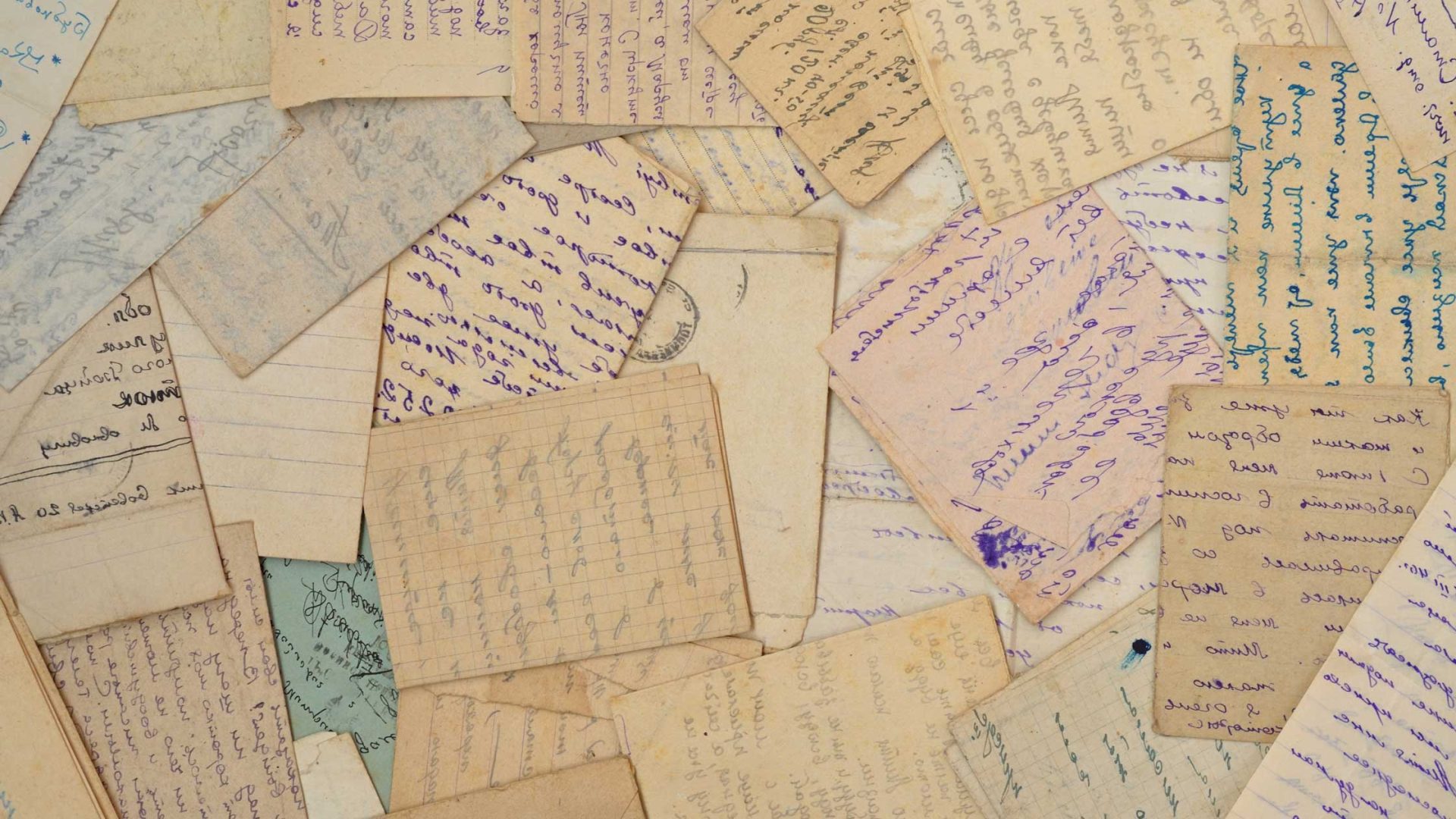
Messages From Beyond via Legacy Letters
As we age, we usually think about making or updating our wills and perhaps noting who we’d like to receive particular pieces of jewelry, furniture or artwork. What we too often ignore, however, is passing on our values and personal histories in any organized way. And it is in those gems, say estate planning experts, that the real value often lies for those left behind.
Interchangeably called legacy letters or ethical wills, these missives are an opportunity to let your loved ones know more about your emotions and personal stories than your portfolio. They can be one page or several pages long. They can even be done as audio and/or video files. The key, say those who work with people to create these letters to loved ones, is to do it.
“There are two legacies — your assets and your values,” says Michael Ettinger of Ettinger Law Firm, which specializes in elder law and estate planning. “Your assets will dissipate, but your values will live on. Bequeathing values has more power than people realize. People will remember who you were more than what you had.
“I believe that with good estate planning you do the social work first and the legal follows the social,” adds Ettinger, whose firm has 12 offices around New York State, including Albany and Rhinebeck.
“This is the missing piece of estate planning,” echoes attorney Susan Turnbull of Personal Legacy Advisors in Massachusetts. “When we think about legacy, we think about what to leave behind. For most people, it’s about the giving of money, but that’s only one part of what they hope to give their descendants. I really believe in thinking about legacy planning as two halves: one tangible and one intangible.”
While awareness of legacy letters or ethical wills may be growing in the contemporary lexicon, their history is long, with many citing Judaism as the beginning. Ethical wills have been part of Jewish faith for centuries, according to Rabbi Pamela Wax, director of adult education and programming at Congregation Beth Israel in the Berkshires. References exist in the Old Testament, she says, ticking off Moses speaking to the Israelites as just one example. “Ethical wills were considered more the worthy will than an inheritance,” says Wax, who leads legacy letter workshops in the Berkshires.
In some ways, an ethical will is a life review. “It emerges out of our trying to figure out the meaning of our lives,” Wax says. “It’s for the future but also for you, the writer. There’s a sense of creating legacy and accepting your life experiences and finding the meaning and hopefully forgiveness along the way.”
It is that thoughtful reflection that drew Jay Sherwin to creating the Life Reflections Project. A lawyer turned interfaith hospital chaplain, Sherwin has seen time and time again how helping people get their personal stories down on paper helps both the writer and the eventual recipients. “We think about who we are leaving our stuff to, but as you know most relatives don’t want it. But a brief document that conveys some of your best lessons, your gentle advice and best wishes — that’s a wonderful message that endures long after you’re gone.
“First and foremost, this is a gift for yourself to write and reflect on your life. This is an opportunity most of us don’t give ourselves very often,” he continues, ticking off potential subjects such as proudest moments or experiences and friendships the writer is grateful for. “It’s a healthy and productive thing to do, even if you never share it.”
Indeed, just thinking about what a legacy letter might include can be life-altering in itself. “It matters even if you don’t write it,” says Turnbull. “Legacy has to do with your current life. It can have an impact on how you live your life now, even if you don’t write anything.”
Turnbull knows that a certain number of people who attend her legacy letter presentations won’t ever write anything. “That doesn’t matter to me,” she says. “I’m planting a seed that you want to be sure you communicate with intention. Some leave the presentation saying they won’t do it, but I am going to do this family vacation I’ve been thinking about. I don’t know how [a workshop] will land, but I do know it lands somewhere even if it’s not the creation of a letter.”
The options for what can be included in legacy letters are as varied as the people writing them. Some focus on family history. Others provide people a chance to say something the writer is uncomfortable saying in person. “You can express regrets or offer apologies posthumously. You can forgive people. It can be cathartic to write,” Ettinger says.
What ethical wills are not, say proponents, are memoirs. Yes, similarities can exist. “The difference,” says Jodi E. Murphy, who authored a book called Legacy Letters: A Guide to Writing Your Ethical Will, “is that you’re being guided with questions and prompts.” She recommends starting with family history and background. Where were you born? Where did your parents come from? How did you meet your spouse? “They seem basic and I may be able to answer it about my mother but not my grandparents and great-grandparents. It’s the history you want to leave for future generations you may never meet.”
Firsts can be good prompts, too. (See below for other ideas.) What was your first pet? What was your first job? “A lot of people are humble and think no one cares about their first job when they were 16, but yes, they do,” Murphy says. “Those are the stories and history pieces that get lost as time goes on.”
Legacy letters also can be created for various milestones that may happen long after the writer has passed on. You can write a letter to a granddaughter, for instance, to read when she graduates from college or gets married or has a child. It’s a chance to pass on reflections and hopes based on your life experiences at those milestones.
Experts offer various suggestions for those worried about their writing ability. “This isn’t literature,” says Sherwin. “We’ve all written letters, so don’t worry too much about the precision of the language or grammar. Be yourself. Tell some good stories and name some lessons and values. Offer your blessings. Do it from the heart. You’re not being graded by your English teacher.”
Still feeling unsure about writing? Ethical wills can also be audio or visual files, or these versions can be additions to a written form. “It preserves your voice and image for people to see and hear,” Sherwin says.
And of course your recipients don’t have to wait for your death to receive a legacy letter. Sharing your stories and history now can be a great way to have important conversations with your loved ones while you’re still alive.
Getting Started: Some Tips from the Pros
From Jay Sherwin at the Life Reflections Project:
- What is one important event in your life, or one life experience, that really helped to shape who you are? How did it affect you? What did you learn from it?
- Can you name one person (or two or three) who was an important and positive influence in your life? What did they give you or teach you?
- What in your life are you most grateful for?
- What is one thing that you wish you had done differently? What lessons did that experience teach you?
- How do you want to be remembered? What do you want to be remembered for?
- What other words of advice can you offer to the people who read your letter? What wishes do you have for them? How can they honor your memory?
From Jodi E. Murphy, lawyer and author of Legacy Letters: A Guide to Writing Your Ethical Will:
- Don’t wait.
- Start a simple journal to capture memories now. She used Dr. Seuss’ book, Oh, the Places You’ll Go!, and passed it around to her child’s teachers, coaches, etc., over the years. When her eldest graduated high school, she gave it to her. “All of those things are legacy letters. She can pass it on to her children.”
From Rabbi Pamela Wax, director of adult education and programming at Congregation Beth Israel in the Berkshires:
- What values do you try to live by?
- What have you gleaned from your losses and mistakes?
- What’s a good enough life?
- (Borrowing from the poem “Summer Day” by Mary Oliver) What did you do with your one wild and precious life?
From Susan Turnbull, of Personal Legacy Advisors in Massachusetts:
- Don’t prejudge your ideas or your ability to write this. “People think it has to sound profound. It can be intimidating to think about.”
- Think of this as a work in progress. “If you wait until you think it’s the wisest things you’re going to say, you will never write it.”