

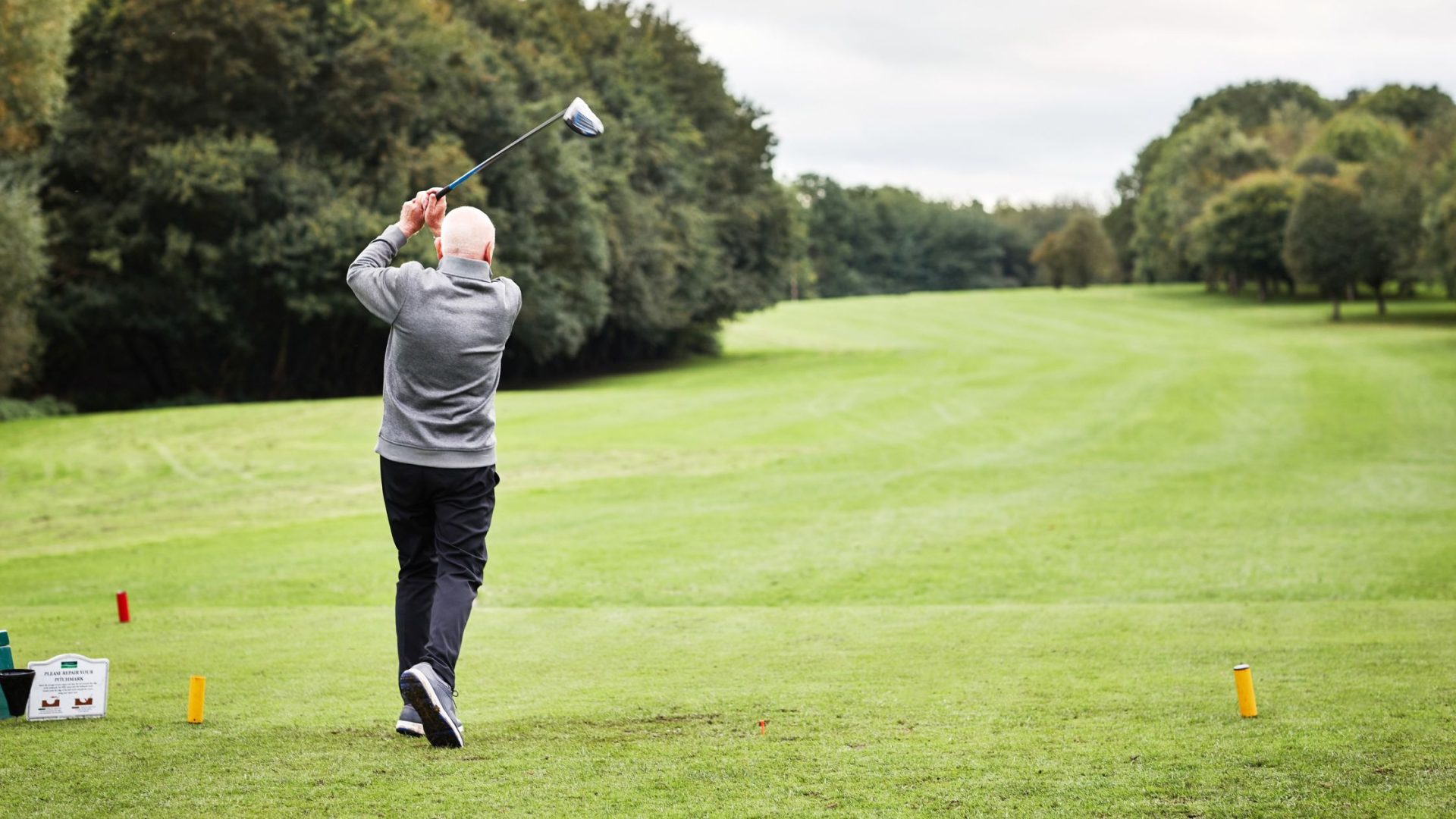
Why you’re never too old to take up the frustrating, exhilarating game of golf
Golf can at once be maddening, frustrating and exasperating. It can also be exhilarating, exciting and downright fun.
Does that range of emotions sound like something you want to experience, maybe even within a five-minute span? If you’re thinking of learning to golf, you’d be joining 26.6 million other people who played in 2023, according to the National Golf Foundation. Many of them were newcomers: 3.4 million played on a course for the first time last year. The total rounds of golf played in the U.S. during 2023 was a record 531 million, a testament to the sport’s booming popularity.
The fact is you’re never too old to learn the game of golf, one of the greatest of Scottish inventions, right up there with the pneumatic tire and Scotch whisky. It is a pastime that one can learn at any age and there are so many reasons to tee it up.
“The biggest is to stay healthy. Even riding in a cart, you walk,” says Rich Scott, the owner and head golf professional at Fox Run Golf Club in Johnstown, New York.
It’s true: Trek an 18-hole round carrying a bag or pushing a trolley and the distance is roughly six miles. The game is also a great outlet for those who, later in life, still have a competitive nature.
“It’s a game where you can compete against yourself, your spouse or with your friends,” says Noel Gebauer, head golf professional and general manager at the 36-hole Town of Colonie Golf Course.
Socializing before, during and after the round is an inherent part of the experience. Teeing up with old buddies or new acquaintances, such as in a league, is a great way to stay connected and broaden your friend group. Gebauer says his two public courses host three nine-hole leagues four days a week, and most of the participants are 50 years of age and older.
Another plus to golf is that it is played outdoors in the sunshine (and for the completely obsessed, also in rain, drizzle, sleet and snow).
It may be daunting to think about picking up golf now but there is a highly recommended way to get introduced, says Scott. “Find a PGA of America pro to get you started right,” he says. “Then grab three friends and go take lessons together.”
In the golf boom that resulted from the COVID-19 pandemic, two of the largest growth segments have been women new to the game and women returning to golf. For many, group lessons are a popular way to get into (or back into) the sport.
Even with lessons and a modicum of athletic ability, however, there is no way around it: Golf is not easy. But it can still bring immense enjoyment, and being good at it is not a prerequisite for finding fun.
“It’s hard,” admits Gebauer, who brings his new golf students out to the course to watch golfers at all levels in action. The lesson, he says, is that it’s not necessary to be a perfect golfer to enjoy the sport.
“If they take the time to look around, there are a lot of people who really enjoy struggling at golf,” Gebauer says. “We watch balls in the water, running along the ground, getting hit sideways into the woods. You don’t have to hit the ball like people on tour to enjoy golf and be comfortable.”
Scott agrees. “Don’t put pressure on yourself to be the next Tiger Woods,” he says.
There are many ways for beginners to ensure that the game is enjoyable.
One tactic comes directly from Bobby Jones, an American amateur golfer who was among the sport’s most influential figures. In 1930, Jones became the only player ever to win the “Grand Slam” — winning all four major golf tournaments of his era. His salient piece of advice for anyone, but especially beginners, seems counterintuitive: Put down the scorecard and pencil.
“Don’t worry about par. The practice of printing par figures is literally a mental hazard,” Jones advised.
Just getting out and swinging a club, learning and understanding the rules and etiquette is enough. There is no need to count the shots. When the time comes that keeping a tally matters, disregard par (the number of strokes it takes a top-notch golfer to play a hole) on the scorecard and create your own par based on your previous scores. If the hole is a par 4 (two shots to the green and two putts), and you play it between six and seven shots, then your par can be 6 or 7.
Another way to ease into the game is to make the course as short as possible. “Move up to the front tees,” Scott advises, pointing out that on a 300-yard hole, “if you hit three 100-yard shots, you’re on the green.”
He also suggests using a “scramble” format when playing golf with friends who are also new to the game. That means instead of playing your own ball from tee to green, the group plays as a team. It works like this: Everyone in the group tees off. Then everyone hits their second shot from the location of the best drive of the group. The third shot is hit from the spot of the best second shot. Keep going in this manner, even if the ball is on the putting surface, until the ball is holed.
The goal of each round should be having fun. “For so many, that’s all they want out of it,” Gebauer says. “It’s almost more important to know where the beverage cart is as the next tee.”
Another key is to avoid overdoing it. Even for seasoned players, 18 holes of golf can be long and daunting. Playing nine holes is perfectly acceptable. In the post-COVID world, the number of nine-hole rounds has shot up, even exceeding 18-hole rounds at many facilities. Where once playing “only nine” was frowned upon, it is now encouraged.
Golf, as a whole, has become more welcoming in recent years. Much of the clichéd staid and uptight attitude has lessened significantly. Most facilities now allow music on the course. The use of cellphones, considered a high crime not long ago, is welcomed during the round, including for scorekeeping. Hey, it’s a great way to call your drink order into the halfway house while you’re playing so it will be ready when you arrive.
One mistake to avoid when taking up the game, though, is thinking that it can be mastered. It can’t. Not even by the best.
“Golf is a puzzle without any answers,” Golf Hall of Fame member Gary Player once said. “I’ve played the game for 40 years and I still haven’t the slightest idea how to play.”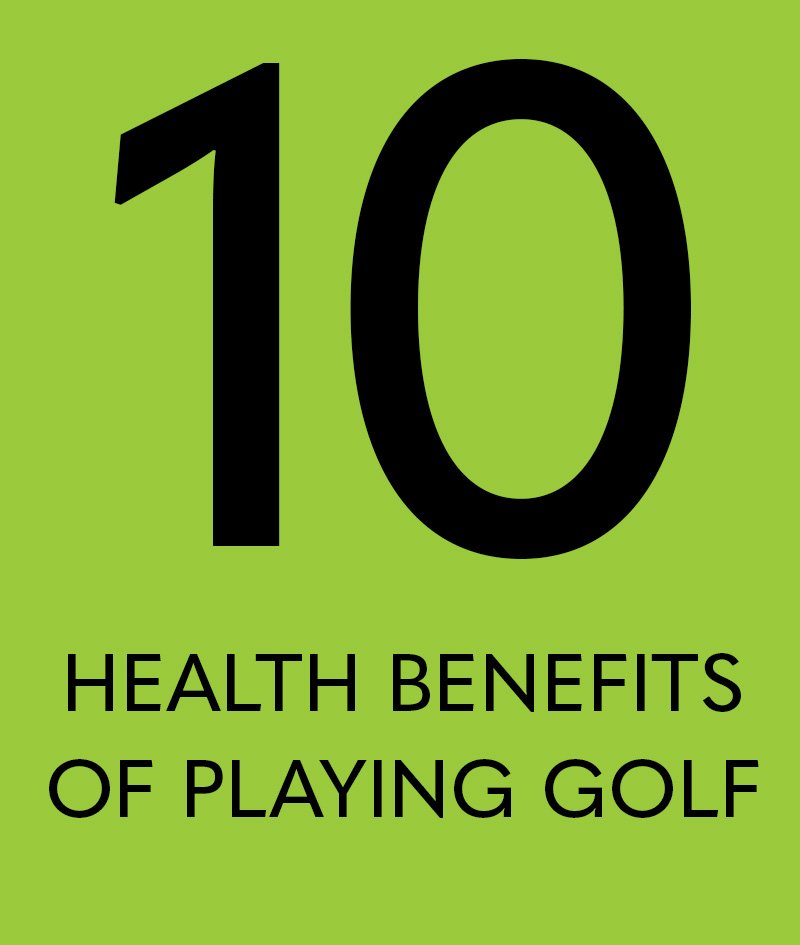
10 Health Benefits of Playing Golf
- Physical exercise
- Potentially help with weight loss
- Good source of vitamin D
- Exercise for your brain
- Improves your sleep
- You get stronger
- Make new friends
- Improves self-discipline
- Can improve your mental health
- Helps overcome sadness and can lead to a long, happy life
Source: Keiser University’s College of Golf & Sport Management
Top image by iStockphoto.com/DMP