

Halloween’s origins can be traced to the ancient Celtic festival of Samhain, which marked the end of summer and the harvest, and the beginning of the cold, dark winter season. The ancient Celts believed that October 31st was a night when the boundary between the worlds of the living and the dead became blurred, enabling restless spirits to return for a night of mischief. Although nowadays we blame most of the holiday shenanigans on restless teens, many still believe that Halloween night presents a unique opportunity to commune with those who have passed beyond the veil.
Even if you don’t really believe in ghosts, participating in some holiday festivities could be just the thing you need to get into the Halloween spirit. Luckily, the Capital Region teems with tales of the paranormal that can be experienced firsthand by joining one of the many ghost tours that run throughout the season. To give you a little taste, here are a few local legends and some opportunities for getting spooked.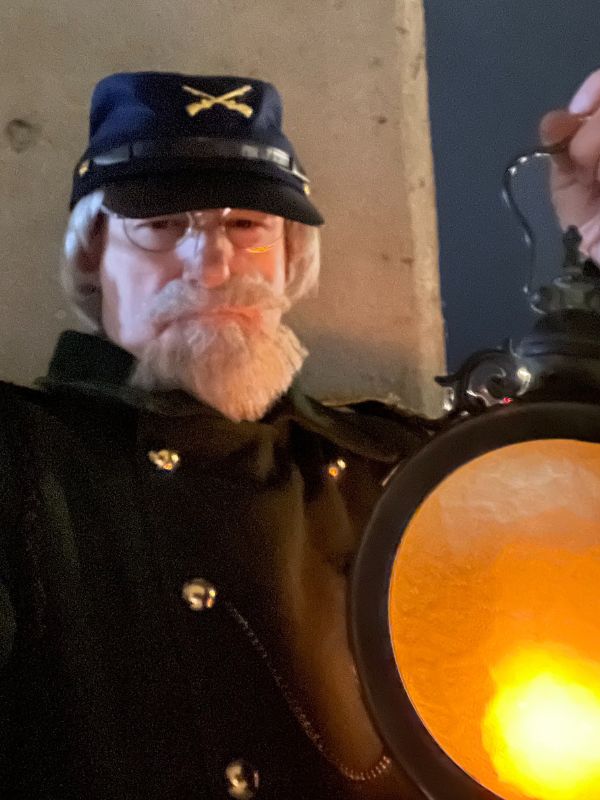
State Capitol Building
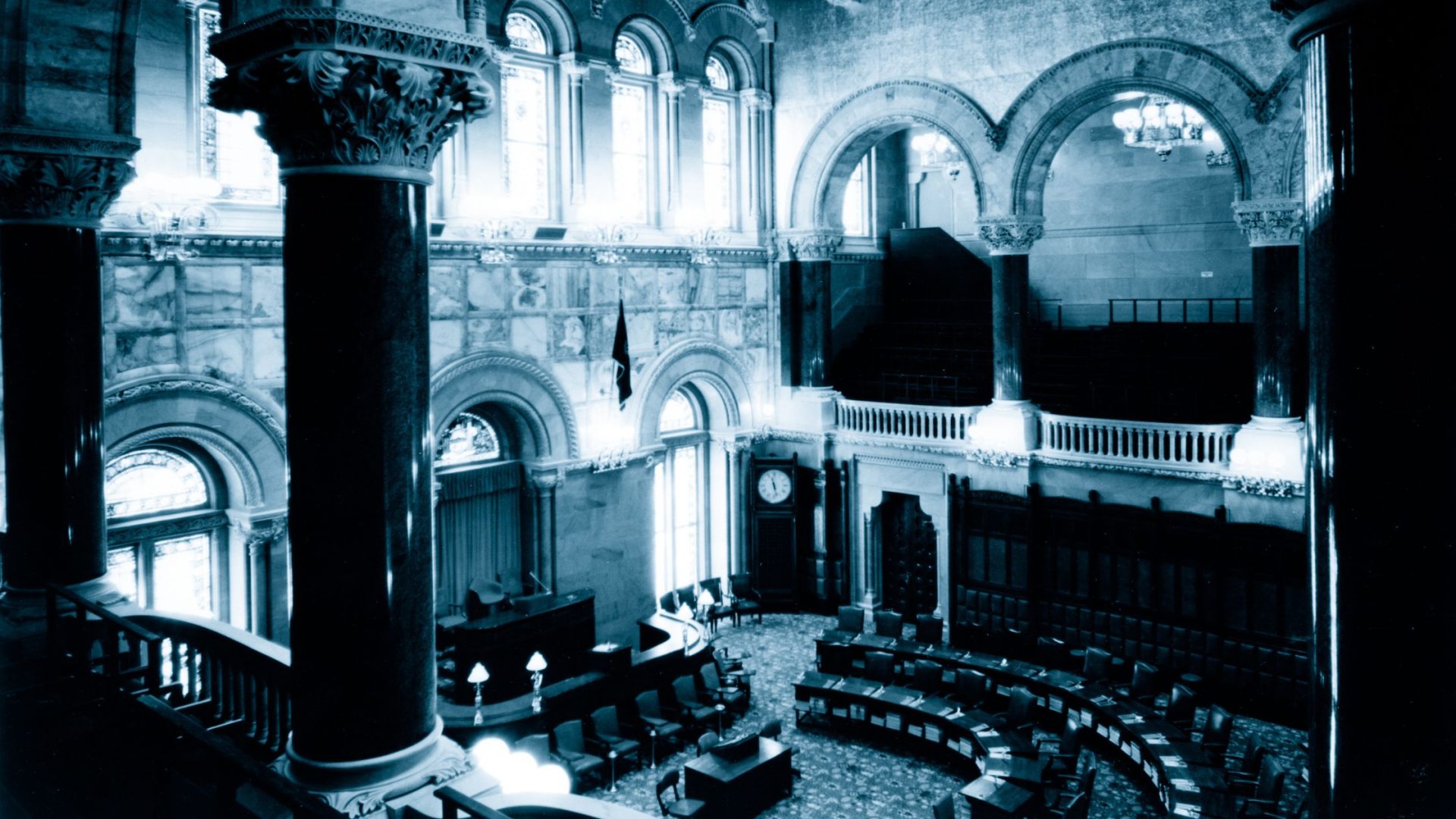
The State Capitol Building isn’t just architecturally imposing; it is one of top spots for Albany ghost stories. According to legend, the building is home to at least three spirits that have made their presence known.
In the late 1800s, a foreman named Cormac McWilliams tragically fell from scaffolding in the Assembly Chamber to the floor, dying on impact. The chamber has been reported to be haunted ever since, with “ghastly sounds” and a presence that seems to lurk just over one’s shoulder.
On March 29, 1911, only four days after the infamous Triangle Shirtwaist Factory fire, a massive fire broke out in the library on the third floor of the Capitol and rapidly spread to the floors above. Although the Albany Fire Department responded quickly, the flames destroyed over 700,000 documents in the State Library and damaged the Million Dollar Staircase. When it was finally extinguished, firefighters found one casualty — the elderly night watchman Samuel Abbott. Since then, employees and visitors have reported hearing or seeing an older man in a watchman’s uniform making his rounds in the upper halls, checking doorknobs. Others have heard the sound of jangling keys, and there are even reports of his ghost checking on young women working late into the night.
Last but not least is the bitter ghost of William Morris Hunt, a Boston artist commissioned to paint murals in the Senate Chamber. Hunt’s elaborate pieces were painstakingly etched directly into the upper portion of the Assembly Chamber’s sandstone walls. However, after only 10 years, the stone panels on which they were painted disintegrated. As a response to the structural damage, the ceilings were lowered substantially — and both of Hunt’s pieces were lost in the process. Some scholars believe this was a catalyst for his entering a deep depression from which he never recovered. He apparently died by suicide in 1879. Since then, visitors have claimed to feel an angry presence or cold spots in the Assembly Chamber.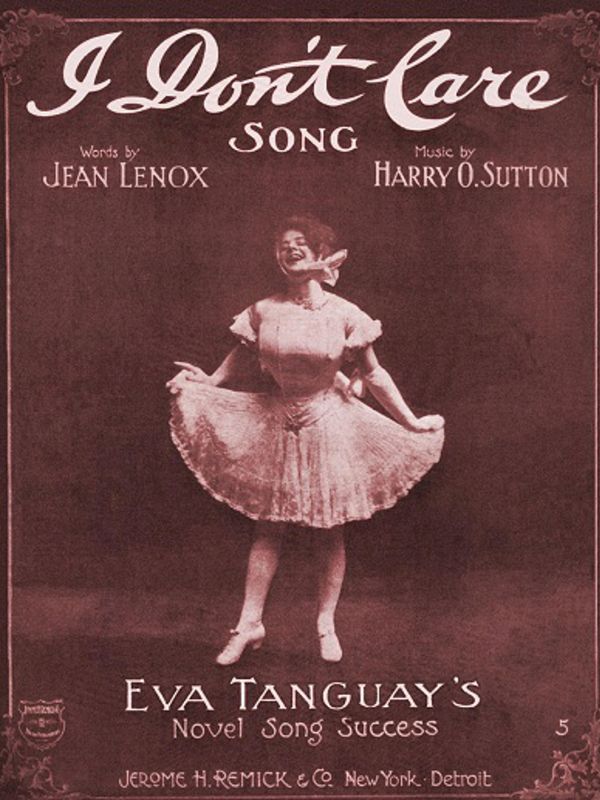
Eva Tanguay – Cohoes Music Hall
The Cohoes Music Hall, built in 1874, is believed to be home to several restless spirits who play tricks on performers and staff. Props mysteriously disappear; shadowy figures appear in empty windows; and colorful orbs, long believed to be spirit signs by ghost hunters, appear in photographs. The Cohoes Paranormal Society launched an in-depth investigation of these happenings in 2017 — you can see some of their videos in an article from the Times Union — and while their evidence might point to other explanations, people still fondly attribute the pranks to the theater’s most famous permanent resident, Eva Tanguay.
Eva Tanguay was known as “The Queen of Vaudeville” during the height of her popularity from the early 1900s until the early 1920s. Also nicknamed the “I Don’t Care Girl” thanks to her most famous song, Tanguay became a Hollywood legend. But before she achieved fame and stardom, she was a 12-year-old girl who got booed off stage at Cohoes Music Hall while performing in Little Lord Fauntleroy.
Haunting memories of public failure aren’t all that’s linking Ms. Tanguay to this particular theater. It is reported that Danny Cosgro, who served as Cohoes’ mayor from 1921 to 1929, was deeply infatuated with the Hollywood starlet. Undeterred by the rumors of her tantrums — the Times Union notes that she was once arrested for stabbing a stagehand in the abdomen with her hatpin — Cosgro published a love poem to her in the local paper. Some believe that love affair was enough “unfinished business” to draw Tanguary back after her death in 1947.
To ward off unwanted spiritual shenanigans, musicians and drama troupes performing at the Cohoes Music Hall commonly leave offerings like chocolates, T-shirts and red roses for Tanguay’s restless ghost. They are heaped backstage near the box seat where Cosgro (as well as her other wealthy admirers) often sat to watch her perform. The theater is known to leave a “ghost light” lit on stage for Tanguay, as well.
New York State Education Building
When the State Education Building was being constructed in the early 1900s, tensions were high between working-class Irish and Italian immigrants. Legend has it that as workers were pouring the concrete for what is now the basement, an Italian stonemason named Jason accidentally fell from the first floor. As Jason struggled to free himself, his Irish foreman — supposedly angry at Jason’s carelessness — sadistically muttered, “keep filling,” and watched as the Italian suffocated under the pouring concrete.
Although this particular Albany ghost story could be chalked up to rumors, others say evidence suggests otherwise. Workers required to venture down into the basement — commonly called “the dungeon” — testify to frequent interactions with Jason’s ghost. The consensus is that Jason is usually friendly, even helpful, knocking the books they’re looking for off shelves and keeping them company in the elevator.
Ghost Tours and Other Eerie Events:
Intrigued by these Albany ghost stories? The Haunted History Trail notes numerous walking tours and virtual lectures happening at dozens of locations throughout the state. A complete list of events in the Capital Region can be found at Discover Albany; among the highlights are the New York State Capitol Hauntings Tours, the City Séance Ghost Tour populated by actors from Capital Repertory Theatre and the walk-through experience of the Murder at Cherry Hill.
Top image source: Library of Congress, Prints & Photographs Division, ny1284