


She’s not green. She’s not wicked. Lady Shiya sets the record straight on modern witchcraft
Ask people to describe a “witch” and most immediately recount a wrinkled older woman with long white hair and perhaps even green skin and a big mole somewhere on her face. (Thanks, Wizard of Oz and, yes, even Wicked).
The reality, however, is very different. Witches are lawyers, teachers, mothers, fathers (yes, there are male witches), doctors and more. They follow a variety of different paths in their belief systems because unlike, say, some Christian religions, witchcraft has almost as many ways of practicing as there are witches. Some are so-called green witches who draw on the powers found in nature to create healing salves and more. Sea witches are drawn to the ocean, and their powers are often influenced by the moon and its cycles. Still others, such as Gardnerian witches, follow a strict protocol that involves a specific practice for a year and a day.
Witches can practice in covens or fly solo. They can be any age or gender, and may or may not worship gods and goddesses. All of these options are a part of modern witchcraft.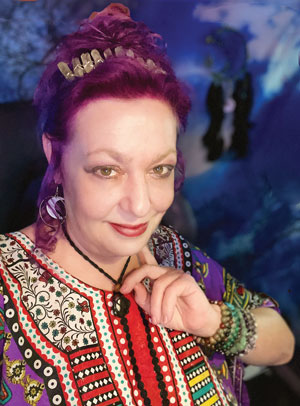
To get a better understanding of a contemporary witch, we talked with Shiya Hodes who goes by Lady Shiya, the honorific she received after finishing her high priestess training in the Gardnerian tradition. (Gerald Gardner introduced Wicca as a religion in the 1950s in the U.K., after which it jumped across the pond to the U.S. Wiccans, who may or may not be witches, see the divine in nature and follow this overarching belief: “Harm none and do as you will.”)
Originally from Texas but now living near Rochester, Lady Shiya knew she was psychic from an early age. She recalls receiving messages for people still on Earth from loved ones who had died. “At 3 years old, it was weird things coming out of the mouth of a child,” she recalls, noting that her strict Christian parents were not happy about this gift. “I was spanked initially. I learned how to dial it down and dial it back.”
Fast forward to when Lady Shiya was around 11, and her church was looking for youth leaders. She signed up and sat down for the required interview with the youth pastor. “He asked me why I thought I could do this job and I said, ‘I can feel the emotions of other people. God gives me messages. If they’re hurting, I hurt too.’” The pastor immediately called this behavior Satanic, to which she responded, “But I’m 11 and this helps people.”
While fighting the backlash that her behavior wrought, both in her home and at church, Lady Shiya secretly began doing her own research. In the early days of the internet, she discovered other people who thought and behaved as she did. “I went out and started talking to them,” she recalls. She also got several books to help her better understand. (The Spiral Dance by Starhawk and Wicca: A Guide for the Solo Practitioner by Scott Cunningham are her top recommendations for those who are curious.)
At 12 on Beltane (also known as May Day in Christian circles and one of eight Pagan sabbats), Lady Shiya began her personal year and a day’s study. Eventually she began working in a local metaphysical store and began meeting like-minded people, some of whom invited her to join their Gardnerian coven. By 17, she had completed enough training to become a high priestess.
Like many who travel a path that is seen as too different, Lady Shiya met plenty of adversity along the way. She recalls coming home from work when she was 16 to be greeted by her parents and three trash bags of all of her pagan gear. “They burned my stuff,” she says. “It was an old-fashioned book burning.”
“At that point I went right back into the closet,” she says, noting her parents had her rebaptized and took the door off her bedroom. “I played the good girl. I didn’t come out again [as a witch] until I was 19.”
Given her past, Lady Shiya knows how hard it can be for people to explore a spiritual life that may be misunderstood and therefore ostracized. Religion in general, she says, has often been used as a way to control people. “It became an overriding factor for how people lived their daily lives,” she says. “Salvation became nothing about living a good life on this Earth. It became a divinely earned thing that came by living life manipulated by biblical principles. It became this big cultural world fear that your soul’s permanent disposition is worth more than your personal accountability. If you can serve, you’ll be rewarded in heaven.”
In contrast, witchcraft is generally a forgiving and expansive spiritual practice, she says. “It’s a craft,” Lady Shiya says. “I am practicing the laws of nature and the laws of the divine to craft a better life for myself and those around me. When we lift each other up, we all fly high. My mission is not so much religious (as it is) helping people live their best lives.
“I’m an omnitheist now,” she adds. “Not one religion holds all truths. I want people to say she cared; she did her best. Am I perfect? No, but do I care? You better darn well believe it.”
For more information about Lady Shiya and her various services, go to ladyshiya.com.
Witch-Curious and Not Sure Where to Start?
If you’re interested in learning more about witchcraft in its broadest sense, you’re not alone. A survey by the Pew Research Center in 2023 found that between 1 and 1.5 million people in the U.S. identify as Wiccan and Pagan. That’s more than identified as Presbyterians at the time.
“People are tired of not being elevated,” says Lady Shiya of this growth. “Witchcraft is one facet of (spirituality). It’s for those of us who want to take more of it into our own hands using the properties of natural law to change or influence the energies around us that remain unseen and unquantified. It’s a path of personal responsibility. Ultimately it’s a path of responsibility to yourself, to your family, to the people around you, to integrity and to dignity.”
Lady Shiya suggests reading and joining like-minded circles online or in person (after researching them, of course) and perhaps looking for a local metaphysical shop. “Find out what resonates for you. The first concept of a witch is to know thyself. You can’t control everything around you if you’re out of control of your own self and psyche. You must go within before you can go without. Until you’re ready to do that, the path of witchcraft is not for you.”