

Surviving physical death — and coming back to tell the tale
Being struck by lightning and briefly dying in 1994 at the age of 42 during a family picnic in Athens, New York, changed Dr. Tony Cicoria’s life.
While using a pay phone, the Saugerties resident saw a flash and heard a loud crack. “The flash came out of the phone and hit me in the face,” he recalls in an email. “It threw me back like a rag doll.”
Cicoria, a general/trauma orthopedic surgeon, said while trying to make sense of what was happening he could see his mother-in-law running toward him, but it seemed as if she couldn’t see him standing there. Instead, she took several more steps and looked down at a body — his body. It was then that he realized he was dead.
“(I) was aware of everything that had happened and was happening,” he remembers. “My spiritual self was eternal and continued beyond death. No one could see or hear me, but I could see and hear everything.”
By the time he walked up to the top of the stairs where the family was gathered, Cicoria says he “had lost all form and was just a ball of energy”; a bright, bluish-white light “bathed me in absolute love and peace.” He then could see what he describes as a “passing collage” of his life — its highs and lows. Then, as if “someone flipped a switch,” he was back in his body. “I was angry,” he recalls. “I didn’t want to go back.”
Near-death experiences are vivid, lucid experiences that often occur under extreme conditions such as trauma, ceasing of brain activity, deep anesthesia or cardiac arrest in which no awareness or sensory experiences should be possible, according to Dr. Bruce Greyson, a researcher with the University of Virginia’s Division of Perceptual Studies.
For some an NDE can be a religious experience. While the Bible is not clear on the subject of near-death experiences, there are times when biblical characters saw into the spirit realm, explains the Rev. Lon R. Dean, pastor of House of Praise Church in Castleton-on-Hudson, in an email.
He says “glimpses into the spirit realm and into Heaven” during NDEs mostly occur to “bring comfort, peace or a greater understanding of God’s plan.”
One person he spoke with about their NDE, he recalls, “said he was met by a relative who told him, ‘It’s not your time. You have to go back,’ and he woke up in the operating room after coding out.”
After the lightning strike, Cicoria, now 72, says he no longer cared about the academic life he had been pursuing, and found himself “driven to hear classical piano music,” even though it hadn’t interested him much in the past. He has since studied piano and plays periodically for audiences.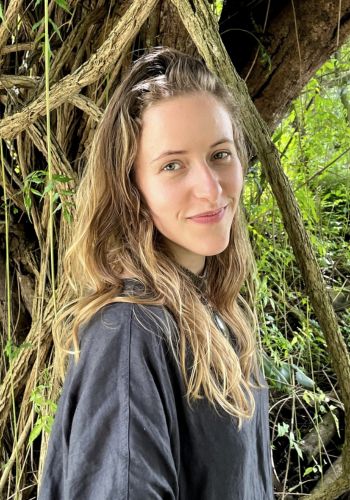
Accepting death
Michelle Polacinski of Troy says she came close to death numerous times after experiencing an adverse reaction to a prescribed medication in 2016.
“I kind of came to terms with the possibility that I might die,” Polacinski says. “Really, once you get closer to (dying), it’s more like a sense of overwhelming peace … It’s just this kind of acceptance of what is going to happen.”
Before her medical crisis, the former Los Angeles filmmaker says she cared “so much” about her status in society, work, money, objects, fame and what people thought of her. But the experience changed her.
“None of what society tells us actually matters,” says Polacinski, who’s now an herbalist, has worked as a death doula and is studying to be a grief counselor. “It’s really all about our health and well-being for our personal selves, love for other people and love for the planet, animals, plants, etc. Nothing else really matters. And I have just wanted to feel closer and closer to nature.”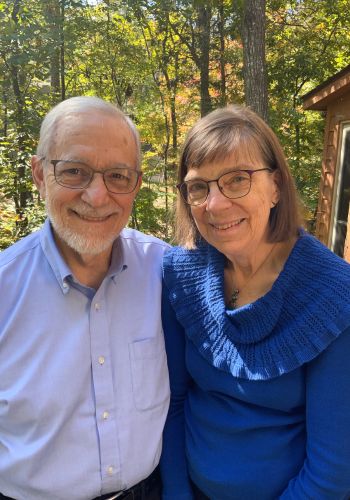
NDE Research
NDE researchers Suzanne B. Mays and Robert G. Mays have studied more than 600 people who claim they’ve had near death experiences. They say they are convinced “we do not die with the passing away of the physical body” and that “there is something more to the human being that survives physical death.”
Robert Mays says the soul, psyche or mind (our essence), which contains all our sensations, feelings, memories, will, intellect and personality, survives. “In an NDE, the soul separates temporarily from the physical body, and at death, it separates permanently,” he adds.
The Mayses say NDE experiencers of all ages from different cultures have reported similar features: They see a tunnel or a light, enter a “beautiful heavenly realm or dark velvety void and feel it’s their true home” and experience a “profound sense of peace and freedom from pain.”
People sometimes meet angels, religious figures or deceased persons they recognize as spirits, and often experience a review of their lives. Even though they are usually told they must go back, Mays said, most don’t want to return to their bodies, which they view as a shell or a costume.
Sometimes, experiencers bring back messages or report having seen events in the physical world beyond normal sight, such as in other rooms or beyond the building they’re in, he says.
NDEs and NDE-like events — such as receiving telepathic warnings of danger — commonly have a spiritually transformative effect on experiencers as they reintegrate into this world, according to Mays. He and his wife are members of the nonprofit International Association for Near-Death Studies. Robert is the group’s treasurer. The former Albany, New York, residents now live in North Carolina.
After the events, NDErs sometimes experience new intuitive, sixth-sense abilities. “Being out of body changes the kind of energetic relationship your soul or mind has with the physical body and it’s a little looser. So you can pick up things psychically that you wouldn’t have otherwise,” he says.
Also, Mays says NDErs often lose their fear of death, become less judgmental and more loving, less self-centered, more compassionate and understanding of others, less materialistic, more altruistic with an increased empathy for others, and are less competitive and more cooperative. 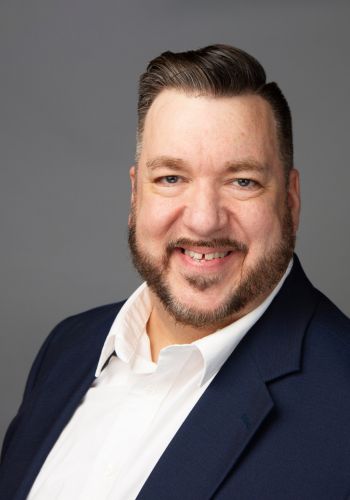
Reading NDE stories can also bring about these qualities in people — something the Mayses say they’ve experienced firsthand.
Cicoria said he is now more spiritual than religious following the lightning event.
Reflecting on Einstein’s quote, “God does not throw dice,” Cicoria says he approaches life differently now, as he believes that everything happens for a reason. “Professionally, people are what is important, not what you are doing,” he says.
Dean, the pastor, says NDE stories are popular for two reasons: people’s fear of death and also a “great curiosity.”
“Seeded in each of us is a thought, ‘There must be more than this.’ We have a desire to understand the meaning (of) life, our purpose. The NDEs tell us there is an afterlife, a higher purpose to our existence, and that God is real.”
For more information, go to selfconsciousmind.com and iands.org.
Top image: iStockphoto.com/legna69.