

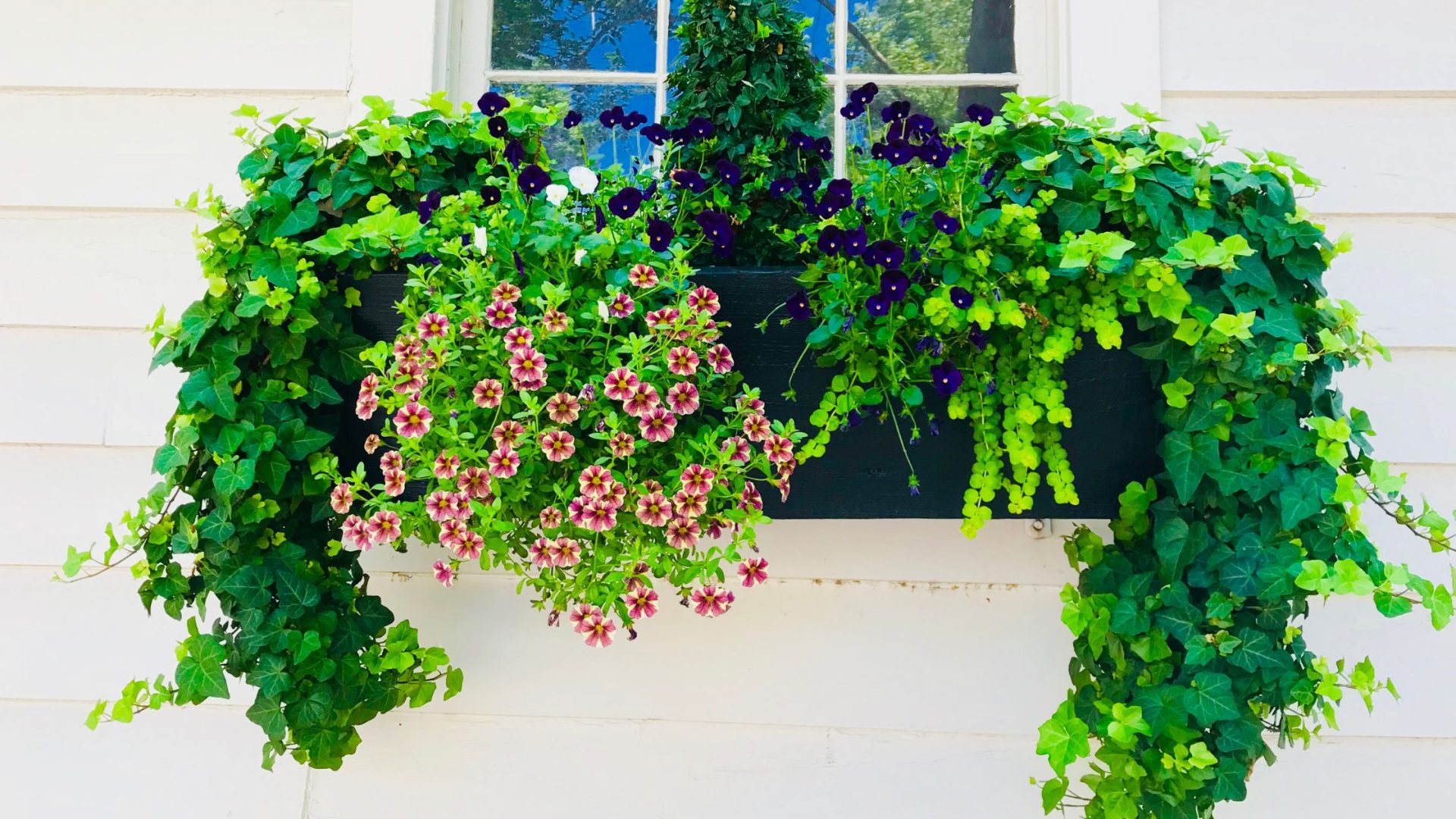

You can help hasten spring along no matter where you live by planting colorful, cheerful window boxes, even early in the year. Since window boxes are close to the house, they are usually partially sheltered from late-season freezes, and some flowers absolutely thrive in the cooler weather.
Even if you’ve planted thousands of container gardens in your life, perhaps this little refresher will inspire you as you plan your window boxes for this spring.
Anatomy of a Window Box Planter
When I worked for a garden center back in my youth, a master florist drilled me on the rules for how to design balanced-but-bold flower planters. You can really get into the mathematics if you want to, by adhering to the “rule of thirds” (which, confusingly, has several different connotations), but for nonprofessionals, the Thriller, Filler and Spiller guidelines will suffice just fine:
Thrillers: Plants chosen as the “thriller” of the planter are the centerpieces, the ones that will add height and visual interest in the vertical dimension. Typically, this includes plants like grasses or ferns — anything that grows primarily upwards in a showy fashion. I like to choose my thrillers first, as it gives me something around which to build the rest of my planter.
Fillers: Fillers are the flowering plants that will add color and fill out as they grow to create a lush, vibrant look. These are usually the most fun to select, because garden centers typically have an abundance of varieties to choose from.
Spillers: Spillers are the plants that cascade down the sides of the container as they grow. They serve to soften the edges, and if chosen carefully, they will also add contrast, color and texture that complement your fillers and thrillers.
Growing Conditions
If you want your window boxes to thrive — and hopefully last through the entire season — make sure you’re buying the right plants for where you’re going to put them. Consider the amount of sunlight the planter will get, as well as what kind of drainage it will have. Then, try to select plants that have similar care requirements. You’ll be setting yourself up for disappointment if you try to pair sun- and drainage-loving succulents with ferns (which prefer moist conditions and shade), for example.
Caring for Your Window Boxes or Planters
When planting your window boxes, add a good, granular, slow-release fertilizer to the soil. This will help to replenish nutrients in the soil as the flowers grow, which is necessary in the limited space of a container.
Then, your most important task is remembering to water your window boxes regularly. A container that fully dries out one or more times during the season can take weeks to recover, according to Todd Holloway, a container designer in British Columbia. (I also know this from experience, shamefully.) Freshly planted pots use less water than they will later in the season (when the plants are bigger and root systems take up more space), but make sure when you do water, you do it thoroughly.
Our Favorite Early Spring Flowers
Some plants just lend themselves beautifully to early spring planters, so here are a few of our favorites:
Sun-Loving:
- Snapdragons: come in so many bright colors, and will bloom until fall if cared for properly.
- Petunias: easy to grow, and will bloom through summertime. Come in upright and trailing varieties, so they can be either a filler or a spiller!
- Geraniums: classic spring favorite, and easy to care for.
- Sweet Alyssum: fragrant, with tiny flower clusters that will also bloom in partial shade.
- Calendula: lovely and bright — and edible!
- Succulents: drought-resistant by nature, and there are so many varieties you could have an all-succulent planter! (Kalanchoe, Echeveria and Pencil Cactus are some hardy faves.)
Shade-Dwellers
- Fuschias: stunning showstoppers, prefer partial shade and come in both upright and trailing varieties.
- Begonias: have sweet, fragile flowers, and sometimes their leaves are even more spectacular.
- Impatiens: shade-tolerant with a long blooming period.
- Pansies: cheerful and ultra-hardy despite their fragile appearance, often one of the first flowers to bloom in early spring.
- Creeping Jenny: bright, chartreuse leaves always add contrast to any planter as a spiller.
- Dusty Miller: soft, feathery foliage is a great filler that looks gorgeous when mixed with bold flowering plants.
- Coleus: bright and showy, and good for bees.
Top Image: Jodie Riley from Getty Images, via Canva.com