

On Our Nightstand, Fall 2024: Who Are We, Anyway?
We all read books for different reasons. Sometimes we just need to escape the world. Other times we are motivated to learn something new. This column’s recently published books — two fiction and one nonfiction — allow us to do both.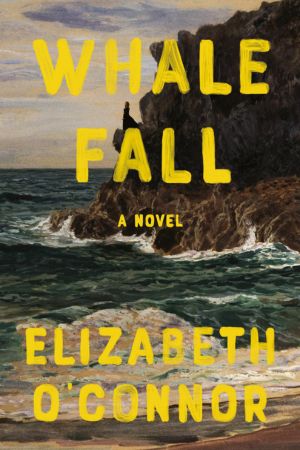
Whale Fall
by Elizabeth O’Connor
When a whale dies at sea and its carcass falls to the sea floor — a phenomenon called a whale fall — it becomes a thriving ecosystem for deep-sea creatures, providing food and other resources. In Elizabeth O’Connor’s new novel, the dead whale is washed ashore on a remote Welsh island rather than falling to the ocean’s depths. There, it is a curiosity and feels more like an ominous portent than a resource.
Set in 1938, the novel follows 15 families living rugged lives as they grab what they can from the waters that surround them and make do. News from the mainland arrives in dribs and drabs, often days or months after the fact. There’s a “Big War” brewing, but no one fully knows what’s happening. The future feels as uncertain as the weather on the island.
Enter two English ethnographers who hope to study island culture. They ingratiate themselves among the fisherfolk with a particular focus on Manod, the 18-year-old narrator. She’s bright, speaks both English and Welsh (unusual for those on the island) and has aspirations. What kind of life could she have if she left?
The couple’s true intent, however, quickly becomes clear. While they initially appear to want to celebrate this fading lifestyle and culture, to record it for posterity, their real purpose is more about them than the people they’re recording and whose stories they’re telling. The result is a story about loss and finding oneself, both in community and as an individual. It’s a story that is at once lyrical, poignant and gripping.
Whale Fall by Elizabeth O’Connor. Published by Pantheon. 224 pages.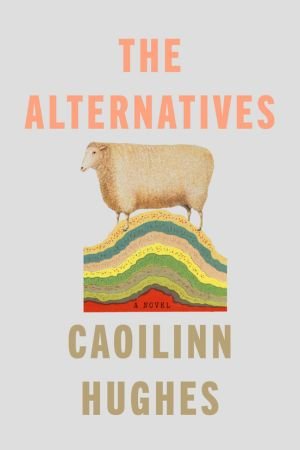
The Alternatives
by Caoilinn Hughes
The Alternatives follows the four Flattery sisters as they navigate their complicated lives in an increasingly complicated world.
Olwen, the eldest and a geology professor, kicks off the story by deliberately disappearing one night on her bicycle. She’s found a few months later by sister Rhona, a political science professor at Trinity College in Dublin. She notifies the other two sisters, Maeve and Nell, who return to their Irish homeland to try to figure out what the heck is going on with their sister and, by extension, themselves.
Maeve is an Instagram-famous chef and cookbook author who is obsessed with food shortages and wants her next cookbook to focus on that idea. (Her publisher is decidedly less than thrilled.) Nell is an adjunct professor in Connecticut who has a mysterious ailment that makes movement challenging — except when she does her regular nocturnal swims in oceans and ponds.
As orphans whose parents wandered off a cliff on a stormy Irish night when they were children, they are all understandably damaged in their own ways and a little unsure of how to actually interact as adults. They are also each grappling with living in a world where the climate and environment are in danger, and struggling to address it in their own ways. Their story in that sense is our story — a tale of family love and strife and how we all come to terms with our duty to each other and the world outside our collective doors.
The Alternatives by Caoilinn Hughes. Published by Riverhead Books. 338 pages.
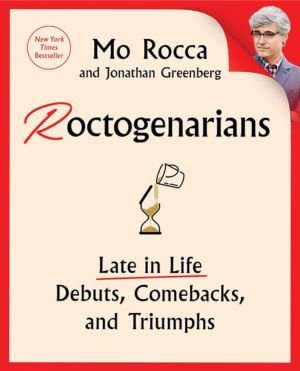
Roctogenarians: Late in Life Debuts, Comebacks, and Triumphs
by Mo Rocca and Jonathan Greenberg
Mo Rocca is no stranger to death and, by extension, aging. While many may know Rocca as a regular on NPR’s Wait Wait … Don’t Tell Me! and CBS News Sunday Morning, he’s also the host of the podcast Mobituaries. In the podcast, which begins its fourth season this fall and inspired the bestselling book of the same name, Rocca explores people and things that are gone but should not be forgotten.
In this new book, Rocca and co-author Jonathan Greenberg expand on that idea by focusing on people whose big moments came late in life. Some are still alive. Others are gone. All of them are fascinating as Rocca explores his underlying premise that 80 is the new 60.
Whether you agree with that assertion doesn’t really matter. The stories are heartwarming, fascinating, and a walk down memory lane for those of us of a certain age (in other words, you). We learn the story of Estelle Getty, who was 62 when she finally got her big break as an actress after first starring on Broadway in Torch Song Trilogy and then being chosen to play the always-entertaining Sophia Petrillo on The Golden Girls. Laura Ingalls Wilder, meanwhile, author of the perennially favorite Little House series, began publishing at the age of 65. The list goes on and is filled with stories written in Rocca’s chatty style.
Simply put, this book is a delight and a reminder that aging is never an excuse to give up on your dreams.
Roctogenarians: Late in Life Debuts, Comebacks, and Triumphs by Mo Rocca and Jonathan Greenberg. Published by Simon & Schuster. 372 pages.
Top image source: iStockphoto.com/Kobus Louw.
More Stories You May Enjoy:
• Three books to dispel aging myths: On Our Nightstand column for Summer 2024
• Saying goodbye to old friends: Writer Rod Michael considers how saying goodbye reminds us of the fleeting nature of our existence.
• Putting FUN Under the Tree: Writer Caitlin Manner talks about the near-disaster experience of gifting her son tickets to the “Wait Wait … Don’t Tell Me!” live comedy show