
Financial experts offer practical tips to keep your investments on track

With so many demands on our time and attention, it can be tempting to put off thinking about anxiety-inducing financial issues. But if you’re retired — or planning to retire soon — it’s important to stay informed about economic shifts and policy decisions that may affect your retirement plans.
Certified financial planners Gretchen Meyer and Louis D’Angelo agree that even after retirement, there are still ways to strengthen financial security, though patience is essential. Many retirees are asking, “Am I going to be OK?” — and planners say the answer often depends on having a plan designed to weather uncertainty.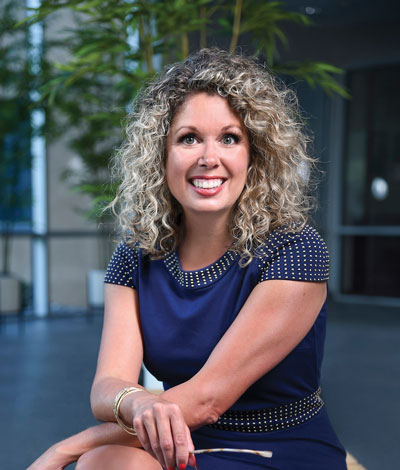
Where you are on your retirement timeline has a lot to do with what kinds of adjustments you can make regarding your investment strategies.
If you’re still employed
While you’re still working, a 401(k) or similar employer-sponsored plan is still one of the safest and most effective ways to build retirement wealth, according to financial planning website NerdWallet. These accounts allow your money to grow tax-deferred, meaning you won’t pay taxes until you withdraw funds in retirement, and many employers offer matching contributions as well.
There are a few changes to retirement savings this year, including a new rule for catch-up contributions, the 2026 Roth Catch-up Mandate. D’Angelo of the Albany Financial Group says that if you earned more than $150,000 in 2025, any catch-up contributions to a 401(k) or other employer plan must now go into a Roth account, meaning they’re taxed upfront.
To maximize your 2026 retirement savings contributions, note that the contribution limits are a little higher. Most people can put in up to $24,500; those age 50 and older can contribute up to $32,500; and people ages 60 to 63 can contribute even more — up to $35,750 — thanks to a new “super catch-up” option.
If you’re already retired
After retirement, your focus shifts from building savings to living off them, says D’Angelo. That often means adjusting your investments — what worked to grow your money may not be the right mix now, especially if you want to take on less risk going forward.
The first step, he says, is to take a close look at where your money is invested — like taxable accounts, IRAs or Roth IRAs — and how it’s divided up. You’ll also want to test your plan against “what-if” scenarios, such as a big market drop or high inflation, to see if there’s a risk of running out of money too soon. If you spot any weak spots, you can usually make adjustments to help protect your savings.
So what does balanced investing look like? Starting with 60% stocks and 40% bonds in retirement is a good baseline, he says, then adjust for your comfort with risk. “It’s almost like performing an optometry test, you know?” D’Angelo explains. “‘Better, or worse? How about now?’” Some people can handle big losses knowing recovery could take years, while others can’t. “The best portfolio,” D’Angelo says, “is the one that doesn’t keep you up at night.”
Meyer, founder of Pachira Wealth Management, agrees that getting yourself organized and checking for balanced asset allocation is just as important as having patience with the current market. “If the market goes down, but you have a plan, it’s a little bit easier to let the ups and downs roll off your back. But if you take your money out when the market is down, that’s really the only time you’ve lost money,” she says.
Managing Spending
Beyond investments, how you spend your money is the area you have the most control over in retirement. When everyday costs rise, it’s important to see if you’re spending more than usual just to cover your basic needs.
For example, if you’re pulling money out of an IRA, D’Angelo says “the old rule of thumb is a 4% withdrawal rate — which means you can take 4% out of your assets safely — that number is probably pushing about 4.5% right now, given where the markets have been, but the logic is the same,” he says.
At the same time, being aware of your spending will help you know what is and isn’t possible. “It’s the difference between knowing you can go on that vacation, or maybe now’s not the year to redo the roof,” Meyer says.
Looking ahead to 2026, retirees have several strategies to consider to help manage taxes, boost income and make the most of their savings, according to D’Angelo and Meyer:
- Roth Conversions: Move money from a Traditional IRA to a Roth for tax-free growth and inheritance.
- Tax-Loss Harvesting: Sell underperforming investments to offset gains and lower taxes.
- Gifting and Charitable Giving: Give up to $19,000 per person tax-free, or up to $105,000 from an IRA to charity if 70½+.
- Maximizing OBBB Act Benefits: Take advantage of higher SALT caps and senior deductions; Social Security may still be partially taxable.
- Annuities: Remember that these provide guaranteed income for essential expenses, independent of the market.
- Medicare Optimization: Review plans, especially Part D, which has a new $2,100 out-of-pocket prescription cap.
Preretirement checklist
- Social Security: Log onto SSA.gov to get your updated Social Security benefits estimate. (This gives you a clearer picture of your benefits and also helps protect against identity theft, D’Angelo says.)
- Capital Expenses: Consider handling major home or health care expenses while you still have a salary.
- Cash Reserves: D’Angelo advises that you “aim to bolster your cash or ‘safe bucket’ to cover 12 to 24 months of retirement expenses.”
- Complete Estate Planning Administrative Tasks: Update your wills, trusts and health care proxies, and verify fiduciaries (those designated as executors or powers of attorney).
- Consult with an Insurance Adviser: Make sure you have the right amount of coverage based on your needs.