
Heart disease is the leading cause of death in women according to the Centers for Disease Control and Prevention (CDC), accounting for more fatalities than all types of cancer combined. The reason for this statistic is fairly direct: Women face unique risks for cardiovascular disease compared to men, largely due to differences in anatomy and hormones. Furthermore, many doctors overlook heart disease diagnoses because women don’t always present with the “classic” symptoms (i.e., those associated with men.)
Since February is Heart Health Month, we thought it would be a good idea to outline some of the unique risks and symptoms of coronary heart disease (CHD) that women face. As always, any medical information in 55+ Life articles is intended to help inform and educate our readers, but can never replace the counsel and guidance of a physician. If you think you might be at risk, please consult your doctor.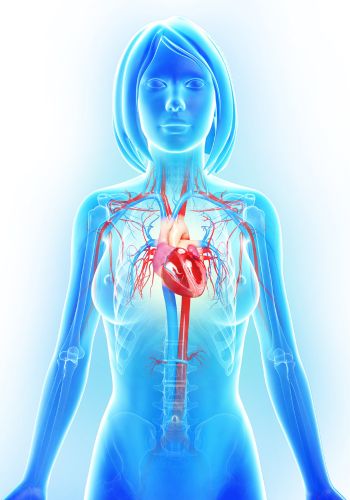
Heart Disease in Women: Why It’s So Different
While cardiovascular diseases (CVD) are common for both men and women, there are differences between the sexes in terms of clinical symptoms, the research that’s been done and responses to treatments.
One of the major factors at play is women’s hormones. Female hormones, especially estrogen, naturally provide protection against heart disease. That’s why studies show that CVD occurs more frequently in men than in premenopausal women. The risk of CVD for women, therefore, increases significantly with the onset of menopause, which is also associated with symptoms that in and of themselves increase risk: increased blood pressure, body mass index, obesity and body fat distribution.
The National Heart, Lung, and Blood Institute (NHLBI) also attributes some of the gender differences in heart disease to the size and structure of women’s hearts. A woman’s heart and blood vessels are smaller, while the muscular heart walls are thinner. The Cleveland Clinic adds that women also have fewer red blood cells, which means that women have a reduced ability to take in or carry oxygen. Additionally, women are more likely to experience coronary microvascular disease, or heart disease in the tiny arteries of the heart. According to the NHLBI, this can make the disease harder to identify and can cause delays in treatment.
The protocols around treatment for heart disease are also different between women and men. Infuriatingly, despite conclusive studies confirming estrogen’s role in cardiovascular health, further research surrounding potential treatments for women has been mired in controversy. For one, females are routinely left out of biomedical research and ignored in the analyses of data. (The main reason? Female hormones are too difficult to factor into experiments because they muddy the results.) Secondly, the most commonly referenced study regarding female hormones and heart health — the one that vilified Hormone Replacement Therapy — is still relied upon for guidance in this matter, despite recent studies revealing its flaws. 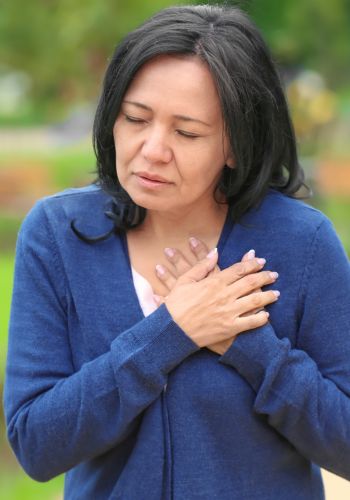
Heart Disease Symptoms for Women
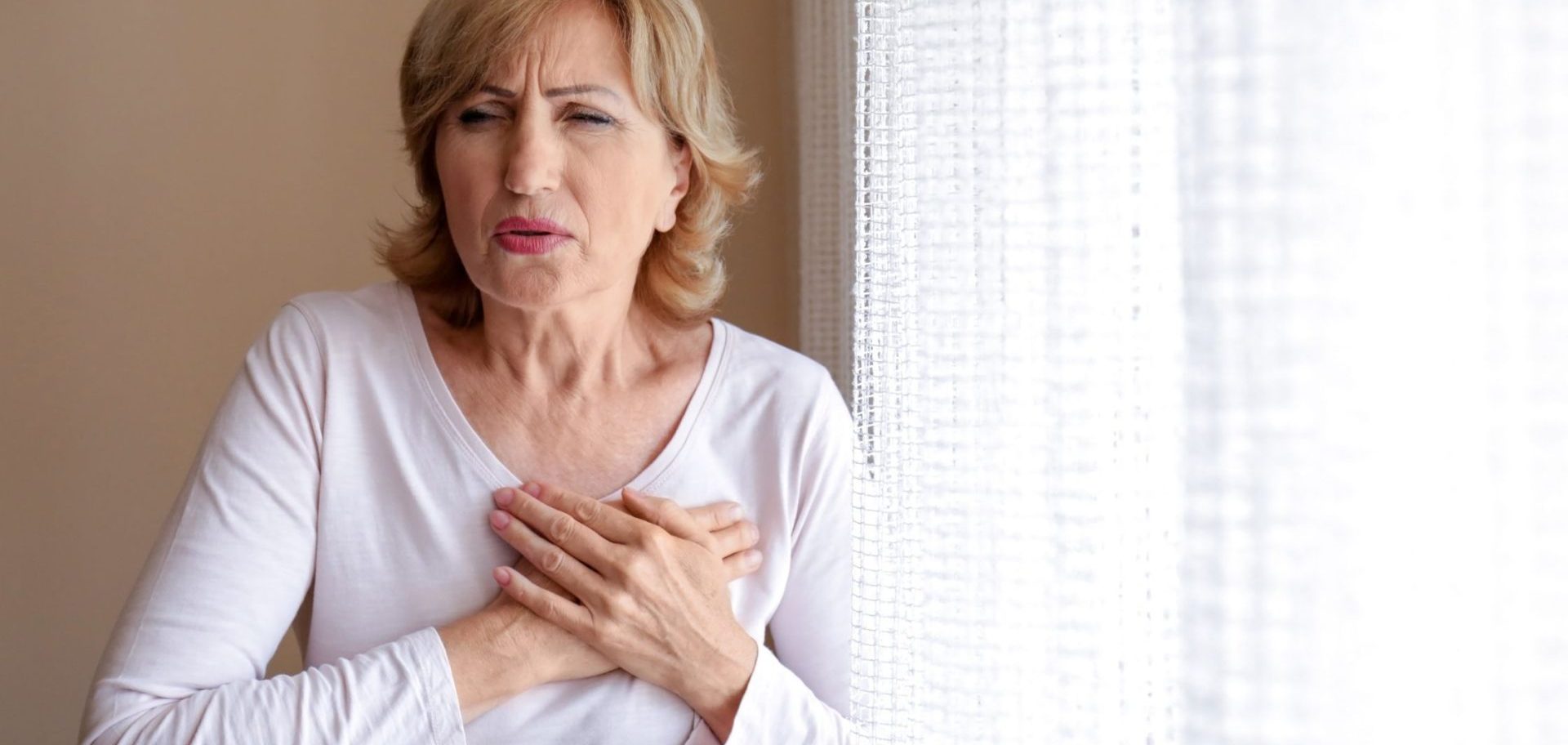
Troublingly, the CDC says that some women might not experience any symptoms while living with heart disease. Others may have:
- Angina, usually felt as a dull or heavy chest discomfort or ache
- Pain in the neck, jaw or throat
- Pain in the upper abdomen or back
- Nausea
- Vomiting
- Fatigue that won’t go away or feels excessive
- Shortness of breath
While many of these symptoms are similar to those for men with heart disease, differences between the genders do exist. In men, for example, angina tends to worsen with physical activity and go away with rest, according to the NHLBI. By contrast, women are “more likely to have angina while they are doing routine daily activities, such as shopping or cooking, rather than exercise.” (Of course, one might argue that those tasks count as physical activity…)
Additionally, the type of pain and its location may differ. The Cleveland Clinic says because of this, women are at a higher risk of experiencing a “silent heart attack,” which is a heart attack that goes unrecognized by the patient or medical professionals. This article explains other “sneaky” signs of heart disease that often get dismissed.
Risk Factors
Certain risk factors for heart disease are unique to (or more common in) women compared with men:
- Diabetes. Women with diabetes are two to four times more likely to develop cardiovascular disease than men with diabetes.
- High cholesterol. This risk factor applies to everyone, but low levels of high-density lipoprotein HDL cholesterol (aka the “good” cholesterol) may be more dangerous for women 65 and older.
- Mild to moderate high blood pressure, especially after age 65. According to the Cleveland Clinic, women over the age of 60 are more likely than men to have hypertension, but less likely to have it managed. This is often due to differences in responses to treatment and sodium sensitivity after menopause.
- Menopause. The associated estrogen level drop increases your risk of blood clots, atherosclerosis and high cholesterol.
- Smoking. Women who smoke are more likely to develop cardiovascular disease than men who smoke, and they are three times more likely to have a heart attack.
- Autoimmune and inflammatory diseases. Women make up approximately 80% of people diagnosed with autoimmune diseases, such as rheumatoid arthritis or lupus. Autoimmune diseases greatly increase a person’s risk for heart attack, heart failure and other cardiovascular problems.
- Lack of exercise. Exercise reduces heart disease risk among women more than for men, but 1 in 4 women in the U.S don’t exercise at all, and only 1 in 4 exercise enough to get the benefits.
- Mental health problems such as stress, marital problems, anxiety, depression or low social support.
- Overweight/Obesity. After menopause, you’re more likely to gain abdominal fat, which research links to a higher risk for heart disease. Obesity is more dangerous for women than men as well; it nearly triples the risk for a heart attack among females.
Women also experience a higher risk for coronary heart disease because of pregnancy-related or other reproductive factors, as well. Among them:
- Anemia, especially during pregnancy
- Early menopause (before the age of 40)
- Endometriosis
- Hormonal Birth Control
- Gestational Diabetes
- Preeclampsia and Eclampsia (high blood pressure during pregnancy)
- Having a preterm birth
- Polycystic Ovarian Syndrome (PCOS)
- Menstruation that started at a young age

Testing and Treatment Discrepancies
As a result of these discrepancies and lack of understanding, women need to do more self-advocacy than men when it comes to diagnostic tests and treatment for heart disease. Because of the differences in symptoms and anatomy, standard testing methods don’t always work. The Cleveland Clinic points out, for instance, that obstructive coronary artery disease may sometimes involve an artery with a smooth layer of plaque instead of a large piece; this is more common in women. A coronary angiogram — the standard test for this complication — won’t always catch this type of plaque buildup. So, if you have symptoms and do get tested, the results may come back as normal.
Studies also conclusively show that women experience gender bias when seeking treatment for heart disease. When women go to the hospital for heart-related symptoms they are:
- more likely than men to experience delays in receiving an initial electrocardiogram
- less likely to receive care from a heart specialist when hospitalized, and
- less likely to receive life-saving treatments and medicines.
Furthermore, many treatments work differently for women than they do for men, which can also result in unwanted side effects and differences in efficacy. For example, women are more likely to have intolerance to ACE inhibitors (medications that lower your blood pressure), and they’re also more likely to develop side effects from statins (drugs that reduce cholesterol levels).
Heart Disease Prevention for Women
The bottom line is that women need to be aware of their risk factors to adequately advocate for themselves when it comes to diagnosing and treating heart disease. Understanding these factors can help women better avoid preventable risk factors, and to find a doctor who will listen to concerns when they are presented.
Top image by pixelshot, via Canva.com.