


On Our Nightstand: Perspective-shifting reads
Books serve so many purposes in our lives. Sometimes they provide much-needed escape. Other times, they explain complicated history or science or political situations, providing details and context. And, finally, they can also give us tips for how to change our lives or, sometimes, just get by.
This issue’s book column falls into the latter category, with a trio of books designed to help you see your life differently and then, potentially, act on those realizations. Best of all, two of the books can be read in snippets as you need them.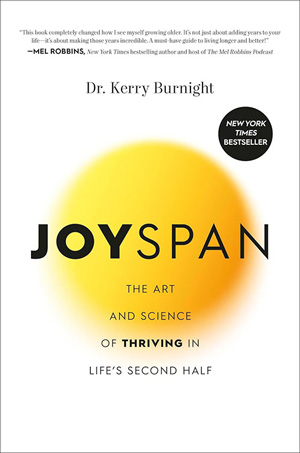
Joyspan, The Art and Science of Thriving in Life’s Second Half
by Dr. Kerry Burnight, Worthy Books, 272 pgs., $29
Dr. Kerry Burnight is a career gerontologist who realized, in part from watching her 96-year-old mother, that positive aging can have just as much, if not more, to do with attitude as genetics and luck. And so she coined the term “joyspan,” which she defines as “the experience of well-being and satisfaction in longevity.”
People who thrive in longevity, she writes, consistently follow these four strategies:
- Grow: They continue to explore and expand
- Connect: They seek out and put time into relationships, new and existing
- Adapt: They adjust to challenging situations, such as health issues
- Give: They volunteer and give of themselves
Joy, Burnight points out, is not just seeing the world through rose-tinted glasses all the time. It’s about making choices that provide contentment and meaning — and then actively acknowledging the events that follow, living in the happiness that these choices provide.
In addition to detailing the science and data behind how joyspan can improve the quality of a life and extend its length, Burnight gives the reader concrete ways to measure their own joyspan and offers simple ways to improve it. Since aging includes so much we can’t control — illness and loss, for instance — why not embrace something we can control — our attitudes and choices — and increase our joy every day? This book makes the answer to that question easy.
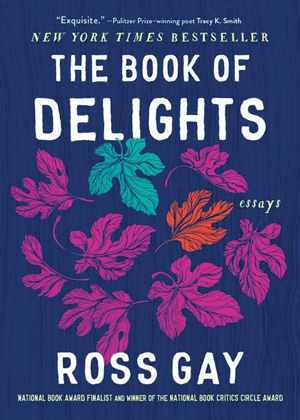
The Book of Delights
by Ross Gay, Algonquin Books, 271 pgs., $23.95
Ross Gay is a poet and essayist whose book, The Book of Delights, is just that — a delight. An English professor at Indiana University, he published the book in 2019 after deciding to write a daily — or mostly daily — “essayette,” as he calls it, about something that delighted him. He began and ended it on his birthday with the caveat that he write each essay quickly and by hand.
The collective result is a reminder that some of life’s true joys are in the small moments we often miss or register only fleetingly. We are reminded of the ways in which these small joys, and sometimes even annoyances, connect us. Whether Gay is writing about a praying mantis on an empty pint glass (August 29) or hickories (March 7) or the reaction he got when traveling with a small tomato plant on a flight (June 9), his essays remind readers to be more present, to take notice; and that is a plan that can almost always bring just a moment of joy into a day that might otherwise feel dismal.
And given the success of this first collection, there’s a sequel: The Book of (More) Delights. Perfect.
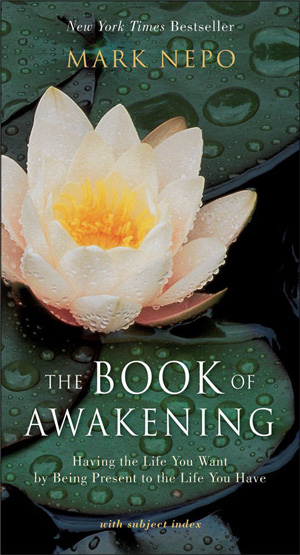
The Book of Awakening: Having the Life You Want by Being Present to the Life You Have
by Mark Nepo, Conari Press, 429 pgs., $18.95
This is an oldie but a definite goodie. This book has been by my side ever since I first discovered it in my roommate’s bathroom over 15 years ago. Why? Because almost every time I’ve opened it, it is uncannily the right message for the right time.
Like Gay’s book, The Book of Awakening is set up by days. Nepo’s book, however, begins each day with a quote that sets that day’s theme, if you will. The January 24 entry, for instance, features this from Albert Einstein: “There are two ways to live your life. One is as if nothing is a miracle. The other is as though everything is a miracle.” Nepo then tells the story of a man who was so consumed by worry that he ultimately undermined getting the help he needed. Nepo ends each missive with three or four strategies or meditations the reader can use to better understand his reflections — and shift their mindset.
Especially in these troubled times, we could do worse than starting or ending each day with one of Nepo’s readings.
Read More:
- Cozy Reads to Get You Through Wintry Weather
- Celebrating the Magic of Libraries and Bookstores in Fiction
- Sporting Nonfiction Books to Inspire You About Living