

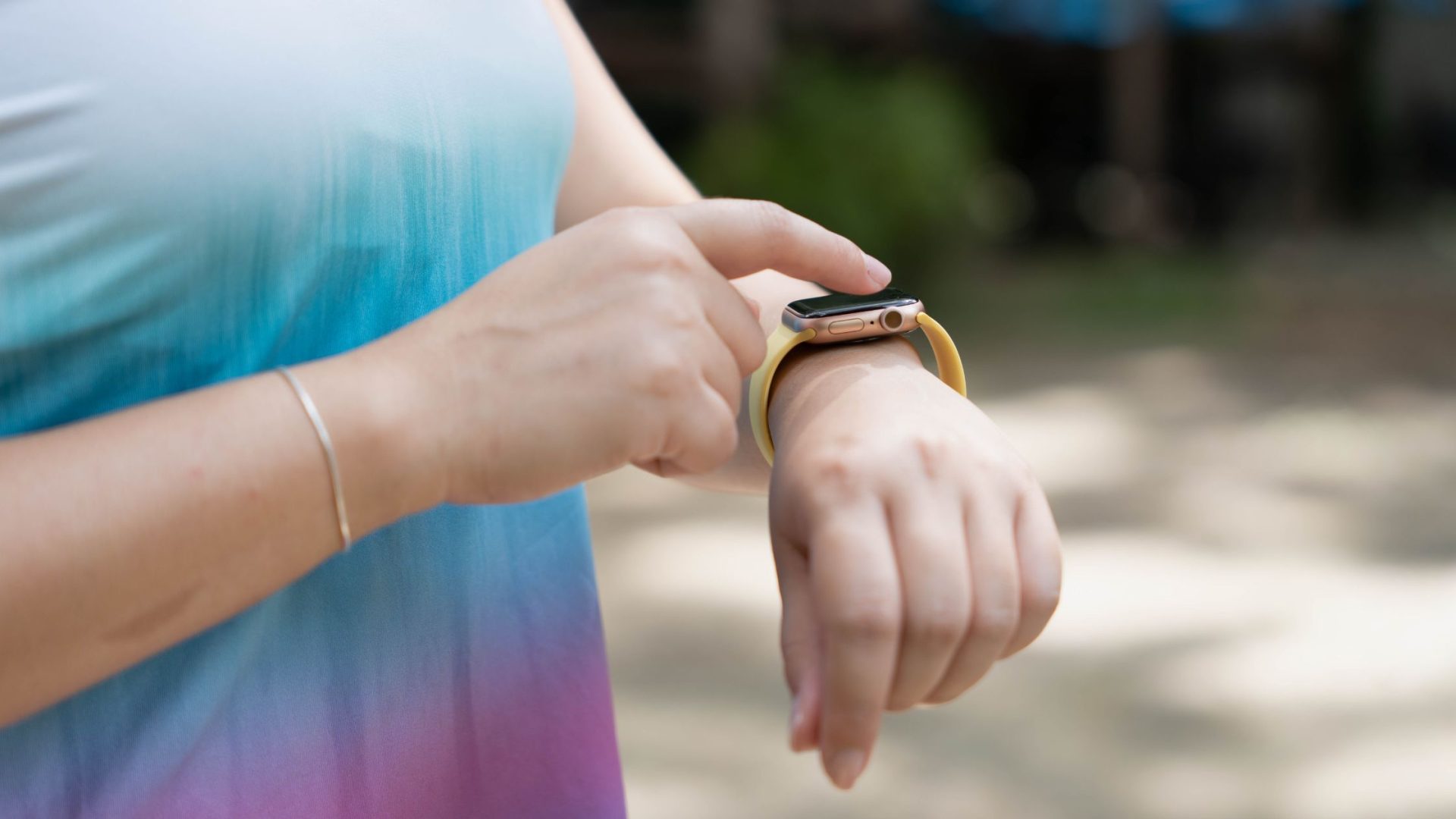
People often make new fitness goals around the start of the new year, but the reality is that it’s always a good time to consider thinking more actively about your health. Even tiny changes we make to our routines and eating habits can have cumulative benefits that go a long way. If you’re looking for a simple tool that could have a positive impact, a fitness tracker might help.
Automatically installed on almost every smartphone, fitness trackers can help with motivation, goal-setting and enhanced activity awareness. When paired with wearable fitness devices (like Apple watches, Fitbits, and Oura rings), these apps can track steps, reveal sleep patterns, and even monitor your heart rate.
They aren’t, however, without some drawbacks. Some experts caution that fitness tracking apps are inaccurate, create the potential for obsession and undue stress; come hand in hand with data privacy concerns; and can even cause some people to ignore their body’s natural signals in favor of digital metrics.
Here’s what you need to know before you start:
Fitness Tracker Benefits
Quantifiable Feedback
The most tangible benefit of a fitness tracker is that you don’t have to rely on a scale or outdated assessments (like the much-maligned Body Mass Index (BMI) or the humiliating “pinch test”) to see if you are making progress towards your health goals. Liam Rodgers, head of treatment at London wellness facility network Until, says, “Trackers add objective data to things we would typically just measure subjectively, which anyone could benefit from. A small increase in daily steps or sleep or a decrease in stress can show meaningful changes in people’s health that they can witness firsthand.”
Motivational Tools
Being able to track health metrics in real time is a powerful motivational tool. The visual representations of your efforts can help create accountability, which in turn can compel you to stay consistent with your exercise routine and make healthier choices.
According to the largest study performed to date, fitness trackers have a positive effect on users’ activity levels. This meta-review of 121 separate studies showed that, on average, using physical activity monitors led people to take an additional 1,235 steps per day and engage in 49 additional minutes of moderate-to-vigorous physical activity per week. Dr. Megan Wasfy, a cardiologist at the Cardiovascular Performance Laboratory at Massachusetts General Hospital, attributes this increase to the subjects’ access to the data that trackers readily provide. “For people who are motivated to start exercising more, sometimes the day-to-day feedback on their progress helps keep them engaged,” she told Harvard Health.
Accountability Partners
Many wearable fitness trackers also offer social features that allow users to connect with friends, join challenges and share achievements. This social support system can be a critical part of users’ motivation to stay on target with their goals. (I have personally joined challenges on several platforms — Strava, Apple Fitness+, and Pacer — and can attest that there is a certain appeal to earning those silly digital badges and having friends cheer on your latest athletic endeavors. On the flip side, this social aspect ups the potential shame associated with “falling off the exercise wagon.” That also can be motivational — sometimes.)
Concrete Data for Medical Purposes
Although this benefit hasn’t been studied to the same degree as some other aspects, it has been shown that wearable health technology can be helpful for medical monitoring and sometimes assist in making informed care plans. For one thing, fitness trackers won’t let us over- or underestimate our activity levels when our doctors ask about them. “Wearable devices provide accurate data that cuts through the bias and guesswork,” Jacek Urbanek, assistant professor of medicine at the Johns Hopkins University School of Medicine, told HealthTech magazine.
Additionally, wearable devices can provide a much richer dataset than the snapshots most medical providers get from in-office tests. And, since these devices can easily track more than just our step counts, doctors are starting to advocate for more integrated uses. For example, Atrium Health in Charlotte, North Carolina, has adopted the use of consumer wearables (like Fitbit) to work seamlessly with its online health tracker, which enables the organization to generate a more complete view of a patient’s health. Details such as weight, blood sugar and step count are all kept in one place. So far, programs like these have been shown to have positive outcomes, including reduced hospital admissions, according to a KLAS Research report.
Drawbacks to Using a Fitness Tracker
In addition to the regular annoyances of needing to keep one more thing charged and on your person, here are a few drawbacks to using wearable fitness trackers.
Reports of Inaccurate Data
While most devices will claim to provide super-accurate data for their users, the truth is that they are never 100% precise. Factors such as sensor calibration, device placement and user movement can affect the accuracy of some measurements. In a 2020 analysis of the most popular wearable activity trackers performed by a team of experts at Memorial University of Newfoundland, experts found a range of accuracy in laboratory settings, differing between brands and depending on what they were measuring:
- Step Counts: Fitbit, Apple Watch and Samsung Watch measured steps accurately
- Heart Rate: Apple Watch and Garmin were most accurate, whereas Fitbit tended towards underestimation
- Energy Expenditure (calories burned): No brand was accurate!
Of course, with each technological update we gain advances in accuracy and the ability to measure different aspects of our health, but it’s important to regard our trackers’ data with at least a few grains of (metaphorical) salt.
An Unnecessary Source of Stress, for Some
After gifting each other Oura rings last Christmas, my friend and her husband developed a friendly rivalry over their sleep stats. Upon waking, they’d compare data and smugly gloat if the app revealed they’d gotten better quality sleep than the other. This competition led to some amazing health benefits; they both managed to break several bad habits that had been impinging on a good night’s rest.
However, my friend recently admitted that she had to stop wearing her device. While she enjoyed analyzing the data it provided, she realized that it was starting to become a nightly source of stress. She would lie awake in bed, worried about that cup of coffee she’d had a bit too late in the day or how indulging in dessert might affect her numbers.
Some experts warn that the pressure to meet daily goals or compare performance with others may create anxiety and detract from the overall enjoyment of sleep and/or physical activity.
Risk of Developing Unhealthy Habits
My friend’s experience isn’t uncommon. The Journal of Clinical Sleep Medicine published a study that was developed because a growing number of patients were seeking treatment for self-diagnosed sleep disturbances based on data from their trackers. They coined the subsequent diagnosis “orthosomnia” (“ortho” meaning straight or correct, and “somnia” meaning sleep), because “the perfectionist quest to achieve perfect sleep is similar to the unhealthy preoccupation with healthy eating, termed orthorexia.”
Unfortunately, this progression from tracking to obsessing is easy to succumb to. Constantly thinking about how and when to track food, sleep or exercise can create an unhealthy relationship with those necessary daily functions. One 2018 study reported that compulsive exercise and disordered eating habits were elevated among people who use food and exercise monitors, particularly for those who use wearables for weight or aesthetic purposes.
Data Security Concerns
The widespread adoption of wearable fitness trackers has “enabled continuous biometric data collection at an unprecedented scale,” according to University College Dublin’s 2025 systematic analysis of data policies across leading manufacturers of such devices. This raises significant questions about data privacy, security and user rights. Their findings regarding transparency, data collection purposes, third-party data sharing and other metrics highlighted inconsistencies in data governance across the industry, and why this could be problematic. The authors wrote, “With recent advances in artificial intelligence and machine learning, the value of wearable-derived biodata will continue to evolve, unlocking new possibilities to personalise health interventions, advance scientific research, optimise healthcare delivery, and inform public policy.” But it also introduces significant risk to individuals whose data might be used without their consent. For example, insurers could use health data to perform individual risk profiling, or employers could potentially access data that reflects negatively on a job candidate.
Is a Fitness Tracker Right for You?
Fitness trackers are great tools for accountability and awareness, but they aren’t perfect replacements for listening to your body. The most important takeaway from the various drawbacks of wearable fitness trackers (and their accompanying apps) is the reminder that no one should ignore how their body feels, no matter what the digital data says. As insightful as trackers are, they are — at best— an estimate. They shouldn’t override the signals your body might be sending you.
To benefit from wearing a fitness tracker, the fitness website Freeletics recommends that you find a balanced approach. Listen to your body. Verify data accuracy by researching your specific tracking app or device, and read consumer reviews. Then, set reasonable goals, and use the tracker as a tool — not your master.
Top image by charliepix from charliepix, via Canva.com
More on fitness:
- Getting the Most Out of Virtual Reality Fitness
- No-Frills Primal Fitness
- The Best Fitness Podcasts for People Over 50