

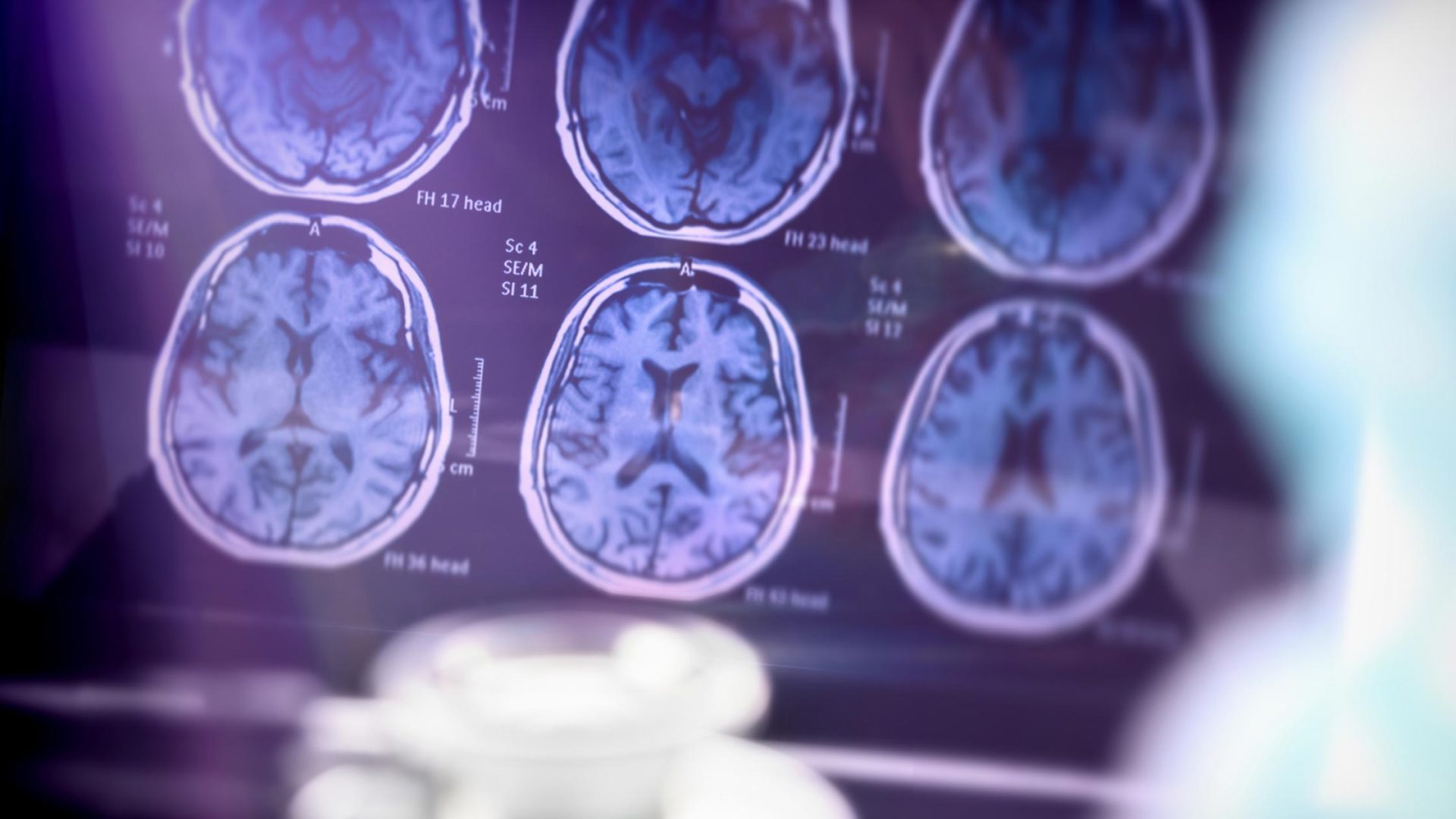
According to an article published in the science journal Nature, the Alzheimer’s research field has historically been “less than welcoming” to theories that do not center around amyloid-𝜷 and P-tau, the proteins that accumulate to form the plaques and tangles that are the hallmarks of the disease. But a new study, recently published in the medical journal BMJ Open, might make a compelling case for those who believe certain viral infections — and the inflammation they cause — could be contributing factors.
The authors of this most recent observational study concluded that herpes simplex virus type 1 (HSV-1), the most common cause of cold sores, could be implicated in the development of Alzheimer’s disease, and that consequently, antiherpetic therapies could potentially be used to protect people against developing Alzheimer’s and related dementias.
Alzheimers Link to Viral Infections
In the 1990s and 2000s, neurovirologist Ruth Itzhaki and colleagues at the University of Oxford in the UK were early proponents of the role herpes viruses might play in the development of Alzheimer’s disease, particularly HSV-1. They were the first to discover that HSV-1 DNA is present in the human brain in a high proportion of older people, and that the virus’s presence in the brain, in combination with a specific genetic factor, confers a high risk of developing Alzheimer’s disease.
In 2022, Professor Itzhaki expanded the study of viral roles in Alzheimer’s disease by investigating the varicella zoster virus (VZV), another type of herpes virus, which causes chickenpox and shingles. In this study, they found that while VZV infections wouldn’t lead to Alzheimer’s directly, it was highly likely that if they occurred in someone with latent HSV-1 (which includes approximately 2/3 of the global population) it would reactivate the virus and dramatically increase the levels of amyloid-𝜷 and P-tau. This suggested that severe shingles infections could trigger HSV-1 cells in the brain to cause damage akin to that caused by Alzheimer’s.
The Recent Study
For the study, researchers combed through an extensive database of health records of American adults from 2006-2021. Researchers then examined 344,628 “case-control” pairs, which were subjects matched in age, sex, geographical region, and number of healthcare visits, but where one subject had been diagnosed with Alzheimer’s disease and one had not.
In total, 1507 (just under 0.5%) people with Alzheimer’s disease had been diagnosed with HSV-1, compared to 823 (just under .25%) of those in the control group. While the risk of developing Alzheimer’s disease rose in tandem with age (unsurprisingly), these findings suggest that the likelihood of an HSV-1 diagnosis was 80% higher among those with Alzheimer’s disease, after adjusting for other potentially influential factors.
Furthermore, among the 2330 people with a history of HSV-1 infection, 931 (40%) used antiherpetic medication after their diagnosis, and they were 17% less likely to develop Alzheimer’s disease than those who didn’t use these treatments.
Expert Responses to the Study Are Varied
In a response to this particular study, Dr. Sheona Scales, director of research at Alzheimer’s Research UK, told Science Media Centre that while there is an increasing amount of evidence suggesting that our body’s reaction to certain viruses could put people at an increased risk of developing Alzheimer’s disease, these findings need more investigation. “Despite the large sample size, this research has limitations partly due to only using health records and administrative claims data. Most people infected with HSV-1 don’t have any symptoms so some infections might not have been recorded. Infections predating the information recorded are also not available.” Furthermore, “although cases were matched with controls, diagnosing Alzheimer’s disease, especially in the early stages, remains a challenge,” she continued.
An additional caveat is that this was an observational study, so no firm conclusions can be drawn about cause and effect. (To be fair, the researchers involved with the study aren’t pretending otherwise, stating that “the molecular mechanisms remain to be fully elucidated.”)
In a far more antagonistic response, Dr. David Vickers of the Cumming School of Medicine, University of Calgary, Canada, asserts that the pharma-funded research exaggerates the role of HSV-1, “overstat[ing] a minor infection as a ‘public health priority’ to justify unnecessary treatment.”
Other experts were more careful to hedge their responses, celebrating what this study could lead to in the future, while reassuring that it doesn’t conclusively prove that cold sores cause Alzheimer’s disease, or that antiviral drugs can prevent it. Dr. Richard Oakley, director of Research and Innovation at Alzheimer’s Society, said, “Much more research is needed to explore how viruses might be involved and before we can draw firm conclusions. It is critical we explore every avenue to understand the complex causes of the diseases which cause dementia — infections are a growing area of interest.”



.)