

Brain Trust
Ask just about any person of a certain age to name their greatest fear about growing older and many will likely say dementia. Indeed, a 2021 survey noted that 64 percent of Americans say getting dementia is their biggest anxiety around aging. The prospect of reversing dementia isn’t likely to be on most people’s radar.
This isn’t unreasonable, given the sobering statistics in America. The number of people in the U.S. with Alzheimer’s is expected to reach 8.5 million by 2030 and 11.2 million by 2040, according to the Alzheimer’s Association.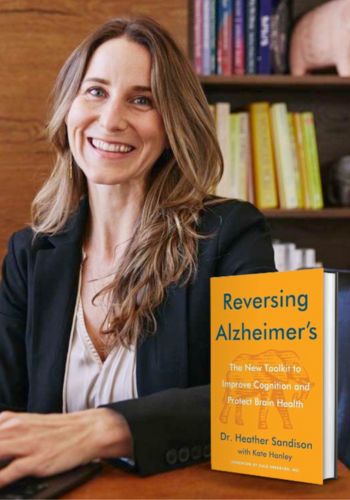
The trend, however, doesn’t have to continue, according to Dr. Heather Sandison, author of a new book called Reversing Alzheimer’s: The New Toolkit to Improve Cognition and Protect Brain Health (HarperCollins, 355 pages). Not only can people take action to help prevent future cognitive decline, but even those who already have symptoms and/or a dementia diagnosis can take steps to regain cognitive function. Alzheimer’s does not, she says, have to be a death sentence.
Sandison, a naturopath doctor who’s dedicated her career to helping those with Alzheimer’s, is the founder of Solcere Health Clinic, which focuses solely on brain health, and Marama, the first residential care facility devoted to caring for the elderly using her immersive, whole-person strategies. She is also the primary clinical investigator and author of a peer-reviewed article on how lifestyle intervention can help people with cognitive decline.
Sandison outlines her strategy for dealing with dementia in her new book, which includes a plethora of scientific information and research to support her methods. The book takes a conversational tone as Sandison breaks down the various steps required to help reverse cognitive decline. She also includes chapters to help caregivers manage their own lives, as well.
“What I add is unique,” Sandison says in a phone interview. “I’ve had a lot of experience coaching people. My approach is very practical and compassionate. And I have seen over and over again that people can measurably improve their cognitive function.”
Her 2023 study is just one example. Of 23 participants, 17 of them experienced cognitive improvements in just six months. And they did this from their homes. In other words, not all of them necessarily implemented every single detail of her protocols, she notes in the book, and the study still had a 75% success rate.
Sandison outlines six components that need to be analyzed and addressed for a brain to operate optimally:
- Toxins: These can keep your brain in defense mode and move resources away from making new neurons that can in turn damage your brain.
- Nutrients: What you eat matters to your brain health. Too many carbohydrates and sugar can damage the brain, for instance.
- Stress: Both too much and too little stress can hurt brain health. Finding a happy medium is key.
- Structure: This includes your physical makeup and your genes. If you’re not getting enough oxygen when you sleep due to the shape of your airways, for instance, your brain can suffer.
- Infections: These can redirect resources from your brain and cause damage.
- Signaling: This refers to all of the body’s chemical messengers that interact with the brain, such as estrogen and testosterone, as well as proteins. Inadequacies in any area — hello, menopause — or receiving too much of a particular messenger can hurt brain health.
Sandison then outlines in clear, precise detail how to change your lifestyle to help all of those components work more optimally. She knows humans well enough to realize that tackling all her suggestions may feel overwhelming (or even impossible if your care partner, as she calls the person with cognitive issues, is less than cooperative or has trouble understanding the changes). Each section, then, has a suggestion in bold that explains one action to take if you feel you can only take one step. In a segment about eliminating toxins, for instance, her one-step advice to reduce toxic exposure is to take your shoes off at the door and open your doors and/or windows for an hour every day. Who can’t do that? (Sandison also includes video links after many of the chapters for those who want more information or who process information more easily that way.)
The best success, of course, involves implementing Sandison’s lifestyle strategies more completely. She devotes a chapter to each of the steps, from getting organized with daily routines to incorporating exercise and more. And the chapters offer readers multiple ways to begin to implement these changes. Making change one step at a time is perfectly fine if that’s where you are.
One of Sandison’s required strategies — and she cites plenty of research to back up her plan — is to eat a ketogenic diet. Ketones, which are the fatty acids that the body creates when using fat rather than glucose, are the brain’s preferred food. Realizing that implementing a diet overhaul like this can feel overwhelming, she helpfully provides multiple recipes and a list of various foods in the different food categories needed to achieve ketosis (where your body burns fat for energy rather than glucose or sugar). Once people have achieved the results they desire — a higher cognitive score — they can ease back into incorporating the ketogenic diet periodically with their more “normal” eating patterns. The key is to continue to incorporate ketogenic eating regularly. You could eat a ketogenic diet a few days a week, for instance, or for a month at a time.
Overall, Sandison preaches connection over correction. “My experience has been that it’s not about changing someone’s mind. If we come in with that as our goal, you usually end up with conflict,” she says. “Getting curious is step one for engaging anyone if you’re trying to create behavior change.
“When you can shift that conversation day to day, you get to experience more of the joy,” she continues. “Growing old is a privilege that is denied to so many. When we can maintain that joy, that connection, that meaningful quality of life, that’s the joy of life.”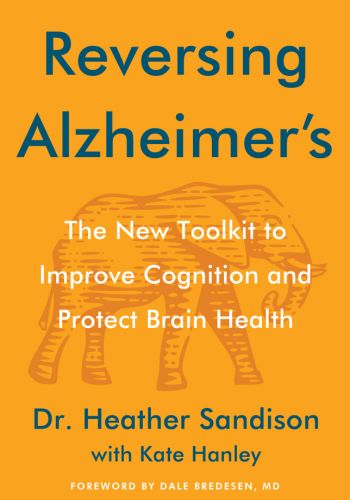
Do One Thing
Dr. Sandison’s “one step can make a difference” advice:
- If you do one thing to take better care of your brain through diet, start by eating lower-carb alternatives to the foods you eat regularly. Instead of rice, try cauliflower rice or quinoa. If candy or sweets are your thing, try a chocolate bar that uses an allulose, monk fruit or sugar alcohol instead of regular sweeteners.
- If you do one thing to reduce stress, prioritize social time. “We are social animals,” she notes in the book. “We need connection to others. It doesn’t matter if your connection is with one or two people or a large group; it only matters that you spend time relating to others.”
- If you do one thing to address infections, brush and floss twice daily, no exceptions.
- If you do one thing to support your structures, see if you have sleep apnea and then follow whatever treatments are recommended.
- If you do one thing for signaling, exercise. “The key,” Sandison writes, “is to do more than whatever you have been doing.”
Get the Book
Reversing Alzheimer’s: The New Toolkit to Improve Cognition and Protect Brain Health by Dr. Heather Sandison with Kate Hanley, published by Harper. $32.00. 384 pages.
Top image source: iStockphoto.com/Cemile Bingol.