

Returning to the Earth
As cemeteries fill up and Americans increasingly turn away from traditional caskets and cemetery plots, new options are transforming the way we approach death and burial.
The National Funeral Directors Association’s (NFDA) 2025 Consumer Awareness and Preferences survey revealed that 61.4% of respondents would be interested in exploring “green” funeral options for their potential environmental benefits, cost savings or some other reason. Up from 55.7% in 2021, this increase underscores a significant shift in consumer preferences while reflecting the broader trend of people seeking to minimize their environmental footprint.
Timothy Diamond, the general manager of the Albany Rural Cemetery, says he has seen this trend here in the Capital Region. “It’s not yet the majority, but the interest continues to grow steadily each season.”
Commensurate with this growing demand, technological innovations in processing human remains are being developed and popularized, effectively reshaping the deathcare industry. Processes like aquamation (a water-based cremation), terramation (human composting) and internment in mushroom-laced shrouds are not only far more ecologically sustainable than traditional burials (including cremation), but they’re capturing the interest of broad swaths of people.
In New York State, funeral directors and cemetery managers are navigating a rapidly changing regulatory landscape as they try to help people hoping to embrace green burial alternatives. Greg Wood of Wattengel Funeral Home, a certified green burial provider in North Tonawanda, outside Buffalo, says he is regularly hampered by legal and infrastructural limitations, adding that New York still has a long way to go on the road from innovation to implementation. “I don’t think a week goes by where we don’t get a phone call or two inquiring about green burials. We’re going to see more and more of this, because the interest is certainly out there. It’s just [that] executing it into a viable situation isn’t always possible.”
Diamond agrees that the biggest challenge is balancing requests with regulatory requirements, especially in older sections of the cemetery where the infrastructure was designed long before modern green standards existed.
Nonetheless, whether you’re intrigued by their ecological, economical or aesthetic values, opting for a green burial is an increasingly feasible option, made easier by completing some preparations in advance. Turn the page for green burial options.
Green Burials
A green burial is generally any form of burial or internment that is not harmful to the environment, compared to traditional burial methods that waste nonrenewable resources, contribute millions of tons of chemical and material pollution, and occupy arable land.
Broadly, the term refers to burying cremated remains in biodegradable urns, burying unembalmed bodies in environmentally friendly shrouds or caskets, and avoiding the use of cement vaults for housing. But as Wood pointed out, there are myriad variations available, so it is important to speak with a funeral director about whatever arrangements you prefer.
Most critically, Wood explained, New York has unique (some would say outdated) funeral laws you will have to negotiate. For example, it is one of the few states that strictly prohibits funeral homes from owning or operating cemeteries (and vice versa). This separation creates logistical hurdles; Wood often finds himself explaining to frustrated customers that while he will do everything he can to help carry out their wishes, he can only guarantee his half of the equation. “We can do our part as a funeral home, but I can’t really help you with the cemetery. It’s, unfortunately, not a one-stop shop.” So his best advice is to research which cemeteries offer green options first to ensure they can accommodate your desired arrangement.
For example, many cemeteries like Albany Rural Cemetery offer designated green burial sections where remains are interred without vaults or embalming chemicals, allowing for natural decomposition. Diamond agrees that it is much easier to honor someone’s wishes for an environmentally friendly burial in those sections, but the cemetery has worked hard to responsibly expand green options in older sections as well.
Price comparisons: In most cases, green burials are less expensive than traditional burials because they often forego vaults, embalming and ornate caskets.
Wood recently did the math, and estimates that opting for a green-certified casket and green graveside services of the kind he facilitates would cost approximately $4,000, or about half as much as a typical, traditional burial.
Diamond mentioned that a green burial lot can be slightly more expensive than a regular lot, although that doesn’t negate other savings. “As a result of not using a vault, the ground collapses a bit, causing a depression, so we must use more material and time to ensure the ground is safe and sound and aesthetically pleasing.”
Aquamation/Alkaline Hydrosis/Water Cremation
Although it goes by many names, this process is relatively simple: Heated water and potassium hydroxide work together to liquefy the body in a matter of hours, leaving only bones and sterile water behind. The bones are then pulverized — much like in regular cremation — and the remains are returned to the family.
As we’ve written about before, this process is more environmentally friendly than flame-based cremation. Aquamation doesn’t burn fossil fuels, and there are no direct emissions of greenhouse gases. According to The Green Cremation, a facility that performs aquamation in Connecticut, the process is the most environmentally friendly cremation alternative available, and the results are the same: cremated remains, with nearly 20% more ashes than you would get from traditional heat-based cremation.
Unfortunately, in many states aquamation is not yet legal for processing human remains. A bill seeking to legalize the process was introduced in New York in 2011, but was opposed by religious groups. However, as with many green burial alternatives, you have the option of making arrangements to transport your body to the nearest facility where it can be done.
Price comparisons: The cost of aquamation can vary depending on the location, the services chosen, and the availability of providers. For example, The Green Cremation offers flame-based cremations and aquamations at the same price, but our research shows that, on average, aquamation tends to be slightly more expensive than traditional cremation.
Mushroom Shrouds/Caskets
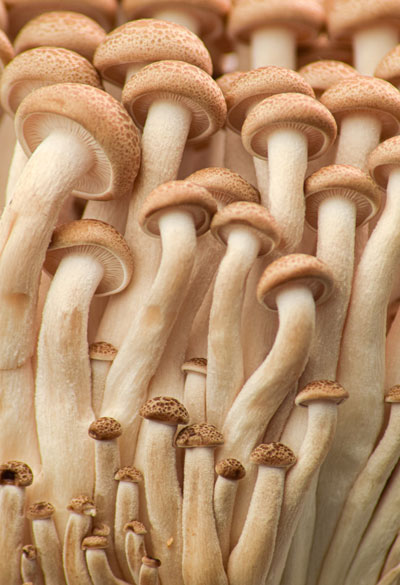
The concept of using fungi to decompose (and supposedly, detoxify) human remains is an increasingly popular one. Essentially, mushroom shrouds and caskets are made by lacing organic materials like cotton, hemp or sawdust with mycelium, or mushroom spores. Once buried, the mycelium reactivates in the presence of moisture and microorganisms in the soil, decomposing the body and releasing beneficial enzymes back into the ground.
Wood says that mushroom products were all the rage at the last New York State Funeral Directors Association New York State Funeral Directors Association (NYSFDA) Convention held in Saratoga Springs in August, and he frequently gets requests from people who wish to use mushroom burial products. While their hearts are in the right place, Wood says there are currently some logistical drawbacks to this method and that biodegradable caskets, made from softwood, wicker or cardboard are a more cost-effective option.
Price comparisons: Even though mushroom shrouds and caskets are natural, they are not inexpensive. The mushroom burial suits and shrouds made by Coeio cost $1,500, and as Wood explains, with shipping and other costs associated, they’re more expensive than other green options.
Terramation/Human Composting
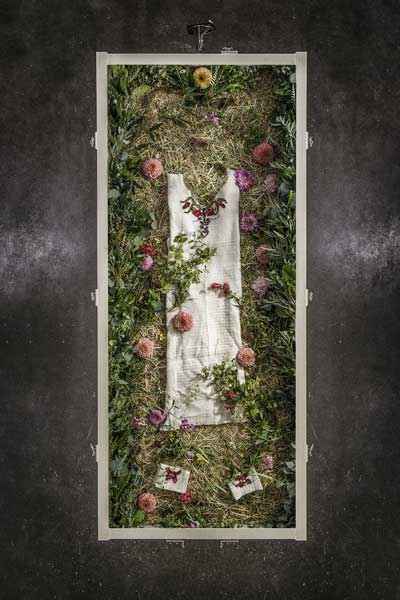
Terramation is a form of human composting similar to traditional composting, which involves decomposing organic materials through the use of microorganisms in a controlled environment. In the case of human composting, or “natural organic reduction,” a body is placed in a specially designed vessel along with wood chips, alfalfa and straw. The vessel is then sealed and placed in a temperature-controlled space, where it is supplied with oxygen. Over the course of several months, the microorganisms break down the organic matter, including the bones, until all that remains is nutrient-rich soil.
Human composting was legalized in New York in 2022, but we still have a long way to go before it’s actually available in the state. The way the current law is written, cemeteries would need to invest in the infrastructure needed to support human composting — essentially a large warehouse — and currently, no cemetery has petitioned the state to build such a facility.
Price comparisons: Unfortunately, until the practice is more commonplace, human composting is quite expensive. Return Home, a provider located in Washington state, has an out-of-state package that costs $5,425 for basic services and an estimated $2,500 or more for the transfer of remains to their facility. Recompose, another Washington-based composting provider, charges $7,000 plus transportation costs.