

Innovative grant program shows what NY’s housing future could look like
Christina Hill never planned on actually building a house in her backyard. But when her 76-year-old mother, who has dementia and needs round-the-clock care, could no longer live on her own, Hill saw an opportunity — and a challenge — to bring her mom home without losing her own space.
“I always envisioned a little house in the yard,” said Hill, 54, a Port Ewen homeowner. “I just didn’t know the opportunity would literally fall into my lap.”
That opportunity came in the form of New York’s Plus One ADU program, a fairly new state-funded initiative that offers grants to low- and middle-income homeowners to build small accessory dwelling units (ADUs), sometimes called granny flats, in-law apartments or backyard cottages. With the help of RUPCO, a community housing nonprofit, Christina applied in July 2023. After months of planning board hurdles and red tape — and a lot of determination — she became the first person in Ulster County to break ground under the program.
“I don’t let the grass grow under my feet,” she said. “If I hadn’t kept moving, it could’ve turned into a much longer process.” It took roughly two years from application to occupancy, said Hill.
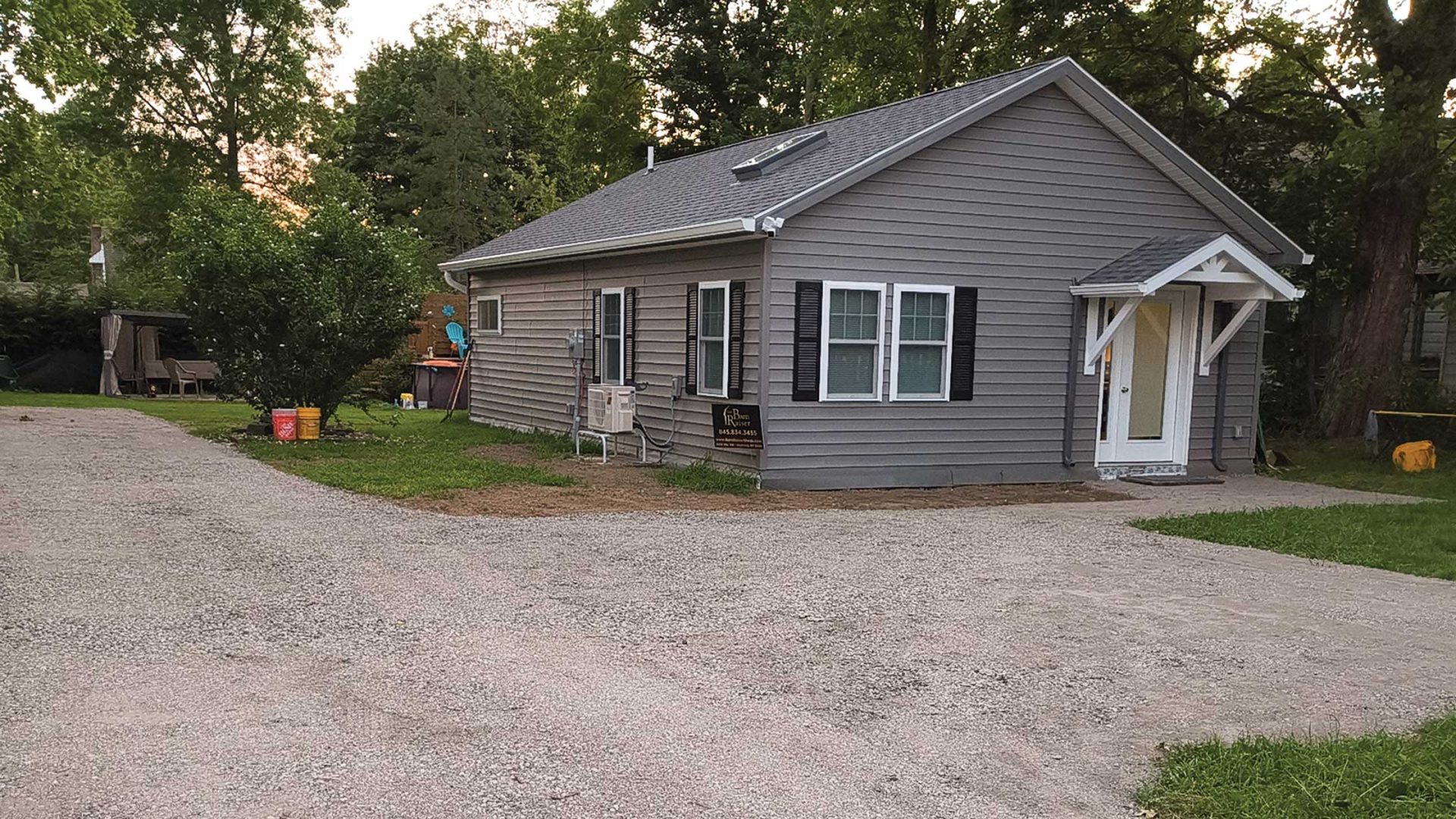
Her ADU is a beautifully customized, 22-by-34-foot detached house just across the driveway from her own home. It features a kitchen and bath, 14-foot ceilings, pocket and barn doors, skylights and a loft for storage. Hill acted as her own general contractor, working with Amish builders to install a fully finished shell, and handling much of the interior work herself.
“I’ve never built a house before and I was my own GC so I had to be in charge of electrical, plumbing, permits, insurance, it was a lot,” Hill said. “I didn’t realize how much juggling there was going to be, but the deeper I got into it, the more committed I was.”
Hill recalled the toll the process took and the relief she felt when it was over. “I remember the moment that I finished decorating, finished putting her stuff out, and I just said, ‘Thank you, God,’ and I cried. I can’t describe the feeling, like I had come through such a feat,” Hill said. “I felt so vulnerable but the gratitude from deep inside, like, ‘We’re here, we made it. I can’t believe we’re here.’ Then we got her moved in. We put her in her wheelchair so she could hang out in the kitchen with me while I was cooking and she could look around and see her things. She’s very happy and it makes me very happy.”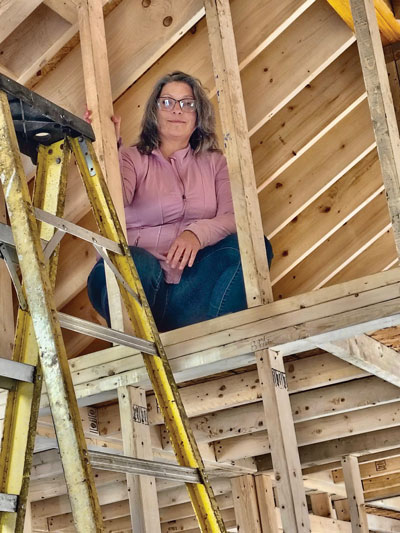
Hill’s project cost just under $200,000, with the Plus One grant from RUPCO covering $112,500. Hill used home equity, savings and credit cards to pay the rest. “They wanted proof I could finish it,” she said. “It’s important for anyone considering this to know — you really have to plan how to fund the whole thing.”
As New York’s aging population grows and its housing crisis deepens, ADUs have the potential to reshape the way we think about senior living, multigenerational households and affordable housing, said Dina Levy, the senior vice president at New York State Homes and Community Renewal (HCR), which administers the Plus One program.
“Like all places, New York state has struggled with the cost of housing and the cost to homeowners of maintaining that housing,” said Levy. “Not only on the production side, like building new homes, but on the costs associated with homeownership, like rising taxes, utilities, maintenance. It’s getting harder to keep up with the costs, leading to people being house rich but cash poor.”
Approved as part of New York’s 2022-23 budget, the five-year Plus One program set aside $85 million to support local efforts to expand housing. It provides income-eligible homeowners with up to $125,000 in funding to build a standalone ADU, like Hill’s backyard cottage; to convert a basement, garage or attic; or to bring an existing ADU up to code.
Across the Capital Region and beyond, a number of municipalities — dozens of them so far — have opted in to the voluntary program. In cities like Albany, where a shortage of affordable senior housing has reached crisis levels, the question is no longer if ADUs are needed — but whether they could be the solution as boomers age, the housing supply dwindles and taxes and home maintenance costs soar, said Levy.
“We’re very mindful of the many reasons a homeowner might want to build an ADU, “ said Levy. “I think the goal is really to help New Yorkers stay in their homes — whether that’s older adults looking to age in place, families making room for relatives or a caregiver, or homeowners who could use a little extra income to keep up with rising property taxes. An ADU can make a big difference.”
Once a homeowner’s Plus One application is submitted, the community-based housing organization can help walk them through the various phases — designing, hiring contractors, funding, local zoning and more.
“The lack of affordable housing opportunities impacts every community across the state,” Gov. Kathy Hochul said in announcing the nearly $60 million that had been awarded through the program as of May 2024. “The ADU Plus One program creates more affordable housing options for New Yorkers while also helping property owners.”
In two years, the program has grown to include 85 participating cities and towns, and has been through three rounds of funding, nearly depleting the initial $85 million allocation and providing funding for some 450 ADUs, Levy said. A fourth round of funding is expected before the end of the year. “It was envisioned to be a five-year program run and we have committed almost all of the funding,” she added. “So the goal will be, let’s do it again, let’s continue the program.”
Lydia Lee, author of The Well-Designed Accessory Dwelling Unit: Fitting Great Architecture Into Small Spaces (Schiffer Publishing, 2024), notes that as housing shortages grow, policymakers are easing restrictions to allow more building — including in backyards and garages. “ADUs allow homeowners to maximize the value of their existing property and have more options,” she says. “For instance, you could build an ADU and get rental income from it, then move into it later on when you want to downsize but still stay in the community where all your social investments are.”
For Hill, the Port Ewen homeowner, the outcome was worth every hour and every dollar. “I just wanted Mom next to me, but in a better circumstance than living in my living room,” said Hill, who still has two teenagers at home. “My kids go over every day and spend time with her; it’s the best quality of life I could’ve given her. I go over in my pajamas. I do overnights with her. She’s happy. So much happier.”
And it’s not just for today — it’s part of Hill’s own future. “Just having that extra space creates such a world of opportunities to secure my future as a senior,” she said. “First my mom, then me. I now have an aging plan in place for myself, too.”
Federal Bill Could Boost Backyard Housing
A bipartisan bill introduced in July in Congress could make it easier for New Yorkers to finance backyard housing. The SUPPLY Act (H.R. 4568), introduced by U.S. Rep. Andrew Garbarino (R-NY) and U.S. Rep. Sam Liccardo (D-CA), would allow the federal government to insure second mortgages for homeowners building ADUs.
Garbarino, who represents parts of Suffolk and Nassau counties, said in a press release that the bill would help families “build in-law suites, convert garages and add housing” while boosting local economies. While New York’s Plus One ADU program for low- to moderate-income households is expanding access, many homeowners still struggle to finance ADUs. The SUPPLY Act aims to remove that barrier.
The bill has early support from national housing and finance groups including the National Association of Home Builders and the Mortgage Bankers Association.
Want to Build an ADU?
Step 1: Make sure you’re eligible
- You must own and live in the property.
- Your household income must fall below the program’s income limits and you must show that the ADU wouldn’t be possible without the grant. Look up the income limits here.
- If the ADU project will cost more than $125,000, you must be open to securing additional financing.
Step 2: Confirm your property qualifies
- Property must be in a zoning district that allows ADUs; check the list.
- It must be free of zoning violations and meet local building and setback requirements.
Step 3: Prepare a “shovel-ready” project
- Begin or complete local permitting steps with your town or city planning office.
- Gather supporting documents like site plans, architectural drawings, builder estimates, financing preapproval (if needed) and quotes for site prep and construction.
Step 4: Gather required documentation. You’ll need:
- Proof of income, paid property tax bills, bank and mortgage statements, deed, homeowner’s insurance and public assistance documentation (if applicable).
Step 5: Apply through your local housing partner
- Find them here.
Read More:




 shows what NY’s housing future could look like.)