

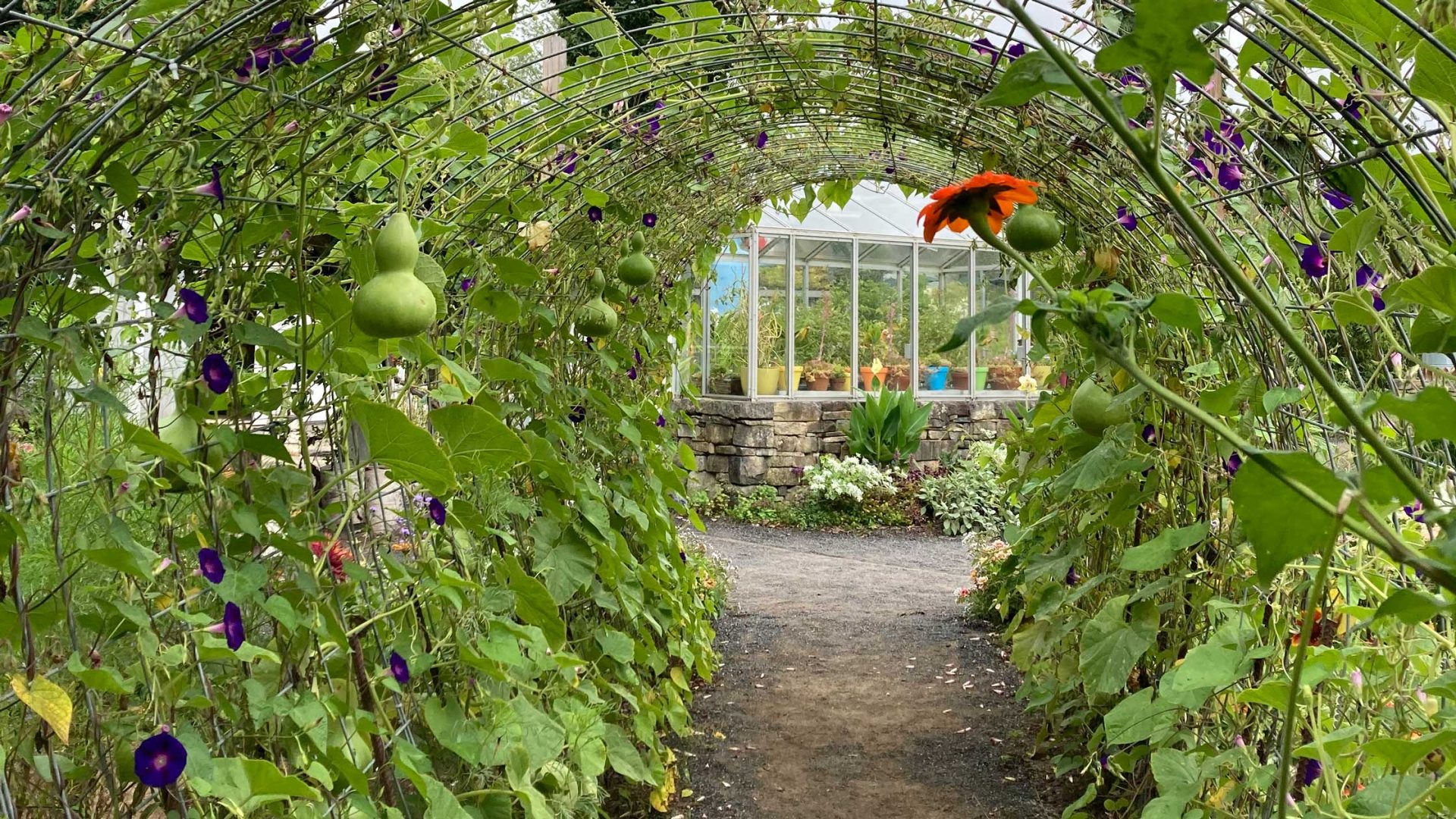
Last summer, our modest vegetable garden grew straight up instead of sprawling across the ground — a happy accident rather than a master plan. After moving into a new house, more urgent projects pushed the garden to the bottom of the “to-do” list.
As the season progressed, our unintentional experiment revealed multiple advantages, inspiring us to be more intentional about vertical gardening this coming season.
If you have limited space outdoors or are looking to add intriguing visual elements to your indoor planting areas, these tips can help you plan a productive and eye-catching living wall for the upcoming season.
What is vertical gardening?
Vertical gardening is exactly what it sounds like — encouraging plants to grow up rather than out. This technique is popular among homes and businesses with limited space, as it allows for the efficient cultivation of vegetables and herbs, increasing food production in less space.
Growing plants vertically means less kneeling or bending when it’s time to harvest. Plus, keeping leaves and fruit off the ground helps prevent mildew and rot, so your plants stay healthier.
Living walls add texture, shape and whimsy to your space, according to Stephanie Stewart, a Rensselaer County master gardener for Cornell Cooperative Extension. Ornamental plants, ferns, succulents, ivies and herbs can all be grown vertically, she says, whether indoors or out.
Vertical gardening “gives you a better backdrop,” agreed Jeremy DeLisle, sales/marketing and lawn care division manager at Grasshopper Gardens, a landscape maintenance and installation company based in Gansevoort. “Living walls can also add texture to areas that might otherwise be overlooked and provide privacy. It also helps with noise reduction, which is always great in city environments or [for] those in high noise areas.”
Plant selection
Choosing the right plants for a vertical garden or living wall is essential. On the vegetable side, tomatoes, sweet peas, cucumbers and pole beans offer easy entry into vertical gardening. But vertical gardening also provides opportunities to be creative.
Recalling a recent tour of the Coastal Maine Botanical Garden, Stewart said, “They had a children’s garden with a huge arch with melons growing on it. As you walked through, you could see little melons hanging down.”
Stewart noted that it’s important to consider how plants interact and to ensure the leaves from one plant aren’t casting too much shade on another.
“You have to be careful about what plants you put with others,” she said. “Basil and tomatoes are great. Squash and tomatoes can work too, but cabbage and tomatoes don’t grow as well together.”
On the ornamental side, considering plant varieties helps ensure success.
“Most of the perennials that we use around here, as long as it’s in the right environment — shade, sun, partial shade, soil and nutrients — are going to work well in those vertical gardens,” DeLisle said.
Other factors to consider include how tall and wide a plant will grow, as well as its requirements for shade and sun.
Vertical garden ideas

Designing a vertical garden can tap into your creative side. You can start with simple tomato cages, arches and trellises available at big-box stores or garden supply centers. You can use a fence you already have on the property or build your own vertical planters.
“You can use fallen branches, different lengths of bamboo, willow and birch,” Stewart said. “At some gardens, I’ve seen people create a little tepee for plants to grow on and make a little reading area.”
The possibilities are endless. For example, you can convert old pallets into herb planters and hang pots on trellises and walls. Block walls or decorative walls at home or at a business can be constructed to include plants.
One great local example can be seen at Lucas Confectionery wine bar in Troy. When owner Vic Christopher renovated the space in 2013, he had contractors build planters right into a wooden accent wall. Pothos, a trailing vine with heart-shaped leaves, was planted there — and it’s still thriving today.
“People love it,” he said of his living wall garden. “They like being around the greenery and the sense of fresh air.”
Maintenance considerations
Consistent watering, seasonal pruning and the right nutrients help your vertical garden grow throughout the season or year-round, depending on where you’ve planted it. Plants installed in living walls, pots or containers need extra TLC to thrive, especially if they’re designed for more than one season.
“You’ll need to keep up with watering, nutrients, seasonal pruning and occasionally replanting after several years,” DeLisle said.
When contractors installed Christopher’s living wall, they included an irrigation system. He runs the irrigation system once or twice a week to keep the plants hydrated.
“The same plants are still alive 12 years later,” he said.
Vertical gardening makes it easy to make every inch of growing space count, whether for vegetables, décor or a combination of both. Start small, experiment and let your creativity run wild.