
Castles, snow, candlelight, snow, crepes, snow, Christmas markets, snow…
Cold hands, warm heart: That’s what I expected when we headed north last December to Quebec City.
I was half right. Warmth spills from shops, restaurants and the wooden booths of the city’s Christmas market, which takes over plazas and parks throughout the historic district. Warmth is served by the plateful — crepes and poutine, and by the shot — whisky and maple syrup. Warmth radiates from the welcomes of shopkeepers and artisans.
If you’re tempted, start making plans now — the Christmas markets here are so beloved that hotels fill quickly once the holiday season nears.
But even with all that warmth, you must prepare for the cold. We arrived by car to a 10-degree afternoon that sank to a bone-chilling zero by the time we ventured into the market in the famed historic district. Always worried about protecting my arthritic hands from winter chills, I pulled on my cashmere-lined leather gloves moments before we stepped out onto a freshly cleared sidewalk to plunge into the swirl of merriment.
After three blocks, it was clear that my gloves weren’t up to the job. Despite gas-fueled warming pillars and tropical gusts from opening shop doors (that immediately shattered into glittery fog), the cold numbed my fingertips.
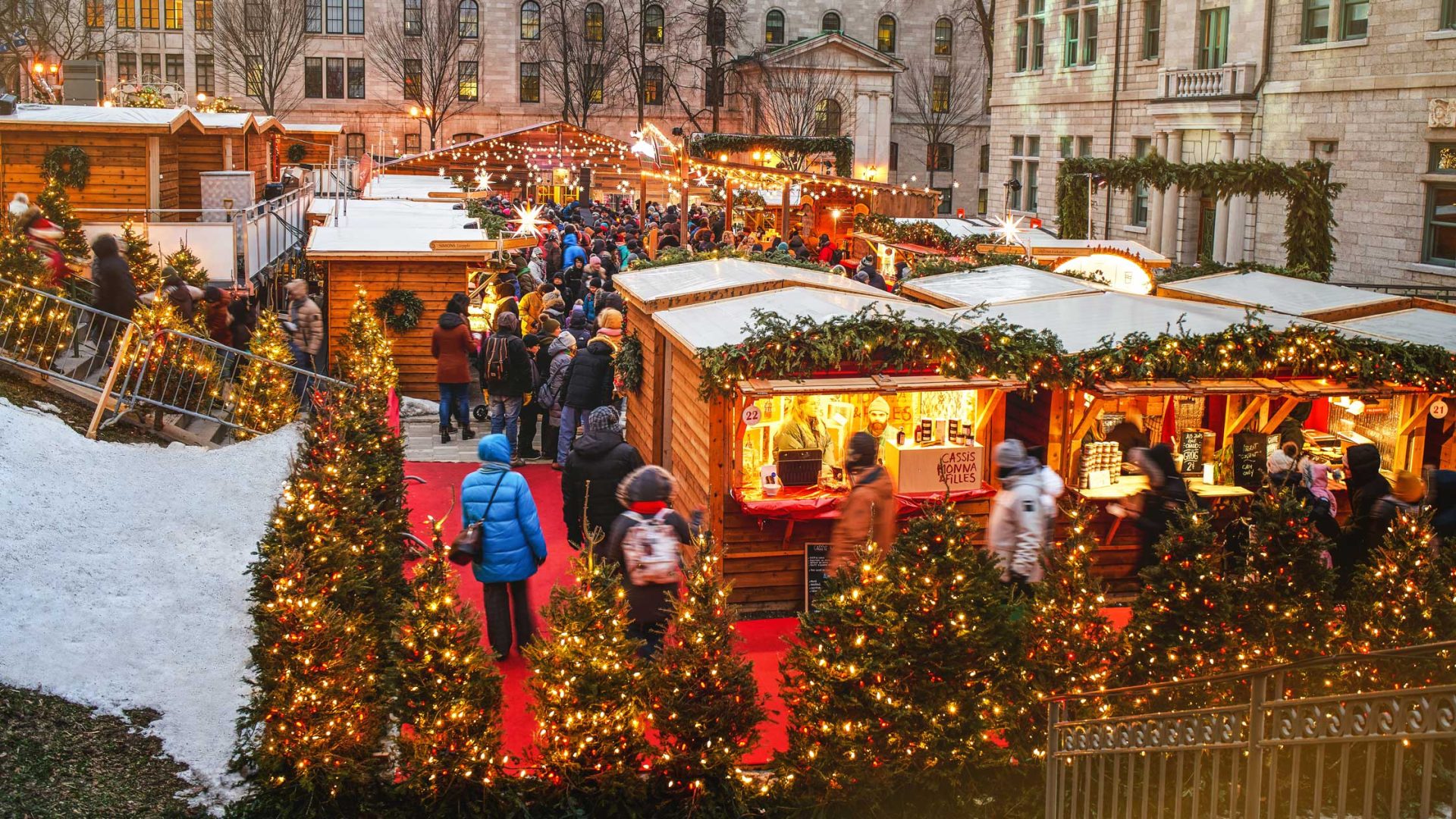
Remedy was immediate. My husband and I ducked into a shop with windows that overspilled with thick leather mittens, scarves and hats. Ten minutes later, we were back in the candlelit cold, following the crowds to the nearest Christmas market. Nested in fur, my hands emerged only to hand a credit card to a merchant for smoked maple syrup; a miniature pottery storybook house, glazed white; sugared almonds. Despite the cold — or because of it? — crowds milled around an outdoor stage, where carolers belted out classics. Under strings of starry lights, kids explored the secrets that lay behind the platter-sized doors of a huge wooden Advent calendar.
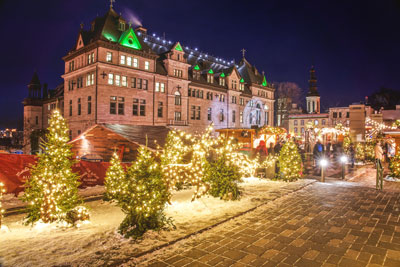
There’s no bad time to visit Quebec City. I’d know: In 1980, my husband and I honeymooned there, and nearly 10 years ago, we rendezvoused there with longtime friends in July. Visiting in winter for the first time, I found that it’s in the crystalline cold that Quebec City sparkles, day and night. The historic district is in its glory, with the outdoor Christmas market transforming streets and plazas through fairy-tale pop-up booths, hot cider and wine vendors, musical performances and skating rinks. And this sprawling city offers adjacent year-round experiences that add variety and warmth: the regional art museum, which regularly features Inuit and Indigenous art, and a modern version of the classic Scandinavian spa, with massive pools of hot water sending spirals of steam to mist views of the river.
Christkindlmarkets
As an aficionado of Christkindlmarkets, I was curious to see how Quebec City made the medieval German tradition its own. While the Quebec City market has the most nearly authentic European setting in North America, hands down, it also reflects Canadian and Quebec culture.
When Quebec City was founded in 1608, the annual Christkindlmarket in Nuremberg, Germany, had been ongoing for 78 years. Founding a tradition that was soon adopted in France, Switzerland, Italy and, more recently, in Baltic and Scandinavian countries, the northern European Christkindlmarket makes a virtue of cold weather, opening the holidays with pop-up villages of wooden booths run by local artisans, bakers, candymakers and purveyors of holiday gifts and goodies. Over the years, the markets have become full-fledged festivals, with live music and performances that warm the day and light up the evening.
The Christkindlmarket jumped the pond in 1996 when the German American Chamber of Commerce opened its first market in downtown Chicago. Now, Christkindlmarkets are a holiday mainstay across North America.
Modeled after the multisite market in Munster, Germany, the Quebec City market laces through five plazas throughout the historic district. In 2024, the Quebec City market did not feature some of the most cherished elements of European markets: Notably absent were chandeliers of gingerbread cookies, booths drooping with glass and wooden ornaments, and a tree-house-sized pyramid — a carousel of figurines twirling in an endless story. Instead, the Quebec City market adapted the concept to its own culture, heritage and goods. Here, you’ll find everything maple, from smoked syrup to sugar candy; outdoor gear of fur, leather and wool; toys and kitchenware made by local artisans.
The setting is picture-perfect. Stone townhouses march up the hill the city occupies, crowded by the famed Château Frontenac with its flag-topped turrets. From the foot of the chateau, you can take the funicular — an outdoor elevator that offers a sweeping view of the St. Lawrence as it gently glides down to the riverfront shopping district, with art galleries, boutiques, and more restaurants and bars.
Whether you stay on the outskirts or at a small hotel in the heart of the historic district, start by just walking the market. Small plazas dot the district, and streets lined with small hotels, restaurants and boutiques offer home goods, Canadian-made clothes, food, books and maple everything.
Allow at least three nights to explore the historic district by day, when year-round shops are open, and by night, when the air snaps with cinnamon and the warm mulled wine neutralizes the chill.
Plan your visit
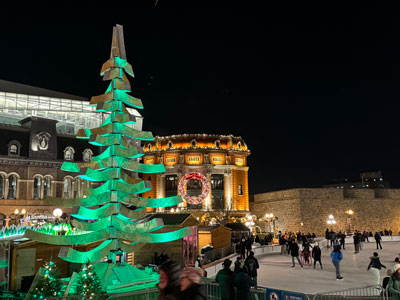
This year, the Quebec City German Christmas market opens on November 20 and runs through December 23. Hours vary, so be sure to confirm that the market will be open when you plan to visit. Because the market threads through Old Quebec’s streets and plazas, it’s smart to review its map in advance.
The Quebec City Downtown Marriott, at 850 Rue D’Youville, is perfectly positioned for a foray into the markets, churches and museums of the historic district, while affording easy self-drive or ride-share access to sites in the modern neighborhoods. It overlooks both the Village Alpin Desjardins outpost of the market, at Place D’Youville, and the city gate marking Rue Saint Jean, one of the main streets through the historic district.
Small hotels dot Old Quebec, opening directly to the markets. For instance, Hôtel Sainte-Anne, at 32 Rue Sainte-Anne, and its neighbor, the Auberge du Trésor, at 20 Rue Sainte-Anne, plant you in the heart of the action.
However, navigating a car through the narrow, crowded streets will be a major headache. If you choose a historic district hotel at this time of year, expect to walk for the duration of your stay.
The famously ornate Fairmont Le Chateau Frontenac, at 1 Rue des Carrières, crowns the city, with prices to match. Tourists often expect to stroll its internal mall and take in the parade of Christmas trees, but during the high season, access may be limited only to hotel guests and those with dining reservations. The hotel’s iconic afternoon tea is held in a sweeping dining room with an unmatched view of the St. Lawrence River. Allow at least two hours for the tea ritual, starting with savory sandwiches and working your way to fruit-capped pastries.
Fortify yourself with two of Quebec’s appropriately caloric dishes: poutine and crepes.
Head to La Buche at 9 Rue Saint-Louis for a maple whisky poutine in a rustic atmosphere. And Casse-Crêpe Breton, at 1136 Rue Saint-Jean, is open all day serving hot drinks and all manner of crepes, from brunch to dessert.
Successful trip tips
I found the offerings of holiday décor and ornaments scant at the Christmas market, but the Boutique de Noël made up for it. This year-round shop at 47 Rue de Buade dazzles with German wooden ornaments, shimmering glass ornaments and all kinds of specialty ornaments. If you yearn to commemorate winter in Quebec with a decorative moose, this is your place.
Take a break from the crowds at the Strøm Nordic Spa, a Scandinavian-style spa about a 10-minute ride from Old Quebec. Sink into the perfectly hot water in pools perched on a bluff and watch the steam spiral into the blue sky over the St. Lawrence River below. Once you’re pink, shrug into your robe and trot to a cold plunge (if the air alone isn’t enough). Cycling among saunas, spas and oversized lounges in front of wood fires, you’ll spend the day in a quiet haze of deep relaxation.
For a cultural immersion of a different sort, spend half a day at the Musée National des Beaux-Arts du Quebec, the premier art museum in the province. Of note, the museum offers special exhibits and permanent collections that give visual voice to the experience and aesthetic of Indigenous Canadians, both traditional and modern.
Cobblestones and ice sound like a treacherous combination, but the city is meticulous about removing snow and salting sidewalks. Still, you’ll want to wear sturdy boots and wool socks for steady footing and hours outside in slow-moving crowds.
For information about year-round Quebec City sites, events, lodgings, restaurants and amenities, visit the website of the city’s visitors’ bureau, Quebec-cite.com.