
Life-changing magic and miracles
Sometimes a walk is just that — a way to get from one place to another. And sometimes a walk is a miracle, an experience from which the walker begins as one person and ends as someone entirely changed. The Camino de Santiago de Compostela, also known as the Way of St. James, is the latter.
That miracles happen regularly along the paths that comprise the Camino shouldn’t come as that much of a surprise. After all, the Way of St. James, which has been around for at least 1,000 years, started as a religious pilgrimage for Christians seeking to reduce their time in purgatory and atone for their sins. The Camino ends at a cathedral in Santiago de Compostela, Spain, where, according to legend, the body of the apostle St. James is buried, and there are seven main routes plus a vast network of paths throughout Europe all leading to the cathedral. Churches dot the landscape along the way for pilgrims, as Camino walkers are called, to stop along the way to pray.
But the Camino has increasingly become a road to secular understanding, and as such has grown in popularity in recent decades in particular. In 2023, 446,000 people walked one of the Camino options, according to American Pilgrims on the Camino, a nonprofit that supports the Camino and provides information for pilgrims. The majority of those are Spaniards, with Americans making up the second largest group.
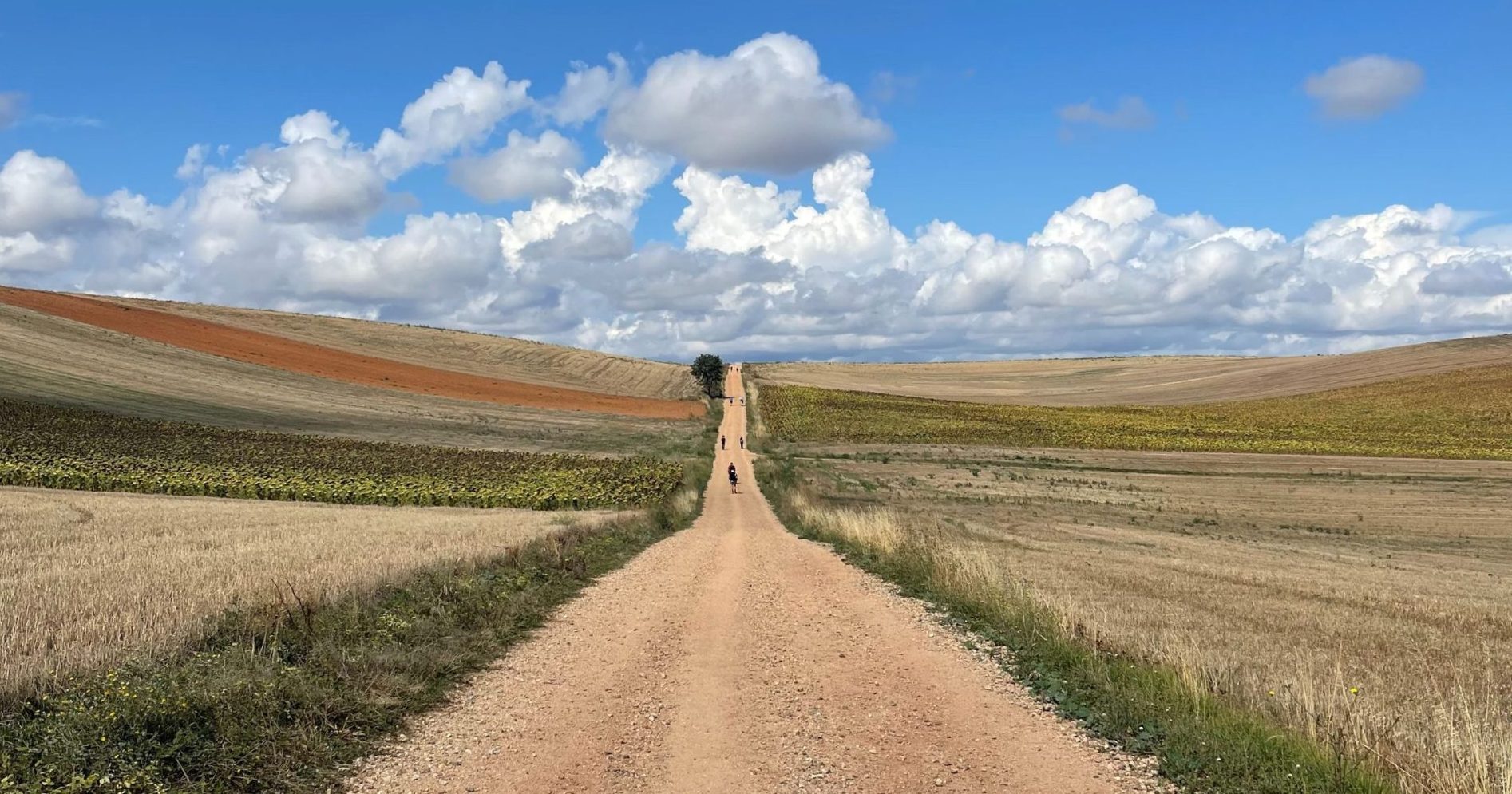
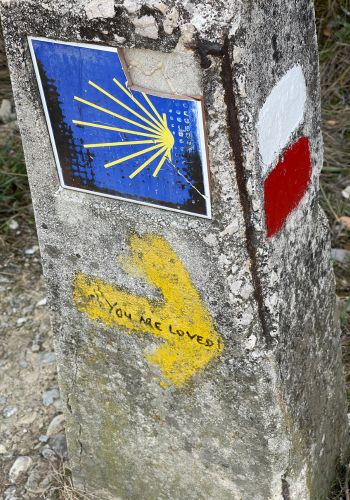
The Camino itself is a simple idea. Each day pilgrims get up and walk anywhere from an average of 12 to 15 miles, following the signs marked with the Camino signature “shell.” At each town, they can stay in hotels or albergues, the simple hostels designated specifically for pilgrims. Each pilgrim registers at the beginning of the Camino and is given a passport that is stamped with the shell insignia at each town along the path. When the pilgrim reaches Compostela, they show the passport and are given an official certificate indicating they have completed the journey. People can travel solo and plan their own trip or use one of the many travel groups that have arisen as the Camino has become ever more popular.
Deciding which route and how to plan and train is as varied as the people who walk the Camino at any given time. To give 55+ Life readers a sense of how a trip might go and the miracles it can work, we talked to three Capital Region people who have done the Camino multiple times.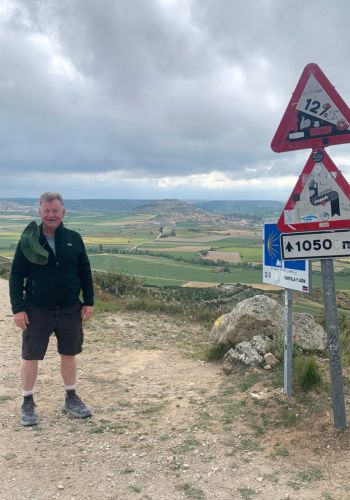
Patrick DeVaney
Age 67, Cohoes
Patrick DeVaney, a real estate agent with McCurdy Real Estate Group, was 57 when he walked his first Camino. He originally stumbled upon a website about the Camino while looking for vacation ideas for his family. “I was ready to start that day,” he says. “I loved everything I read about it, including the spiritual connection with the history.” Then reality set in — kids, mortgage, etc. — and he put the dream aside.
Fast forward eight years. “Business was going well, but negative things started coming to the surface in my life. Family members dying, friends dying,” DeVaney says. He and his wife were empty nesters at this point. He was watching a TV show where a baby died and he remembers suddenly flashing back to a night when the police station where he then worked got a call about a baby dying in her crib. “That scene came back to me like it just happened that day,” he says. “I was so upset, so emotional, I couldn’t even breathe.”
He says he recovered from that moment, but then in 2013, after a nephew had been wounded in Afghanistan, he realized he needed to do the Camino ASAP. His wife and boss were both on board, urging DeVaney to do the whole walk rather than just a portion of it.
DeVaney’s first Camino was the French Way. “That first day is a walk up in the Pyrenees. Two hours into it and it was tough, but it was a cool day and the sun was shining. The views were incredible,” he says. “I remember being several hours into this hike, my shirt was soaked, and knowing this is what I came here for. This is the answer, what I was looking for. Almost every day a miracle happened, between the people I met, the places I visited, the stories I heard from people.” 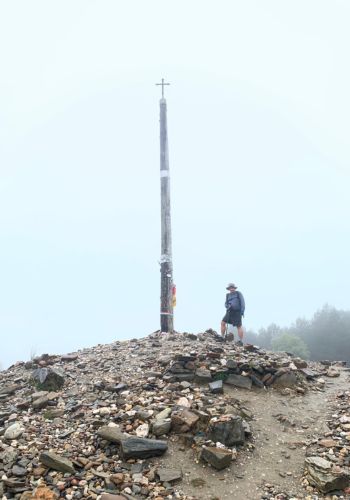
DeVaney recalls one such moment while at Cruz de Ferro, or Iron Cross. Located at the highest point on the French Way between the towns of Manjarin and Foncebadón, the Iron Cross features a mound of pebbles and stones from the multitude of pilgrims who have brought and left a stone behind during their pilgrimage. The idea is that when you leave a stone, you are leaving behind or letting go of your pain, your worries, your concerns. Some pick up a stone along their pilgrimage to place there. Others bring them from home.
“I had my stone from our church that had closed. I went up to it and dropped my stone and read my prayer to myself,” DeVaney says. “When I was approaching the monument, I met a woman from Denmark. I told her I was excited about getting there that day. She said she didn’t believe any of that. She was just here for exercise. I dropped my stone and then went off to the chapel and hung out there for a bit. When it was time to leave, I noticed her standing there. She had tears streaming down her face.
“I went on for the next two hours in a fog. I could see people, but I was not paying attention. I realized all those problems and those negative things in my life I put into that stone and I realized that it really did work. I felt from that day forward, I felt I had solved that mystery. I reset my whole life. From that point on I walked in peace. In my mind I had reinvented my life.”
All told, DeVaney took about 35 days, resting one day a week, to walk the French Way that first time. After returning home, he wrote a book about his experience called Two Million Steps: Band-Aids, Cocktails and Finding Peace Along Spain’s Camino de Santiago. (That’s a million steps to train for seven months and a million on the trail.)
Now 67, DeVaney has done seven more Caminos since that first trip, six of them with his wife. And he has two more planned for 2025, assuming his hip cooperates, and plans to write another book about his experiences.
DeVaney’s Camino Tips
- Train. “When you get to this age range it’s so critical.”
- Get the right footwear and break them in. “I’ve seen people show up with brand new boots. By the third or fourth day the blisters are so bad they have to end the trip.”
- Talk to people, even if it’s outside your comfort zone. “The first one I did by myself. I was able to capture the spirituality and focus on religion by doing it by myself. I stepped outside my box and started talking with people. I’m glad I did it that way.
Susan Nichols
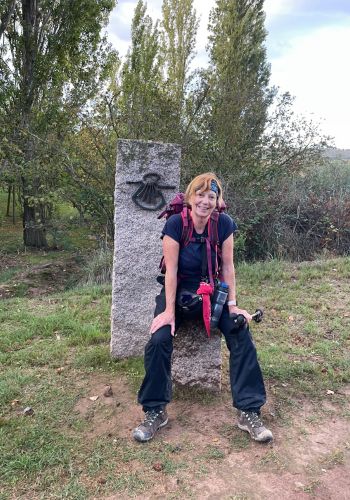
Age 73, Lake George
Susan Nichols was 49 when her husband died after a bout with cancer. She was reading all kinds of books to help her through her grief, including one that actress Shirley MacLaine had written about walking the Camino at age 60 called The Camino: A Journey of the Spirit.
Nichols remembered being intrigued, but she had children to support and had to go back to work. About 20 years later, she was sitting in her office when a postcard arrived noting an upcoming talk about the Camino. “That is something I always wanted to do, but my family would have thought I was nuts because I was grieving,” she says. “I went to the talk and the seed was replanted. I went home and thought about it and thought about it.”
Ultimately Nichols reached out to the speaker, who mentored her about how to plan for the trip. “I didn’t tell my family,” she says. “I booked the flight and went into my boss’s office and said, ‘I think I have to retire now. There’s something I want to do.’” She was 67 at the time. Instead, he gave her a leave of absence.
“I had no clue what I was doing,” she says. “I didn’t know there were Facebook (groups). I just got there and said, ‘I’m OK. I’m going to figure this out.’”
Since then, Nichols, now 73, has done three more Caminos, the last one starting in Lourdes (a path known as the Camino Piemont). “It was my most empowering Camino,” she says. “It’s a little less written about so I was trying to figure out the route. I got lost more. I did 925 kilometers (575 miles) in that one.
“Magic does seem to happen on the Camino,” she says. “Maybe it’s because we slow our life down to a step and you notice things you might not notice in your everyday busy world. I think my husband showed up. I think he guided me. I was all alone in Galicia. I didn’t have a bed. It was dark and he guided me to the perfect place that I didn’t know about. It took me right through eucalyptus trees, and there was a bed and a lady who cooked me dinner.
“It’s not just a big, long walk. It’s the Camino. It brings you back. It’s so hard to talk about when you come back. You don’t want to talk about anything else and yet someone asks you and you’re like, ‘I don’t know.’ It’s all in a moment. It’s so hard to voice. You find yourself. It’s just magical. After every one I say I’m done. I had never been so wet in my life after the Portuguese Camino, but now I keep wondering if I can physically manage another one. I’m thinking maybe next fall. For my 74th birthday, I would like to try another if I can.”
Nichols’ Camino Tips
- Book your flight early and at least the first four nights of lodging, especially if you want to walk during the busiest summer months of July and August.
- Be brave. Be open to meeting other people. “You can learn a lot from other people.”
Kim Bach
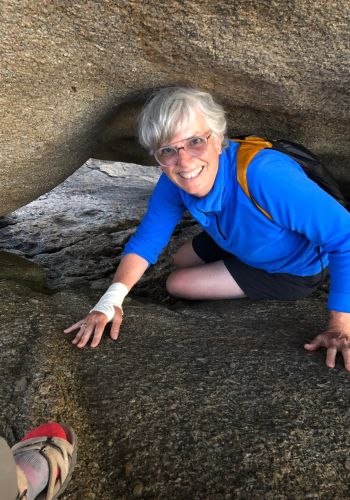
Age 71, Hudson
Like many pilgrims, Kim Bach, who owns Verdigris Tea in Hudson, was inspired after seeing the movie The Way, a 2010 film about the Camino starring Martin Sheen. “I had seen it a few years before and thought, ‘I really want to do that,’” she says. As she approached her 64th birthday, Bach thought doing the French Way could be the perfect way to celebrate.
“I had a friend drive me to Penn Station,” she says. “The minute I was out of the car I thought, ‘What am I doing? I can’t do this.’ When I started walking, though, I thought, ‘What was I afraid of?’
“The first day was a hard day. Every step I took, every mile or so, someone was divesting themselves of stuff. They were not prepared,” Bach says. In contrast, she had the right shoes and clothes. She also had decided to divide that first Camino into sections. She did the first half in the fall and then returned the following spring to walk the second half. “Literally from the footsteps of where I stopped, I started again.”
And Bach, like many pilgrims, has kept going back. She has done the English Way and the Portuguese Way. Then last May, she did the Primitive Way, the oldest pilgrimage route, with her 19-year-old grandson.
“For me, it’s the miracles that keep happening along the way” that keep her coming back. “Twice I got lost. The path is pretty well marked but two times I found myself in the middle of a vineyard and I had no clue which direction to go. Both times, music took me back to the path. I heard guitar music and kept following it, and an old farmer was playing a guitar and his partner was singing. He had decided to entertain pilgrims for the day.
“And the sunrises,” she continues. “These sunrises make you think there has to be more to this life. Those kinds of things that would bring you to tears. It hooked me. I need to have those experiences as I get older.
“It’s transcendent. Each time I feel like my heart has expanded. I have met people I wouldn’t meet if I stayed home. I’ve seen a part of the world I wouldn’t have seen. The experiences are some of the biggest experiences of your life, especially if you’re traveling alone.”
Bach’s Camino Tips
- Footwear — get your feet ready. “The Germans always wore boots. All the Americans had Hokas the last time. Some will do it in sandals with socks. Take a pair of sandals you can walk in if your shoes are bothering you.”
- Talk to people. “When traveling alone, I met all kinds of people, some of whom are still friends. Be a Camino angel. Find out about their lives instead of telling them about yours.”
- Enjoy the food. “It changes as you go across the country. There are so many different styles of foods. Indulge.”
- Lose the cellphone. “Keep it in your pack but quit the selfie bit. You miss out on so much if you’re constantly checking your phone. The trail is well-marked.”
The Most Popular Camino de Santiago Routes
• Camino Frances: Also known as the French Way, this is the most popular Camino route. It begins in Saint-Jean-Pied-de-Port on the French side of the Pyrenees and is about 480 miles. Many websites suggest this Camino as a good choice for first-time pilgrims.
• Camino Primitivo: Also known as the Original Way or the Primitive Way, this Camino starts in Oviedo, Spain, and goes southwest to Santiago. A little over 200 miles, it has fewer amenities and more steep ascents so it is recommended for those with some hiking experience.
• Camino del Norte: The Northern Way runs along the north coast of Spain and is the third most popular Camino route and, at 498 miles, the second longest Camino. It is known for its variety of landscapes, including stretches of beaches and cliffs.
• Camino Portugues: The Portuguese Way is generally flatter than several other routes as it wends along Portugal’s Atlantic coast. It is about 385 miles.
• Camino Finisterre: The Finisterre Way is the only Camino route that starts rather than ends in Santiago, taking pilgrims to Fisterra and Muxia on the coast of Galicia. Many pilgrims add this on after finishing their longer walk as the final pièce de résistance. It’s about 55 miles.
• Via de la Plata: At 621 miles, this is the longest Camino route. It begins in Seville and is generally considered a quieter choice than the French or Portuguese Caminos. The route is known for its forests, lakes and Roman ruins.
• Camino Ingles: The English Way was popular for early pilgrims coming from Scandinavia and the British Isles. They would sail to the northern Spanish coast and walk from there. Today’s pilgrims start in Ferrol, Spain, to begin their 63-mile walk to Santiago.
A sampling of movies about the Camino de Santiago
• The Way. A father, who had a tricky relationship with his adult son, travels to Spain to retrieve his son’s ashes after his sudden death on the first day doing the Camino de Santiago — and ends up doing the pilgrimage himself. Directed by Emilio Estevez and featuring his real-life father, Martin Sheen. 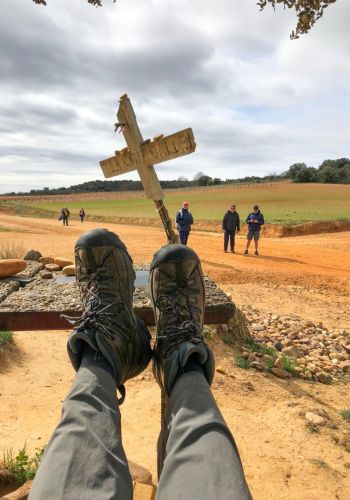
• Walking the Camino: Six Ways to Santiago. This documentary follows six modern-day pilgrims on the Camino and their various transformations.
• I’ll Push You: A Camino Journey of 500 Miles, Two Best Friends and a Wheelchair. A documentary following two friends, one with a disability that makes him think he can’t fulfill his lifelong dream of walking the Camino — until his best friend says he’ll push him. Yes, you will cry. But you will also be uplifted.
• Strangers on the Earth. Professional cellist Dane Johansen walks the Camino carrying his cello on his back and giving free concerts in churches along the route.
Want to Know More?
Patrick DeVaney and Susan Nichols have formed a local chapter of American Pilgrims on the Camino for people who are interested in sharing their stories and for those who are curious about doing a Camino. The group has a Facebook page, American Pilgrims on the Camino — Upstate New York Chapter. For more information, email upstatenewyork@americanpilgrims.org.
Top image courtesy of Susan Nichols.