
Mist rose from the calm waters of the Danube, curling with the steam from my early-morning cup of coffee. I was all alone in a deck chair on the bow of a cruise ship as it glided through the wine country of Austria. The sky was cathedral-ceiling blue. Terraced vineyards rose on either side of the river, laced with vines. Pastel farmhouses drifted into view, then drifted out of sight.
At 6 a.m., most of my fellow passengers were still asleep, but the ship’s staff had already laid out pastries in the lounge. As we silently glided toward that day’s port of call, I caught up on the state of the modern world, while the world in front of me unfolded as it had for centuries.
A European river cruise was high on the bucket list for my husband and me. We’d already seen swaths of Germany, Spain, England and Italy by foot, bus and train. It was time to find out how the view and the pace changed when we settled in for a week on a ship that served as a floating boutique hotel, waking up most mornings in a different neighborhood.
The ship smoothly rounded a river bend and there was a farmhouse, glowing in the soft sun. Apricot trees marched in rows along the banks. (I learned later that the Wachau region’s soil and climate are ideal for both grapes and apricots, which resulted in the subsequent challenge of fitting jars of fresh preserves into my suitcase.)
Two hours later, after a full breakfast and more coffee in the dining room, our ship, the AmaLea, sidled up to the dock. Full of curiosity and calories, my fellow travelers and I tromped down a gangplank and onto the shore. Up a cobblestone sidewalk, we made way for locals whizzing by on bicycles through a stone-arched alley that emptied into the tiny town square of Dürnstein. Our guide, a local, explained the city’s medieval strategic importance and its love-hate relationship with the Danube: floods offsetting trade, in a centuries-long rhythm of renewal and recovery.
We only had an hour to peek into the storefronts and gaze at the ornate wrought-iron shop signs signifying each store’s specialty — a medieval tradition carried on today. But in just that hour, I absorbed enough to add to my understanding of the history, rulers and peoples who’ve made the Danube home from prehistory to Roman occupation, its heyday under Hapsburg rule to the traumas of the 20th century and the ambitions they hold now for the futures of Hungary, Slovakia and Austria.
Each day afforded a walking tour of another byway, followed by free time to shop, pop into local museums or just take a break for dessert and decaf, entertained by the small dramas of daily life.
River-cruise itineraries typically allow each guest to craft their own pace from the day’s menu of available activities. Finding the momentum that best matches your travel goals is ideal for those in late middle life, say travel agents and advisers.
“Start with the experience,” says George Balogh, founder and owner of Blue Skies Travel, an East Greenbush-based travel advisory firm. “Is it about relaxing? Is it about having fun? Is it about being culturally fulfilled?”
If your bucket overflows with lists, start with the end, Balogh suggests. Envision yourself back at home, reviewing highlights from your trip. “What will make you feel that it was great? Somebody who wants to be culturally fulfilled doesn’t necessarily need a disco. Someone who wants to sit on the beach doesn’t want a lecture.”
As your dream journey sorts itself into manageable itineraries, you can start to match time and budget with your most cherished priorities. Here are some of the experiences occupying top spots on many bucket lists.
Big river, small ship
Travel advisers agree that river cruises were practically invented for older travelers who crave historic and cultural experiences over the flashy and new. Who knew that the remains of Roman occupation can be seen all the way down the Danube, from Budapest to Prague?
River cruise lines are expanding shore excursions to match their clientele. Michelle Molnar, an associate director with Tauck, says the company scouts special events and, for small groups, can tailor excursions to fit specific interests.
Meanwhile, the number of river cruise lines and ships keeps expanding. Ocean cruise line Celebrity Cruises is already booking its new line of river ships, set to launch in 2027. And AmaWaterways has announced the launch of 10 new ships in rivers around the world.
Glaciers away
Alaska is perfectly suited for ocean cruises: The vistas are wide, high and stunning from any distance. The 49th state is high on many people’s lists, if not for the scenery, then for the wildlife and active adventures. But Alaska’s shoreline has limited ports, so most cruises follow similar routes, says Jess Peterson, who develops itineraries for Windstar Cruises. Her line makes travel itself the experience, with 10- or 11-day itineraries that linger in misty fjords rather than just passing through.
“We’re not trying to cover so much ground,” says Peterson. And that means that guests have a chance to try out modes of cruising — kayaking among the glacial ice cliffs, anyone? — that they might not otherwise have the time or courage to attempt.
If river cruises are about the adjacent cities and scenery, ocean cruises aim to offer passengers an endless menu of onboard activities. “If you want to be entertained, you need the big-ship experience,” says Kimberly Sith, Celebrity Cruises’ market sales manager for the Northeast.
Aside from family-centric cruise lines like Royal Caribbean, onboard activities for adults increasingly include special interests, such as immersions in golf, quilting and other pastimes with avid followings. Specialty cruises hosted by influencers and luminaries in their respective fields include lectures and, often, hands-on workshops.
Big ships offer nonstop activities and variety you can’t easily find on shore, while smaller ships (150–300 guests) focus on relaxed, accessible experiences, says Smith. “If you’re the kind of person who likes Broadway-style shows and who likes multiple options for dinner every night and lots of venues within the boat, that’s the big ship,” she says.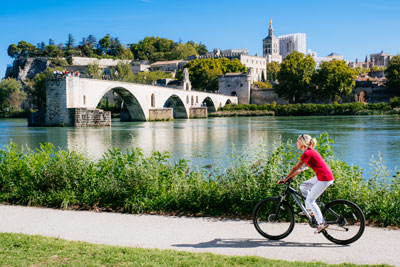
Pedals up
If you’re hoping to regain your momentum on two wheels, you’re in good company. The Adventure Travel Trade Association (ATTA) found in its 2024 survey of cycling companies that older travelers are hitting their stride with e-bikes, “the great equalizer,” says Heather Kelly, the group’s director of research. “E-bikes enable older or less fit people to keep up with a mixed-age group,” she explains. Critically, “the bikes give you a boost when you need it, especially going up a hill.”
The hospitality industry is adapting with e-bike chargers and bike-tour infrastructure for older adults. Many European companies offer rentals, creating a more accessible version of classic cycling tours, with luggage ferried between accommodations, says Kelly.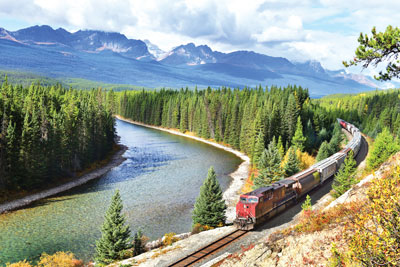
Peak experiences
Why drive through the mountains, eyes glued to the road, when you can sit back in a train lounge and let the Canadian Rockies roll by?
A train excursion through the mountains, lakes and forests of western Canada can be as long and expansive as you want. You can pick an affordable option that pairs hotel stays at night with days on the train, or indulge in a trip centered around a private sleeper cabin.
Increasingly, people review all the options and selectively splurge, says Andy Channell, senior vice president of product operations with Railbookers, an American company that helps travelers arrange train-centric itineraries.
Everybody wants to see the highlights. “If you’re in Canada, you’re going to see Banff, Jasper and Lake Louise,” says Channell of the famed mountain sites in Alberta.
It’s even possible to take Amtrak from the U.S. to a VIA Rail connection in Canada, heading west, Channell says. And his company is increasingly engineering cruise connections in Vancouver for travelers.
The more cherished your once-in-a-lifetime experiences are, Channell cautions, the more important it is to book one, even two, years in advance.
“We’re finding that people want to add something special to that. They’re adding luxury where it’s important to them. Maybe it’s an upgraded hotel room. Or maybe it’s a private experience,” like a helicopter tour, Channell explains. “That little bit of luxury means something different for everyone.”