

Exercising in the summer heat can feel like running through molasses under a magnifying glass; every movement is slower, sweat pours like an open tap, and the sun seems to zero in like it’s got a personal grudge.
Believe it or not, some people pay big bucks for that experience. Hot yoga is a vigorous form of yoga practiced in a heated and humidified room with the intention of maximizing your flexibility and making you sweat a lot.
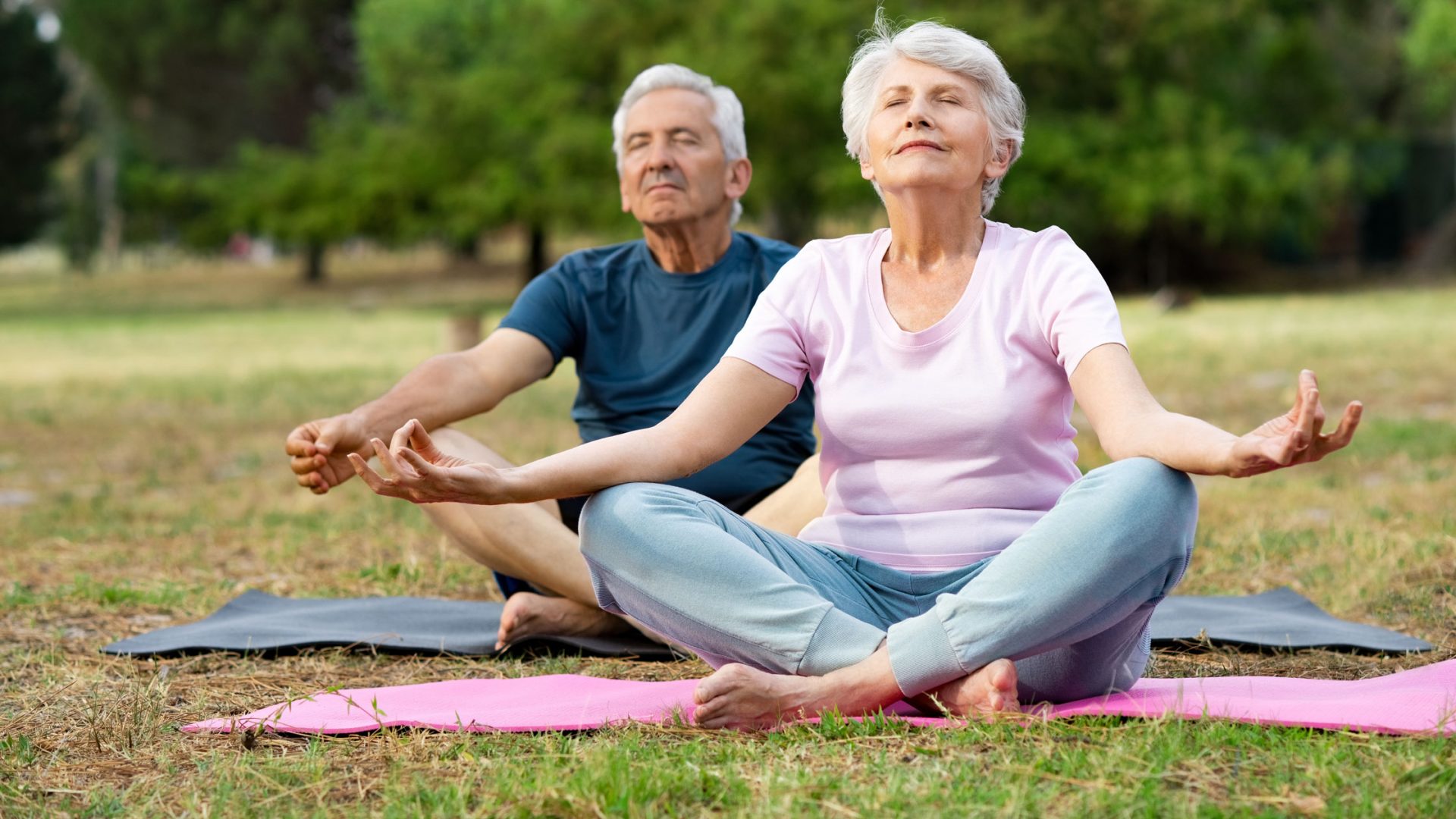
So if you’re looking for ways to stay fit even when the temps are soaring, skip the swanky studio and do your own hot yoga on a mat in the backyard. (Or on the front porch, or at the beach… wherever and whatever brings you joy.) Here’s how you can benefit from hot yoga, and ways to make sure you’re practicing safely.
The Benefits of Hot Yoga:
It’s no secret that yoga is a highly beneficial form of exercise, especially for people 50 and older. According to the Mayo Clinic, regular yoga practices can improve your balance and flexibility, enhance strength and mobility, improve cardiovascular health, provide some pain management, reduce stress, and also do wonders for your mental well-being.
The idea behind hot yoga is that the demanding nature of the poses coupled with intense heat — usually between 80℉ to 105℉, with humidity levels around 40% — will raise your heart rate and facilitate deeper stretches. With the heat turned up, yoga can give your heart, lungs, and muscles an even more intense workout.
When done correctly, hot yoga can have a number of benefits even beyond regular yoga, CNN reports:
- Heated workouts increase blood flow and warm muscle tissue, which can enhance flexibility;
- Elevated temperatures boost cardiovascular demand, which means you burn more calories;
- You could experience a heat-related endorphin release, offering short-term feelings of relaxation.
Some evidence also suggests that practicing hot yoga can help build up heat resilience, which can go a long way towards helping you feel more comfortable outdoors, even when it’s sweltering. And, if you are doing it outside, you also get all the health benefits of natural sunlight.
Words of Caution:
Although hot yoga can feel wonderful, heat alone doesn’t guarantee better fitness results. Dr. Dominic King, a sports medicine physician at the Cleveland Clinic, told CNN that consistency, technique, and overall effort are still important. “Heated workouts add intensity, but turning up the thermostat doesn’t automatically turn up your fitness gains — sweat smartly, not just profusely,” King said.
Furthermore, while hot yoga is generally safe, it’s not for everyone. The Mayo Clinic recommends that people with heart disease, problems with dehydration, heat intolerance, or a history of heat-related illness (such as heatstroke) avoid practicing hot yoga. Additionally, people with diabetes, arterial abnormalities, anorexia nervosa, history of fainting, low blood pressure, and low blood sugar should proceed with caution, according to Medical News Today, as they might be more prone to fainting.
Tips for Practicing (Hot) Yoga in the Summer:
- Hydrate. Dehydration is a major concern with hot yoga. Drink plenty of water before, during, and after your practice. You might consider an electrolyte drink to help replenish what you’ve lost, as well.
- Listen to Your Body: Modify poses as needed and don’t push yourself too hard. The heat can increase your flexibility, but you can still overdo a stretch and end up with an injury.
- Consider Yin Yoga: Yin yoga’s slow, cooling poses can be ideal for summer.
- Practice Outdoors. Enjoy the sunshine and fresh air, but be mindful of sun exposure and hydration.
- Wear Breathable Clothing. Choose moisture-wicking fabrics to stay cool and comfortable. Some people also prefer long-sleeve shirts and long pants to provide “grip” during those poses where one body part is resting on another. (Sweaty arms = slippery arms!)
- Keep a towel handy. Watching puddles of your sweat form on the yoga mat can be gratifying, but they can also cause you to slip and injure yourself. Consider laying a towel on top of your yoga mat, and have another one handy to swipe the sweat away from your eyes, as well.
- Focus on Breath. Practice pranayama (breath control) to help regulate your body temperature and nervous system.