

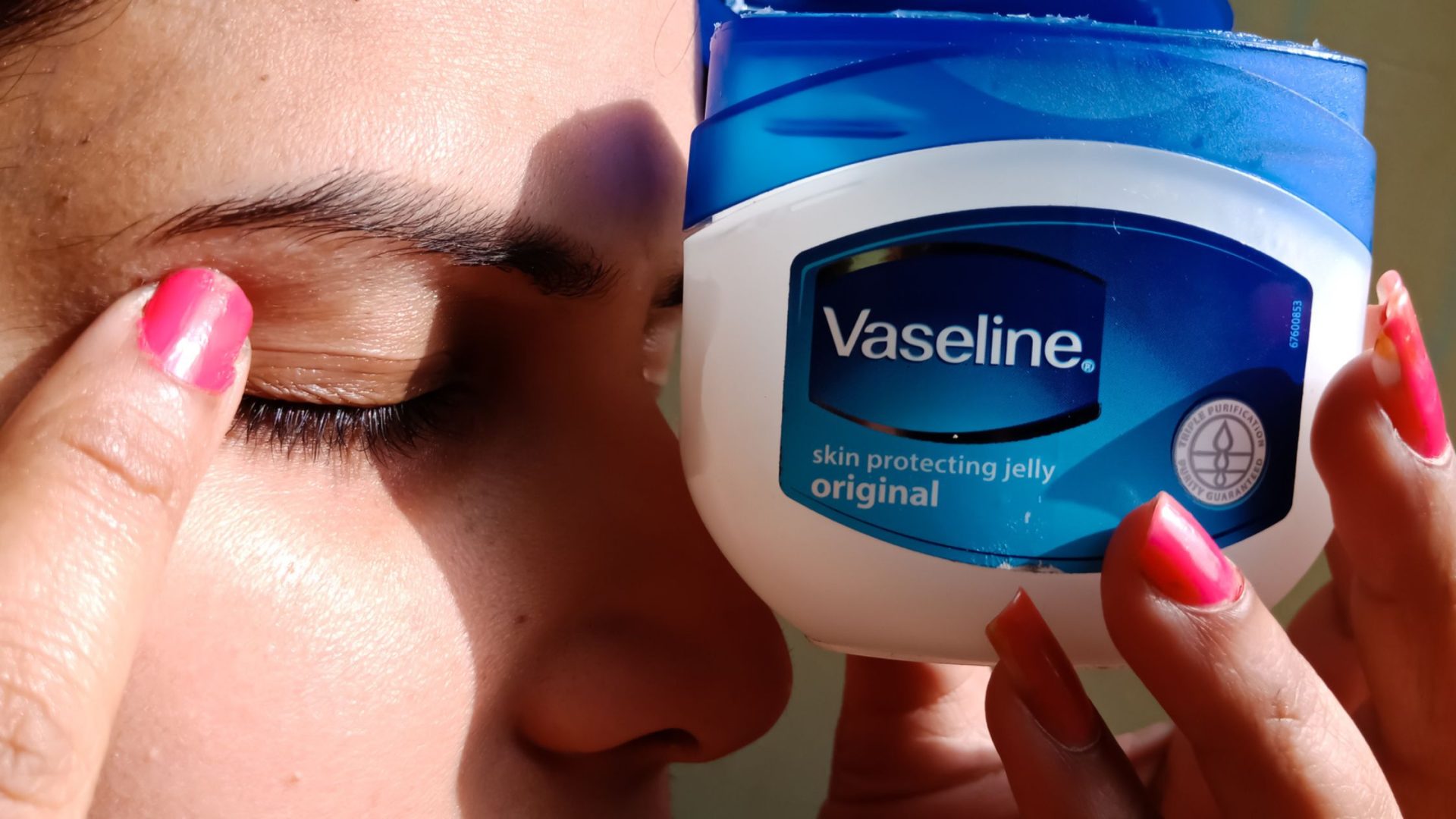
“Slugging.” The first time I heard this term, I was deep in an internet wormhole, trying to find a cure for the dry skin I suffer from every winter. At first, I thought it was another problematic TikTok trend, like the one where teens were ingesting Tide Pods (the little squishy laundry detergent packets). But after more research, I realized that slugging might actually work. Here’s what further research led me to discover, and what you need to know if you want to try this skincare trend.
What Is Skin Slugging?
According to WebMD, slugging was a popular skincare technique long before it went viral on social media. The term is often attributed to K-beauty (Korean beauty) skincare trends like “glass skin,” but the ritual itself has roots in the Black community.
Slugging has nothing to do with actual slugs. (Thank goodness.) Instead, slugging involves cleaning and moisturizing one’s face and then slathering a layer of occlusive ointment (such as Vaseline or Aquaphor) on top. The idea is that the oily top layer will “lock in” moisture so that it can more deeply penetrate your skin while you sleep. The goal of face slugging is to promote dewy, fresh, and younger-looking skin that appears plump and hydrated. (The real trick is to accomplish this without ruining all your pillowcases and having greasy hair.)
Does Slugging Work?
According to many experts, skin slugging is a valid method for hydrating your skin. In an article on slugging for Verywell Health, board-certified dermatologist Dr. Heather Rogers (FAAD) said, “It’s a great way to coax moisture and healing ingredients back into irritated or damaged skin.”
The science checks out, it seems. The “slug” layer itself doesn’t hydrate the skin. Instead, it will trap in anything you’ve applied underneath. (That’s what occlusive skin products do: they act as a physical barrier to both protect your skin from the environment, and to keep moisture close to the skin.) So, if you cleanse your skin and then apply a moisturizer with healing ingredients, applying a thin layer of Vaseline (or any other product containing occlusives like petroleum jelly, mineral oil, silicones, or vegetable oils) should lock those ingredients in for a nice, soothing treatment overnight.
What You Should Know
Although skin slugging is, in and of itself, a harmless practice, those with aging skin need to be careful about the products they choose to use — both underneath the slug layer and for the slug layer itself.
For example, many dermatologists typically recommend pure (or almost pure) petroleum jelly. Although it’s derived from crude oil, petroleum undergoes a stringent refining process that makes it one of the safest products to use on your skin. It is also non-comedogenic, which means it won’t clog your pores because the molecules are too big to penetrate your skin’s outer layer. It just sits on top, creating a blanket to seal in moisture — and anything else.
For that reason, the American Academy of Dermatology (AAD) doesn’t recommend putting petroleum-based products on your face if you have blemish-prone skin, since they may trigger breakouts. They also caution people against using slugging products with too many additives, as they could irritate sensitive skin. Furthermore, it’s a bad idea to use slugging to “force” your skin to deal with active ingredients such as retinoids, vitamin C serums, and chemical exfoliants. “Doing so,” Dr. Rogers notes, “is like forcing someone who isn’t hungry to eat a six-course meal.” Instead, she urges people to think of slugging as a way to baby their skin to get it back to health so that it can then tolerate whatever treatments should be applied.
Who Should Slug, and How Often
One article on slugging in Cosmopolitan suggests that slugging should be done to repair damage, either from aging or the environment. Dermatologist Dr. Dana Stern told the magazine that slugging can be helpful if you’ve gone overboard on peels and exfoliants, which can break down the skin barrier. “When your skin barrier doesn’t have an effective balance of fats, the moisture and hydration that make your skin look supple, full, and plump can’t be maintained,” she said. Slugging can help repair the damage by creating a moist environment that allows the barrier to slowly heal and rebuild itself.
On the other hand, if you’re naturally oily or acne-prone, slugging can be risky. In the same Cosmo article, Dr. Adarsh Vijay Mudgil said that “Vaseline is so occlusive that it won’t let your skin oils escape, which can irritate your hair follicle and stimulate acne.”
If you want to give slugging a go, how often you slug is up to you and your skin needs. The author of the Cosmo article, Beth Gillette, is a slugging devotee and says she slugs three or four times a week. Other sluggers only practice the greasy technique when participating in winter sports that expose their skin to dry wind and cold.
How to Skin Slug:
- Cleanse, really well, while getting ready for bed. (Some experts recommend exfoliating.)
- Moisturize, ideally with humectant-based products, like those containing glycerin, hyaluronic, or aloe-based products, according to Dr. Alexis Parcells, and avoid any that contain active ingredients such as alpha-hydroxy acids (AHAs), beta hydroxy acids (BHAs), or retinoids. (For more information on what these products are, see our article with recommendations for maturing skin.)
- Apply a thin layer of the occlusive of your choice.
**Pro Tips: To make things more comfortable, wear a sleep cap or headband to keep your hair from sticking to your face overnight. And protect your pillow by laying down a towel, as things can get messy while you sleep.
*Featured image by Neeraz Chaturvedi via Depositphotos.com
MORE ARTICLES YOU MAY LIKE