
“For many Americans, spring cleaning represents prime time for tackling grease, grime and grout,” said Brian Sansoni, the American Cleaning Institute’s (ACI) senior vice president of communications and outreach, in a 2023 press release about the institute’s annual cleaning survey.
The ACI oversees the cleaning products industry, leading research and development. It also advises consumers on the safe, proper and beneficial use of cleaning products. In other words: Sansoni knows what he’s talking about. But we think he missed an opportunity to address a fourth cleaning target that starts with the letter “g”: germs.
Some of the germiest places in your home are the ones you barely notice getting dirty — high-touch spots like light switches, remote controls, cabinet handles and your kitchen sponge quietly collect bacteria day after day.
Thankfully, tackling these overlooked trouble zones doesn’t require a full-day deep clean (although you could do it that way, if you prefer). Here are a few places you might want to wipe down and sanitize, pronto.
In the Kitchen:
Back in 2011, NSF International, an independent public health organization, sought to examine the difference between perception and reality in terms of where germs lurk in the home. Their study found that while most people thought the bathroom would be the dirtiest place in the house, the kitchen is where germs go to thrive.
Three out of the top five germ “hot spots,” the study revealed, are found in the kitchen: 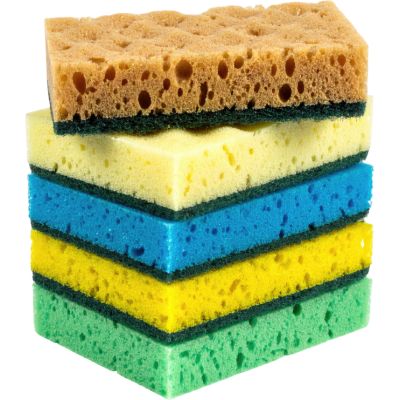
Kitchen Sponge
Ranked as the germiest item in most homes, sponges and dishrags naturally pick up bacteria during the cleaning process. If not properly sanitized between uses, they are the perfect breeding ground for germs, because they tend to stay moist and are constantly picking up more “food” for bacteria to feed on.
To Sanitize: A recent BBC report notes that microwaving or boiling kitchen sponges may reduce some — but not all — of their bacterial load. A 2022 study published in the Journal of Applied Microbiology found that the best defense against bacteria lingering in a sponge is to let it fully dry between uses, or to regularly run it through the dishwasher on the sanitizing cycle. But if you’re buying the disposable sponges, just replace them on a regular basis. Charles P. Gerba, microbiologist and professor at the University of Arizona, told AARP that bacteria counts are highest after three days of use.
Kitchen Sink
The NSF’s study found that the kitchen sink had the second-highest concentration of microorganisms, especially around the drain and in the basin. Like sponges, these areas tend to stay moist, and they gather bacteria from food prep and washing. If you see a slimy, reddish film, that is actually bacteria attached to the surface, which makes them more resilient.
To Sanitize: The NSF advises that you wash and disinfect the sides and bottom of the sink once or twice a week with a disinfecting cleaner, particularly a diluted bleach solution of one tablespoon bleach to one gallon of water. Further sanitize kitchen drains and garbage disposals monthly by pouring a solution of one tablespoon of household bleach in one quart of water down the drain.
Don Schaffner, a microbiologist and chair of the department of food science at Rutgers University, told AARP that the slimy, reddish biofilm is best tackled with a brush and the diluted bleach solution.
Coffee Maker Reservoir
Shudder with me: ugggggh. The NSF ranks your coffee maker’s water reservoir as the fifth germiest place in the home. “Given the dark, damp location, it’s not surprising that it is a prime location for bacteria, mold and mildew to grow,” they explained.
If removing germs and mold from your morning coffee isn’t motivation enough, the mineral deposits that build up from your water will also affect your coffee’s flavor — and how well your coffee maker works.
To Sanitize: Every coffee maker comes with instructions for regular descaling, which removes mineral deposits and all the other gross, nasty stuff you don’t want to imbibe with your daily caffeine. Lisa McManus, the executive editor at America’s Test Kitchen Reviews, told AARP that you should try to descale your machine after every 100 pots of coffee. Many sources, including the NSF, recommend running undiluted vinegar through the machine, then running water batches until the vinegar odor dissipates. However, McManus says, this can sometimes be too corrosive — in addition to not working effectively. She recommends sticking with the gentle, commercially available descaling products.
In the Bathroom:
Toothbrush Holder
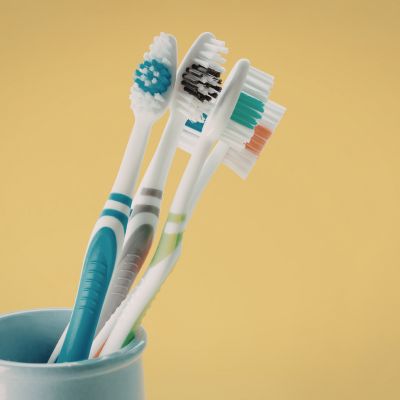
You might assume that the germiest object in the bathroom would be the toilet, but au contraire, mon frère: It’s your toothbrush holder. In the NSF study, the toothbrush holder held more germs than even the faucet handles and light switches.
To Sanitize: If it is dishwasher safe, the NSF recommends placing the toothbrush holder in the dishwasher and washing once or twice a week. If not, wash by hand with hot, soapy water, rinse, and wipe with a disinfecting wipe once or twice a week.
Around the House
All the Handles!
Appliance handles, door handles, cabinet handles, light switches, and faucet knobs are some of the most-touched items in a home, and yet how often do we really clean them? Any time you open something or turn on something, you are potentially transferring germs, which is enough to make even non-germaphobes anxious.
Although it would be impractical to clean them after every use, washing and sanitizing handles and knobs regularly is a good way to protect yourself from colds, flu and food-borne illnesses.
To Sanitize: You can wipe down handles and knobs with a hot, soapy cloth or disinfectant wipes. The NSF recommends daily wiping down of faucet handles with wipes or a disinfectant cleaner (like the bleach solution mentioned above), but door handles and other switches — stove knobs are ranked as the ninth germiest place in the home! — can be cleaned once a week.
Anything with Buttons:
Remote controls, phones, keyboards, and even your microwave panel can harbor more germs than you probably want to think about.
To Sanitize: Ernesto Able-Santos, a professor of biochemistry at the University of Nevada, Las Vegas, told AARP that alcohol-based disinfectant wipes are good for wiping down remote controls and other button-y objects. However, it’s a good idea to check the manufacturer’s instructions regarding disinfectant wipes on electric touch screens, as their use can lead to screen degradation. For panels like the one on your microwave, stick with a hot, damp cloth with a little bit of soap.
For computer keyboards, the website Lifehacker recommends unplugging or removing batteries (safety first!), then cleaning the outside of the device with a damp cloth or alcohol wipe, being careful not to get any moisture in any openings. (Avoid using aerosol sprays, solvents, abrasives or cleaners containing bleach or hydrogen peroxide.) The tools they found most helpful for getting into cracks and crevices were an old toothbrush or makeup brush, and Q-tips.
Top image: NIKOLA ILIC PR AGENCIJA ZA DIZAJN STUDIOTRIPOD SURCIN from Getty Images Signature, via Canva.com