

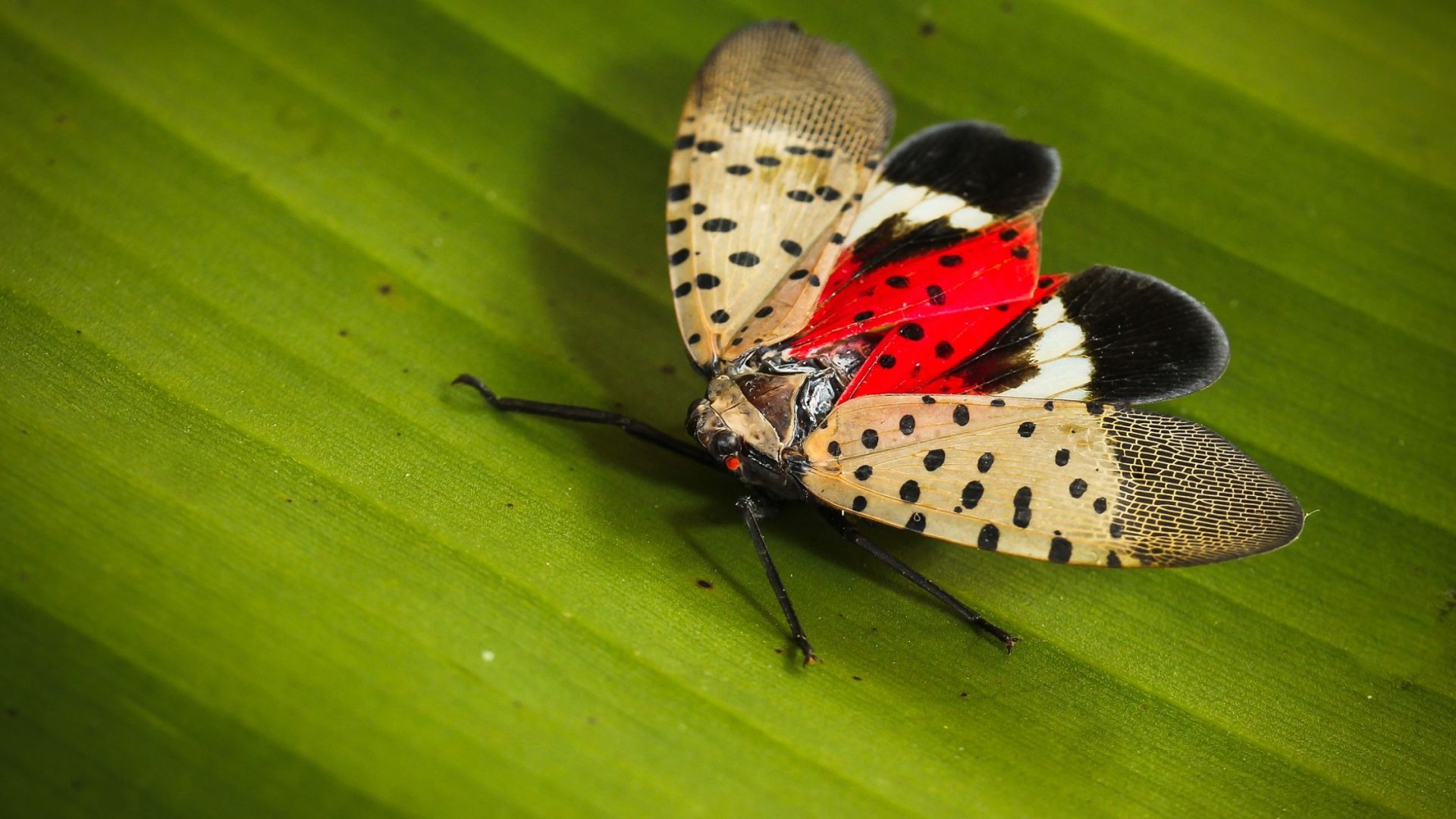
At first glance, the spotted lanternfly almost looks too pretty to be a problem. With its speckled wings and flashes of bright red, this invasive insect can seem harmless — even exotic. But beneath its striking appearance lies a serious threat to vineyards, orchards, hardwood trees, and backyard gardens across the United States.
Since arriving in the US in 2014 as a stowaway on imported goods, the spotted lanternfly has spread aggressively, leaving damaged crops and frustrated homeowners in its wake. Now, conservationists, farmers, arborists, and government officials are enlisting everyday citizens to join the fight against its advance, one stomp at a time.
Why We’re Needed
During the pandemic — when we were already preoccupied with fears of spreading bugs — the so-called “Murder Hornet” captured the nation’s attention. This invasive species that could decimate entire hives of native bees made for seductive headlines, thanks to its nightmarish size and violent tendencies. As a result, the home-bound people of Washington State (where it first appeared) eagerly joined in the urgent fight to stop its spread.
When the Washington State Department of Agriculture (WSDA) engaged the public, they received 4,400 reports of murder hornet sightings (although only 20 of these turned out to be the real deal). Following these tips, and the subsequent extensive hunt for nests, the WSDA was able to declare the murder hornet eradicated from the United States in 2025. “Without the public’s support for this effort, it is unlikely we would be announcing the eradication of the northern giant hornet today,” WSDA’s pest program manager Sven Spichiger said in a statement. “All of our nest detections resulted directly or indirectly from public reports. And half of our confirmed detections came from the public. The people of Washington can be proud that we did this by working together.”
The spotted lanternfly, unfortunately, has already proliferated through 15 states — from New York to Virginia — according to the U.S. Fish and Wildlife Service (FWS). But that doesn’t mean we can’t work together to eradicate this beautiful-but-serious threat to forests and farms.
What We’re Fighting
Spotted lanternfly (SLF) usually reach the adult stage sometime in July, and are approximately 1 inch long and ½ inch wide at rest. Their forewings are grayish with black spots, but in motion their eye-catching red hindwings are contrasted with white and black in an unmistakable flash of color.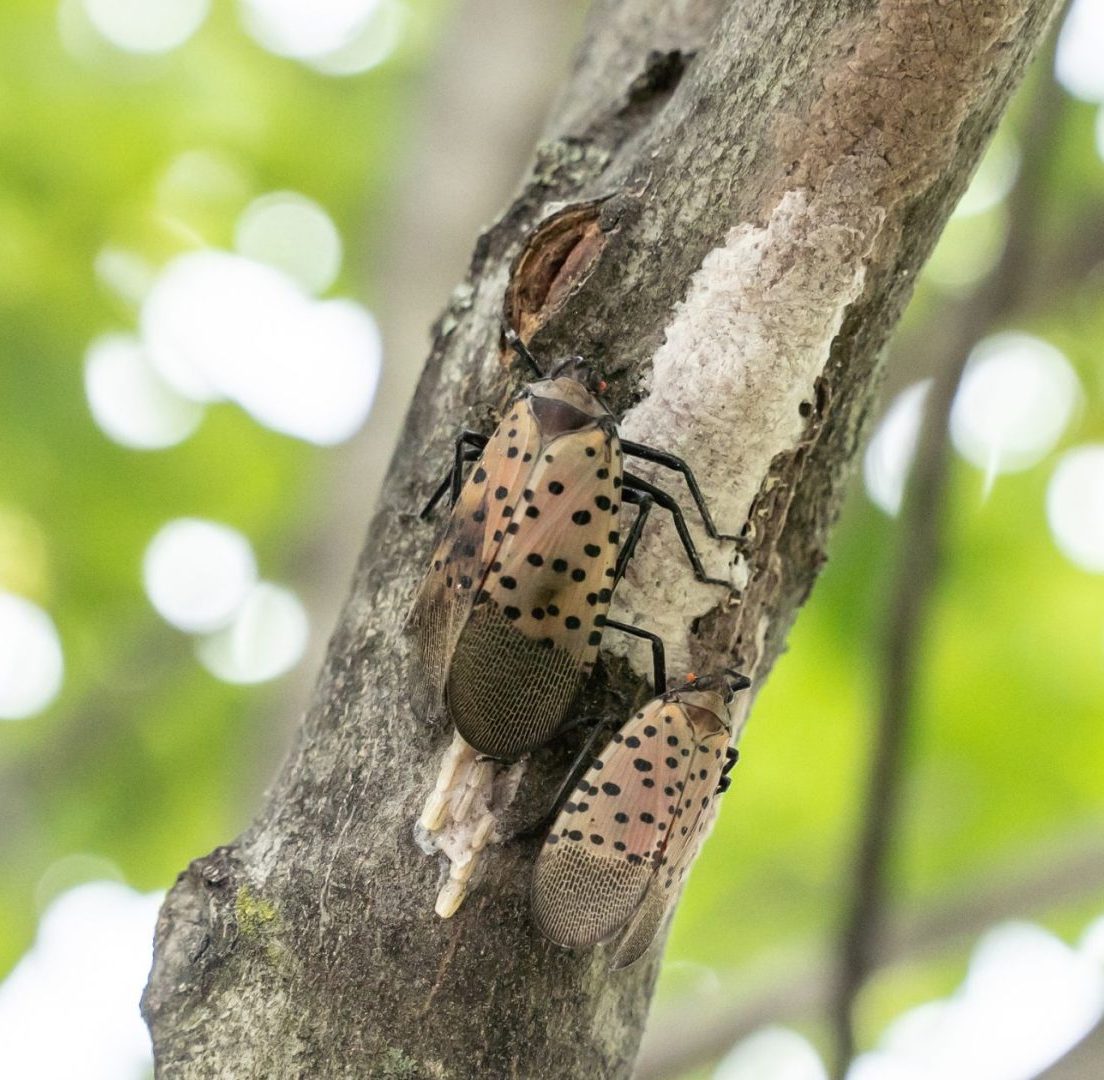
As soon as they hatch, SLF nymphs begin to feed on woody plant species, with a notable preference for the Ailanthus tree, commonly known as “tree of heaven.” Tree of heaven prevalent throughout most of the Northeast – is itself an invasive species and incredibly difficult to eradicate. (According to the FWS, cutting down a tree of heaven only spurs new growth through its aggressive root system.) And discouragingly, removing tree of heaven won’t remove spotted lanternfly — there’s plenty more for it to eat. The FWS reports that the insect has been documented feeding on more than 70 different species, including maple trees, oak trees, grape vines, and apple trees.
SLF feed using piercing mouthparts (that’s a phrase I never want to use again) to access sap beneath a tree’s bark. That alone can harm a tree, as it creates a wound that exposes the tree to other diseases and pests. After feeding, spotted lanternfly excrete a sticky substance called honeydew (partially digested sap), which in turn attracts other nuisance insects (like wasps) and causes the growth of a fungus called sooty mold. Sooty mold isn’t just unsightly; it interferes with plant photosynthesis, negatively affecting the growth and fruit yield of plants.
The National Park Service warns that large infestations of SLF can dramatically reduce grape, apple, and hop yields, as well as damage economically important hardwood trees including maple, black walnut, cherry, and birch. For perspective, although the full extent of economic damage the SLF could cause is currently unknown, the New York Department of Environmental Conservation (NYDEC) predicts that spotted lanternfly will have a negative impact on New York’s annual yield of apples and grapes, which has a combined value of more than $350 million.
Spotting the Enemy: Lanternflies at all Stages
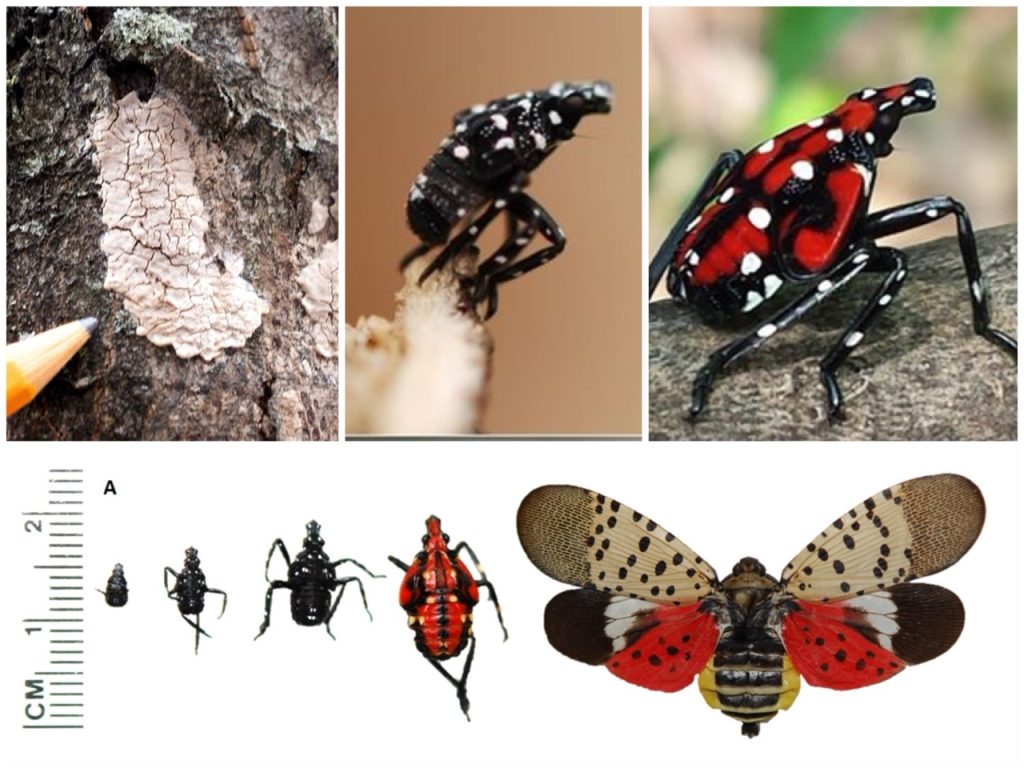 If you go on a hike in any of the East Coast’s national parks, you will likely see plaques asking visitors to eliminate any spotted lanternflies on sight. The good news: with their bright red wings, the adults are incredibly easy to spot and squish underfoot. (They are planthoppers, so they can’t actually fly away; they just flit from plant to plant.) The bad news: SLF lay their eggs almost anywhere, and they can be very difficult to notice. The egg masses are perfectly camouflaged against tree bark, but even on rusted metal or stone the masses might easily be mistaken for mold or fungus growth.
NYDEC says the signs of infestation we should look for include:
- Sap oozing or weeping from tiny open wounds on tree trunks, which appears wet and may give off fermented odors.
- One-inch-long egg masses that are brownish-gray, waxy and mud-like when new. Old egg masses are brown and scaly.
- SLF excrete liquid waste called honeydew that builds up under plants, sometimes encouraging the growth of black sooty mold.
Engaging in Battle
We have more than one weapon when it comes to fighting spotted lanternflies. The Cornell College of Agriculture and Life Sciences has released an Integrated Pest Management plan for SLFs, which outlines in detail several effective methods, like sticky band traps, circle traps, and various ways to destroy lanternfly egg masses.
Cornell’s plan for SLF management is mainly for large-scale operations such as apple orchards or vineyards. Most people will more likely need to engage in a form of guerilla warfare, performed in our own backyards. Primarily, the American Forest Foundation asks people to:
- Learn the life stages of the spotted lanternfly:
Be able to identify their eggs, immature, and adult forms. From late fall through early spring, look for gray, putty-like clusters on trees, firewood, vehicles, and outdoor furniture. Scrape the egg masses into alcohol or hand sanitizer to destroy them. - Check Your Gear Before Traveling:
Spotted lanternflies are excellent hitchhikers. Always inspect your car, trailer, and outdoor equipment before moving them from an infested area, especially in the fall. - Familiarize Yourself with Reporting Tools:
The USDA Animal and Plant Health Inspection Service provides a one-stop shop for reporting resources. If you notice suspicious damage to trees or are unsure if you’ve seen the insect or an egg mass, take photos and send them to your state’s specific invasive species program. (Make sure to include your location.) - Support Forest Health:
Healthy, diverse forests are more resilient to pests and disease. Working with a professional forester to manage your woodlands can strengthen your trees and help prevent infestations from spreading.
*Featured image by VM2002 via Canva.com