
Learn something new, keep your mind engaged and have a good time along the way
I was never so grateful for the Industrial Revolution.
Standing in the humid shade of an August afternoon, alongside two dozen others intent on trying their hands (and their elbows and shoulders) at processing flax plants into linen fabric, I frowned at the “breaker” — a wooden board lethally studded with up-pointed nails.
We were going to whip hanks of dried flax — a fibrous, grasslike plant — against the nails and yank them through. Already softened by a long soak in chemicals, the hard outer armor would shatter during the process, freeing the silky, long internal fibers to be brutally combed into threads. The harder we yanked, the longer and finer the strands.
Only with the husks beaten away could the flax fibers be processed into thread, then that thread woven into cloth, and then that cloth stitched into clothes, tapes for belts and rough towels for household use.
Suddenly, the $24 a yard I’d been spending on machine-made linen fabric seemed like the bargain of the century.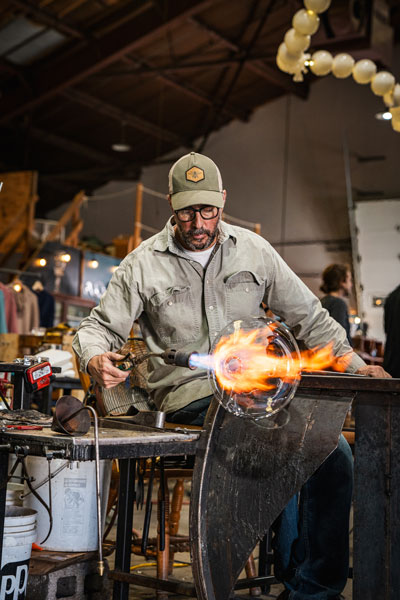
Nothing sharpens appreciation for the modern supply chain like a session flailing and failing at Colonial production methods. But as workshop colleagues and I devoted our cardio capacity to produce a handful of usable fiber, we also learned about the surprisingly egalitarian culture of linen production; about Colonial experiments with chemistry; and about how fabric manufacture wove throughout the other rhythms of agricultural economy.
Creativity is catalyzed by corresponding physical activity. Researchers have found that getting your muscles moving unlocks new neurological pathways.
It’s no coincidence that perpetually creative people credit, in part, their time in rhythmic movement: For instance, author Stephen King famously walks daily to get his creative juices flowing.
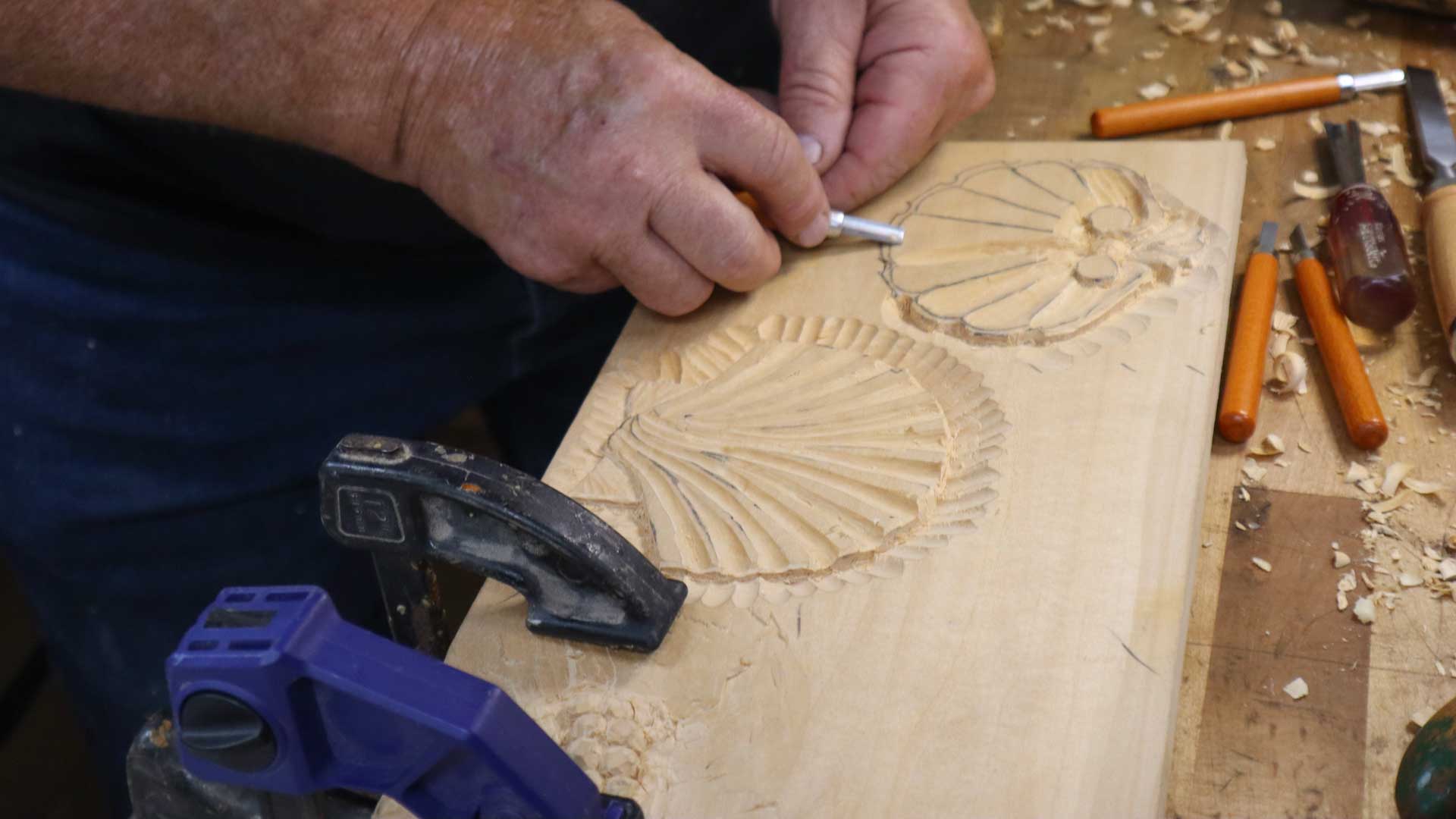
The Northeast is rich with opportunities to pick up tongs, needles, hammers, spoons, knives and all manner of tools to have a go at archaic skills. Folk schools, living history museums, and even unexpected locales like cruises offer the space, tools and expert guidance. Visitors bring energy, enthusiasm and enough interest in learning a new skill to carry them up the learning curve.
Prerequisites are minimal, which is good since most Americans aren’t likely to have a working understanding, much less hands-on familiarity, with traditional skills like tinsmithing, blacksmithing, paper quilling or fabric dying, among the dozens of better- and little-known skills featured at workshops. But precisely because such skills are rarely encountered, many sessions include both those who are completely new and those back for a second or subsequent go-round.
“Our main audience is people who want to go a little deeper,” says Claire Carlson, director of museum education for Historic Deerfield, a living history museum situated in the nearly perfectly preserved historic district of Deerfield, Massachusetts. The museum is composed of Colonial and later-era houses still occupying their original sites; houses moved to the district; and modern exhibit and workshop spaces, all interwoven along Old Main Street with privately owned residences and Deerfield Academy, a private school.
While the primary takeaway from my upper-body workout was to exercise my “add to cart” reflex, better-rounded participants often use workshops to sharpen relevant contemporary skills. The flax-to-linen workshop was just one of dozens of Colonial skill experiences that the museum hosts year-round, rotating topics with the seasons. “We only do open-hearth cooking classes in winter, when the historic houses are closed,” explains Carlson.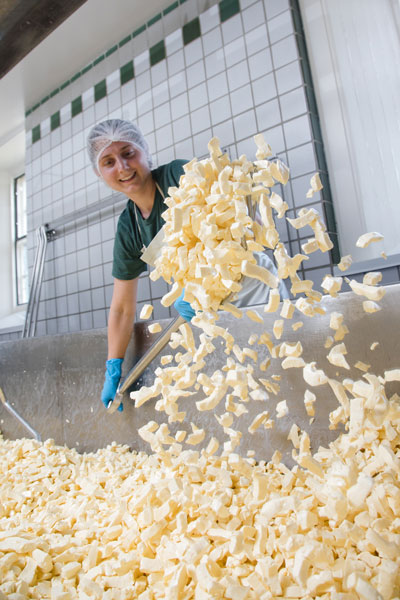
Open-hearth cooking is good to know, should one live in a power-outage-susceptible house with a woodburning fireplace, or have ambitions to culinary camping. Once you’ve mastered the basics, you can return over and over again to tackle more complicated variations of the skill; learn to use more sophisticated tools; and even expand on the skill, such as designing a project.
I went home with a fistful of tortured flax that I showed my perplexed husband; planted it on my desk for sewing inspiration; and, ultimately, after a breezy day, swept my flax from the floor and threw it away.
Unlike my doomed flax, many workshops are designed around a useful take-home, such as the two-day whisk broom workshop that’s perennially popular at Historic Deerfield.
Perhaps more universally appealing is the expanding roster of “cook with the chef” workshops launched by John Brennan, owner of Elm City Social and Olives and Oil, an eastern Connecticut chain of restaurants.
“We teach them the tricks of the trade,” he says, such as how to cold-rise yeast dough to develop gluten, which maximizes stretch. Workshops are also offered in pasta- and cannoli-making.
Blend the where and the how
Occasionally, hotels will craft room-and-class packages with nearby studios, so it’s worth asking artisans if they partner with nearby resorts or hotels on creative packages.
For instance, the Hotel Vermont in Burlington, makes it easy to arrange a weekend centered around glassblowing at the nearby AO Glass studio.
And the Westin Portland Harborview, in downtown Portland, Maine, offers guests time with its artist-in-residency at painting workshops.
Owned by Historic Deerfield, the Deerfield Inn is in the middle of the Main Street historic district, just a short walk from the building that hosts many workshops. Comfortable rooms and a spacious on-site restaurant offer recovery from creative challenges.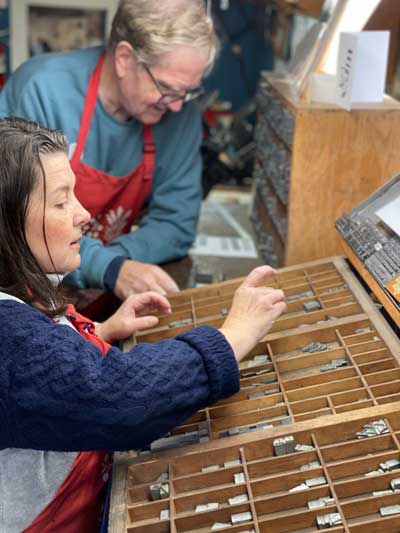
Track down your next learning adventure
Canterbury Shaker Village, in bucolic rural New Hampshire, offers workshops on letterpress printing and a variety of domestic and 19th-century industrial skills related to the Shaker economy. Plan well in advance, as some small-group workshops fill quickly. The complex does not offer on-site dining.
King Arthur Baking School in Norwich, Vermont, lets you sink elbow-deep into yeast dough. Or, try your hand at making complicated pastries, holiday cookies or even the holy grail of 21st-century domesticity — sourdough. Find accommodation in the adjacent metro of Hanover, New Hampshire, home of Dartmouth College.
Make the woodworking beginner’s classic spoon at the Adirondack Folk School in Lake Luzerne, New York, then come back again and again to advance your skills. The school’s extensive range of workshops includes ceramics, fiber arts, cooking and outdooring.
Historic Eastfield has planted itself firmly in the Revolution, mining a bottomless source of skills that deserve to be perpetuated. From tinsmithing to “historic house first aid” (i.e., how to repair an old house with techniques authentic to its provenance), the school offers immersive experiences at its site in East Nassau, New York.