

The Bunny Life

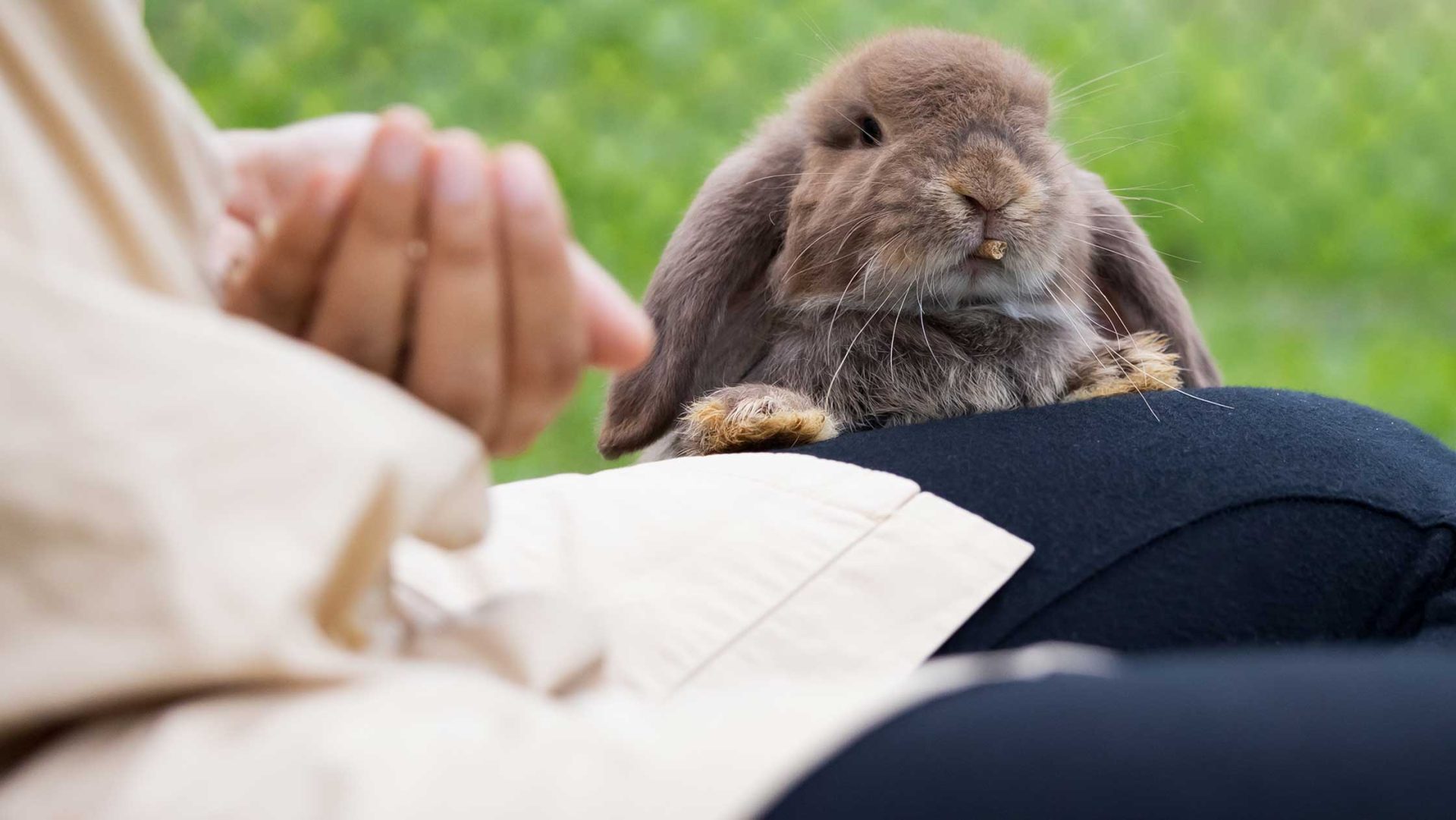
Boop the Fifth — yes, he’s the FIFTH Boop in his lineage — has a lot of grandparents. In Laura LaPalme’s 55+ community in Watervliet, residents regularly stop to stroke the soft brown rabbit, and LaPalme has witnessed the health benefits firsthand.
“They love him,” says LaPalme. “They love to stroke him, and it lowers your blood pressure! Stress hormones go down and your good hormones go up. I had one woman, she said, ‘Oh, I can feel my blood pressure going down,’” LaPalme laughs.
Her observations align with scientific research. A landmark 2001 study published in Hypertension found that pet owners showed half the blood pressure increase during times of stress compared to non-pet owners. More recently, a 2019 Washington State University study demonstrated that just 10 minutes of petting cats or dogs significantly reduced cortisol levels. While most research focuses on dogs, controlled studies confirm rabbits produce similar anxiety-reducing effects — and a 2018 Swedish nursing home study found seniors with elevated blood pressure showed significant decreases after regular therapy animal visits.
Among the Watervliet community’s 200-plus residents, Boop has become an unofficial mascot. But for LaPalme, who adopted him in October 2021, the 4-year-old house rabbit offers something deeper than physical health benefits — he’s family. When LaPalme’s husband died shortly after Boop’s adoption, LaPalme says Boop helped get her through it. “He really helped me,” LaPalme shares quietly. “A lot.”
While rabbits might seem like an unconventional choice for older adults, people like LaPalme are discovering what rescue organizations have known for years: House rabbits offer the perfect combination of companionship and practicality for the 55+ crowd.
No Walks Required
Shelby Wimet-Himelrick, president and founder of Hop on Home Rabbit Sanctuary in Glens Falls, sees the value of “no walks required” pets all the time, especially in winter. “You don’t want to go out on the icy sidewalks being pulled by a big animal,” she says. “Little things like that are why older people — or anyone — would love a rabbit.”
The sanctuary, which houses 140 to 150 rabbits at any given time, reached a milestone in 2025: its 1,000th surrender and 1,000th adoption. While Wimet-Himelrick’s adopters span all ages, she notes that the demographic skews toward women and families aged 35-54 — though seniors are increasingly recognizing the appeal of house rabbits as pets.
“If you want a pet to sit on the couch with, someone to greet you at the door, they love to be with you,” Wimet-Himelrick says. “Rabbits are the best of both worlds. They’re social like a dog, they can be litter-trained like a cat, and they groom themselves like a cat.”
The Adoption Advantage
The timing couldn’t be better for prospective rabbit owners. As of December 2024, New York’s Puppy Mill Pipeline Act prohibits retail pet stores from selling dogs, cats and rabbits. The legislation aims to shut down cruel commercial breeding operations, making adoption from rescue organizations like Hop on Home the best path to pet ownership.
“Rabbits are the third-most abandoned pet after cats and dogs,” notes Wimet-Himelrick. “It’s a problem in the Capital Region.”
Many rabbits end up in rescues because families underestimate their needs. Easter bunnies given to children often arrive at shelters by August, when they’re 6 to 7 months old and entering adolescence. But a calmer temperament, established personalities and often already being litter-trained make adult rabbits ideal for older adopters.
Cuddle Party

For LaPalme, Boop provides more than cuddles. “He greets me in the morning when I come down the hallway,” she says. “He comes zooming to the nearest corner. He follows me into the kitchen and he wants his morning treat — he stands up and he hugs my leg. He came up with that himself.”
LaPalme has owned five rabbits over the years — all named Boop — and says each had a distinct personality. “Cute, adorable, cuddly, smart, very curious, affectionate,” she says, listing Boop the Fifth’s qualities. “And this one is unbelievably soft.”
When we pressed her on why a bunny might be preferable to a cat, she holds the line. “I love cats, but I think bunnies give off a much warmer, fuzzier feeling,” she says.
And the practical advantages stack up quickly. Unlike dogs, rabbits don’t need daily walks or shots — just annual checkups. “Besides yearly wellness checks, (there are) very few vet visits throughout the years,” LaPalme says. Unlike many pets, they’re naturally quiet.
Rabbits are also surprisingly trainable. LaPalme conducts daily training sessions with Boop, teaching him tricks like begging, turning around, navigating a tunnel, and even a small jumping course. “There’s a video online showing 30 tricks you can teach a rabbit,” she says, giggling. “There’s one that shows a rabbit pickpocketing — he can pick a wallet, open it, and take out the money.”
Active When You Are
Contrary to their sleepy reputation, house rabbits are crepuscular — meaning they are most active at dawn and dusk, which often aligns well with retirees’ schedules. “They’re active morning and night,” LaPalme explains. “Sunrise, sunset.”
When happy, rabbits perform an athletic move called a “binky” — a joyful leap with a midair twist. “If they run around, out of nowhere their four legs go flying straight up like an elevator,” LaPalme says. “Then the legs kick to the side like they’re trying to stretch them. Sometimes they’ll be on a dead run and boing! They jump. It’s so funny.”
What Prospective Owners Should Know
Before adopting, older folks should understand that rabbits require specialized care. They need an exotic vet familiar with their unique digestive systems — although this is common in the Capital Region, according to Wimet-Himelrick. Their diet is hay-based, so anyone with hay allergies should take note.
Rabbits also need space. Wimet-Himelrick recommends a 4-by-4 pen or dedicated room where they’re secure when owners are out or sleeping. But though they sleep in dedicated spaces, rabbits like to run as free as a cat or dog, following you from room to room, snuggling while you read or watch TV, and enjoying plenty of room for binkies and zoomies. Homes should also be rabbit-proofed with wire and cord protectors, as rabbits love to chew.
“They want to be near you, they’ll lie next to you,” LaPalme says. “You’re their bunny. Really.”
Getting Started
For seniors interested in rabbit adoption, Hop on Home hosts fundraisers throughout the year, including a spring bowlathon, and welcomes volunteers of all ages. The sanctuary is 100% volunteer-run and is always looking for support.
As New York’s new law takes effect, rescue organizations expect increased interest in adoption. For older adults seeking companionship without the demands of a dog or the aloofness sometimes associated with cats, rabbits offer an appealing middle ground — affectionate, entertaining and perfectly suited to apartment living.
Read More:
- Smarter, Calmer, Healthier: The Positive Impact of Pets
- How to Legally Provide for Your Pets
- Why Fostering Animals Makes More Sense As People Age