

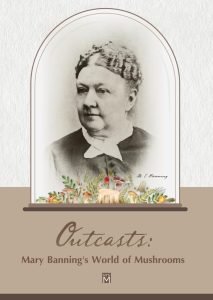
 We’re all guilty of occasionally overlooking invaluable cultural institutions when they exist right in our backyard. The New York State Museum (NYSM), located conveniently in downtown Albany, is one of those places locals tend to take for granted. The current New York State Museum mycology exhibit “Outcasts” sheds light on something else that’s often overlooked: the study of fungi.
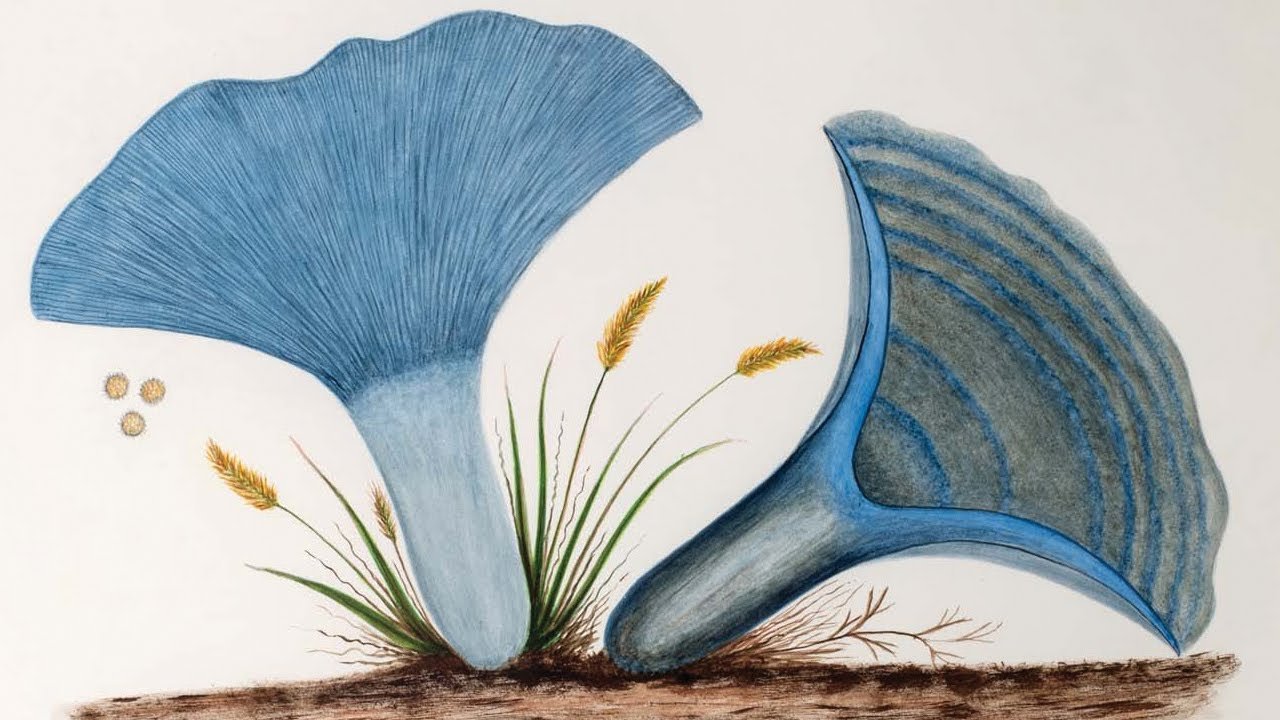
Running through January 4, 2026, “Outcasts” recognizes the museum’s impressive mycology collection — one of the most historically significant in the country, according to Dr. Patricia Ononiwu Kaishian, the museum’s mycology curator — as well as the unacknowledged scientific legacy of Mary Elizabeth Banning, one of the first American mycologists. The exhibit reveals her story and the work to which she dedicated her life featuring 28 exquisite original watercolors and detailed descriptions of mushroom species from Banning’s unpublished manuscript The Fungi of Maryland.
“Outcasts,” in Many Ways
“Outcasts” was recently featured in The New York Times in an article titled “A Fungi Pioneer’s Lifelong Work on Exhibit.” In it, writer Alla Katsnelson celebrates the show and illuminates Mary Elizabeth Banning’s life, accomplishments and struggles, offering valuable context for the museum’s displays.
A self-taught mycologist, Banning dedicated nearly 40 years to researching the fungi of Maryland, where she lived in the late 1800s. She painted intricate watercolors with detailed descriptions of thousands of specimens, and identified 23 species new to science at the time. These potentially invaluable contributions to the field of mycology went largely unrecognized, however, as Banning was ostracized by the scientific community for being “uneducated” — and simply for being female.
Her choice of study was equally disparaged, as fungi were largely a misunderstood subject. Classified as a peculiar type of plant (until 1969!), mushrooms were scoffed at while mycology was considered a “research backwater.” In one letter, Banning wrote, “Fungi are considered vegetable outcasts. Like beggars by the wayside dressed in gay attire. They ask for attention but claim none.” 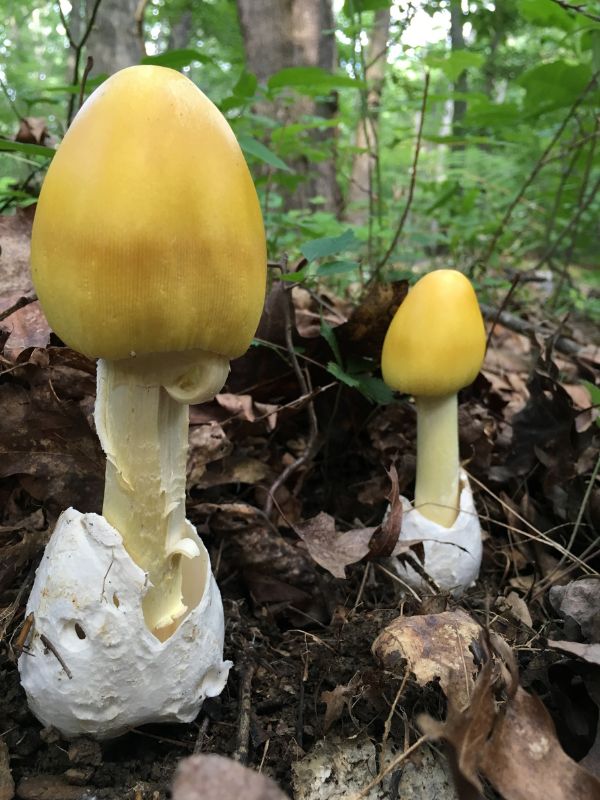
Betrayed by Her Mentor
Charles Horton Peck, one of the leading mycologists of the era according to the NYSM, was the only one who didn’t repudiate Banning’s work. Banning first wrote to Peck in 1878, asking for feedback on her unpublished manuscript. “Unlike other scientists she had tried to contact,” Katsnelson writes, “he wrote back, and they corresponded for nearly 20 years.” For the most part, he treated her like a respected colleague, offering her scientific mentorship, publishing descriptions of species with her support, and even naming species after her.
Her letters, some of which are displayed in “Outcasts,” document her subsequent reliance on Peck to get her work recognized. In 1890, Banning mailed Peck her manuscript “The Fungi of Maryland,” hoping that he could help her publish it. (Peck’s dominance of the mycological field at the time, according to the museum, would have granted him the resources to do so.) The culmination of her life’s work, the manuscript contained 175 stunning watercolor plates along with a collection of her observations.
But Banning’s “only friend in the debatable land of fungi,” as she called him in a letter in 1879, betrayed her. He never published her manuscript, and despite her anguished begging for its return, she died without ever seeing it again. In one of her last letters to Peck, written in 1897, she said: “I hardly know how I ever came to part with my illustrated book. To tell you the truth, I long to see it and call it my own once more, but this could never be.”
Banning’s Work, Rediscovered
When Banning mailed her manuscript to Peck, he was the New York State Botanist and the preeminent mycologist at the New York State Museum. Instead of publishing the manuscript, Peck must have stashed it in a drawer, where it remained for almost 90 years.
John Haines, a mycologist and associate scientist with the NYSM in 1978, recalled being fascinated by the manuscript when an “eccentric curator” showed it to him during a job interview several years earlier. According to The Washington Post, Haines worked to have the manuscript examined and unbound, and the paintings cleaned for a New York State Museum mycology exhibit and for display in Talbot County, Maryland, where Banning was from. At last, Mary Elizabeth Banning gained some posthumous recognition. She was inducted into the Maryland Women’s Hall of Fame in 1994.
What You Can See
In addition to some of Banning’s letters to Peck and 28 of her exquisite original watercolors, the New York State Museum mycology exhibit includes a number of other artifacts and experiences. Visitors can view a selection of Peck’s laboratory equipment, mushroom specimens collected by Banning, and artifacts related to Kaishian’s research as NYSM’s curator of mycology. (For example, museumgoers can learn about a fossilized fungus discovered in Orange County, New York, Prototaxites, which was the tallest land-dwelling organism around 400 million years ago.)
If You Go
The New York State Museum is located at 222 Madison Avenue in Albany, and open Tuesday through Sunday from 9:30 a.m. to 5:00 p.m. The museum occupies the first four floors of the Cultural Education Center, a 10-story, 1,500,000-square-foot building that also houses the New York State Archives and New York State Library, making the building an impressive repository of research, artifacts and information. (It also makes it a worthy destination for a quick getaway.)
Admission is free, but donations represent a vital support for the Museum’s mission (suggested donation is $5 individual/$10 per family). Call (518) 474-5877 or visit nysm.nysed.gov to learn more.
Other notable exhibitions currently being shown include:
- The Gunboat at Ground Zero: A Revolutionary War Mystery (now through 01/31/26)
- The Power of Homestead (now through 06/29/25)
- Margery Ryerson: Art is Contagious (now through 09/07/25)
- Holocaust to Haven: The Refugee Camp at Fort Ontario (now through 12/31/27)
Featured Image: courtesy of New York State Museum, Mary Banning the Artist