

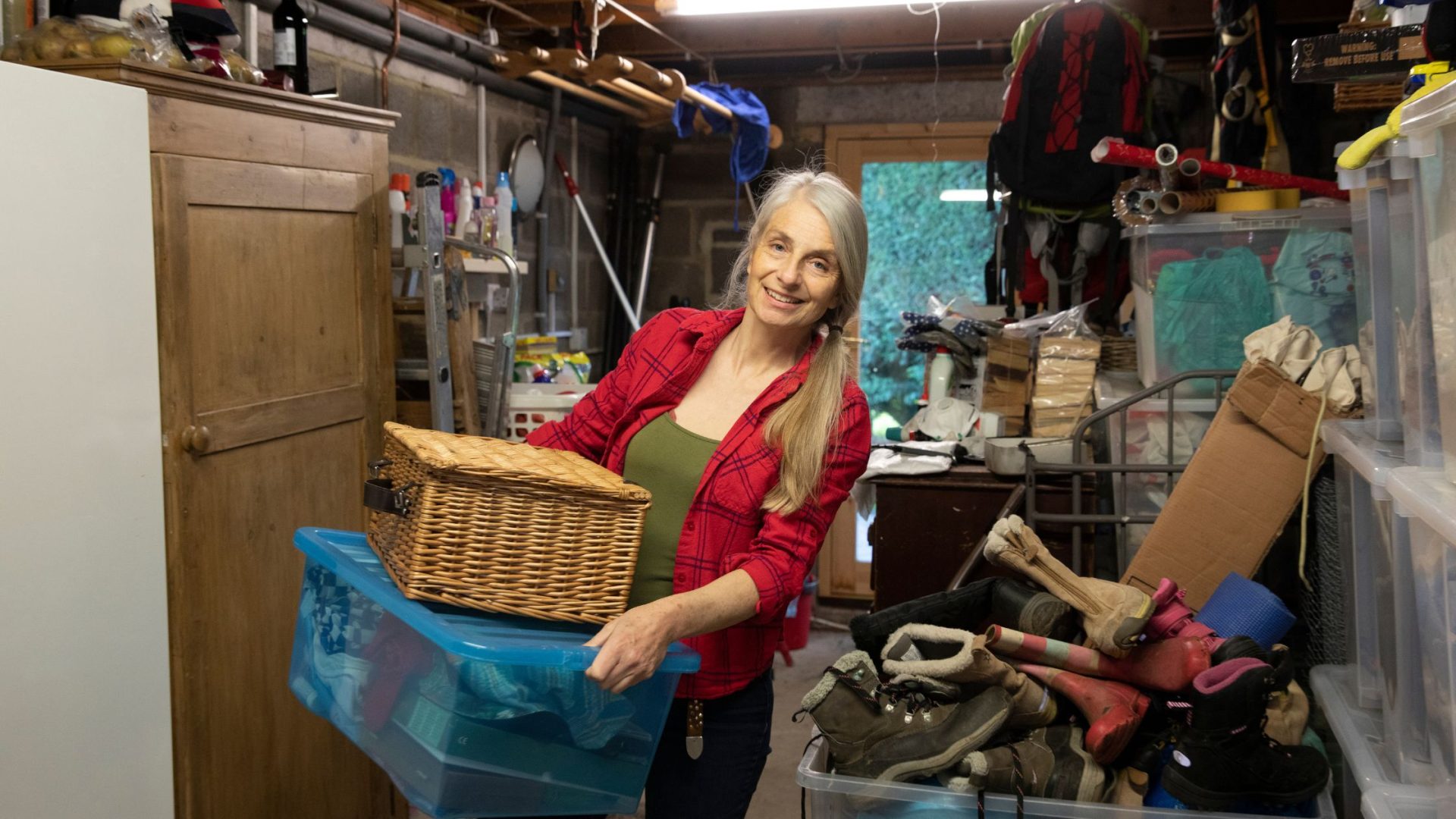
When someone passes away, the emotional toll is often compounded by the practical realities of dealing with their possessions. And because people invariably process their grief in different ways, so too will they approach this task in the only way it feels possible.
If you are the one who will need to perform this final act of service for a loved one, the proposition can be daunting. People spend their entire lives accumulating stuff — necessary items as well as purely sentimental ones. Upon their death, both types of possessions will take on new meaning, complicating the process.
However, grief counselors, estate advisors and people who have gone through the process of clearing out a loved one’s possessions themselves can tell you: There is no right way to manage someone’s personal belongings, but there are strategies to make it easier. Here’s what we’ve learned:
Follow the “Four P’s” of Managing a Loved One’s Possessions after they Die
“What’s Your Grief?” (WYG) is a website that provides grief education and resources for coping with loss. In their blog about sorting through a loved one’s belongings, they lay out Four P’s that can help you get started:
- Participants: Consider whether you want to sort alone or with others. Close friends or family members can be helpful in organizing items and/or offering emotional support as you go. If you find that sorting through your loved one’s belongings is too taxing, you could also hire professional help. Estate cleanout services like Empire Estate Sales and senior move managers like Organize Senior Moves, both based in the Capital Region, can step in to sort, sell, donate or dispose of belongings with respect.
- People: If there are people who can’t be present, what items might they want you to keep for them? Hopefully, any items of great import or value will have been designated in your loved one’s will, but that isn’t always the case. To avoid potential conflict, ask people before starting the sorting process, and be very specific, WYG advises. The worst thing you can do is assume you know what might be important to other members of the family, and then accidentally throw away something that holds sentimental value.
- Prioritize and Plan: Deciding where to start is a large part of the battle. Depending on your circumstances, there might be deadlines and consequences if certain items aren’t addressed quickly; tackling those first is a good idea. (For example, you can buy yourself some breathing room by addressing anything time-sensitive, like emptying the fridge of perishable food and re-homing any houseplants.)After that, come up with a loose order for how to approach sorting through your loved one’s belongings. WYG says a common way to address this task is to go room by room, but you can decide what works best for you. Also, it can be easier to group similar items, like coffee mugs, together when culling collections. (And instead of keeping all of them, just pick a favorite to hold onto.)
- Pace Yourself: Clearing out a loved one’s possessions will not only require time for the physical act of decluttering, but also space for the emotional processing of your grief. Krause Funeral Homes in Wisconsin advises that you do your best to be both patient and flexible. “If you’d planned to go through their closet on a certain day but don’t feel up to it at that time, don’t force things to happen or certain outcomes to occur. Grief is a difficult journey that often takes you by surprise.”
The Sorting Process
The sorting process — whether you are clearing out an entire home or decluttering the one you shared — is an emotional undertaking. As WYG points out, “keep in mind you will probably stumble upon objects you haven’t seen in a long time and continuous reminders of the person you’ve lost.”
While the process is a necessary one, it doesn’t have to be rushed. Some people feel the need to get it done immediately and all at once, but that can lead to regrets later on. Others might want to keep everything that has a story attached to it, although Cathy Schaefer, a retired professional estate consultant, told the grief blog Remembering a Life that this isn’t practical. “At some point what you’ve kept will become burdensome,” she says. Ideally, you’ll need to find some middle ground, and most importantly, remember that it is OK to ask for help.

Methods
Most people agree that one of the simplest ways to sort through a loved one’s belongings is to have a category system. Mia Danielle, a YouTube influencer and podcaster who specializes in organizational strategies, recommends sorting belongings into five categories for “making emotionally healthy and smart decisions”:
- Save for Me. This is often the hardest category to keep under control. The desire to hold onto items that make you think of your loved one is powerful, which can make it difficult to be objective. Danielle suggests a few alternatives to keeping everything; for example, you could photograph and create a digital cache of the items that you don’t need to physically save, or you could take pieces of their favorite clothing items and have them made into a memory quilt. Joyce Hocker, a psychologist who writes for Psychology Today, is a proponent of only physically keeping items you can integrate into your everyday life. “I learned that I could take pictures of treasures that I needed to release […but] my sister’s jewelry takes its place among my own, […and] when I sew on a button, I use Mom’s sewing kit.”
- Save for Others. In addition to holding on to the specific items other people in your family might have requested for themselves, consider what they would appreciate as you’re sorting. For example, if someone loved to bake with the person who passed, ask them if they’d like their recipe book or their trusty rolling pin.
- Sell. Determining what should be sold versus donated can be difficult. Schaefer recommends either hiring a consultant or searching online for potential values of similar items before making any big decisions. “I’ve seen it happen time and time again,” Schaefer told Remembering a Life. “A family will tell me ‘We already threw away Dad’s old junky fishing rods’ and then they want to sell the family’s old Encyclopedia Britannica set because it initially cost a lot of money and so must still be very valuable when the fact is that old fishing rods are sought after — go for big money — and nobody wants old encyclopedia sets.”
- Donate. If possible, donate items rather than throwing them away. “Donating a loved one’s belongings rather than throwing them into a dumpster helps people to feel lighter — less burdened — because now their loved ones’ past isn’t being turned into garbage but rather is being given new life,” Shaefer says. (You can find her list of charitable organizations that often take estate donations here.)
Danielle urges people to remember that the purpose of keeping belongings after a loved one has passed away is to cherish their memory; you should feel confident donating or selling items that aren’t a poignant reminder of that person.
- Throw Away. Focus on being as realistic as possible when considering this category. If someone can get some benefit out of the items they should be donated, but if not, they should be recycled or tossed.
What’s Your Grief has an optional sixth category: the “Not Sure Box.” This category is for those items you just can’t seem to put into one of the five categories above. For example, “everyday reminders” like the person’s toothbrush in the bathroom or their books on the nightstand, can be comforting — but at the same time be “small and painful reminders of the absence in the house. Yet often the only thing more painful than seeing those items every day may be the idea of seeing them in the trash.”
If you don’t have a friend or family member who can take care of disposing of these items for you (saving you the emotional task), then put them aside for handling later. However, WYG says to be careful to set a strict limit so it doesn’t get out of control. “For example, your limit is 10 items. Once there are 10 in the box you will need to revisit something and make a decision on it before you can add something new.”
Just as importantly, if it seems like everything is suddenly impossible to decide upon, that could mean it’s time to give yourself a break from sorting entirely. If you don’t have time limitations on clearing out your loved one’s belongings, remember that it is part of the grieving process and that pacing yourself can be healthy. If you need to pause, Schaefer suggests that you refrain from putting everything into a storage facility — because often those items will end up languishing there until the thought of taking action becomes overwhelming — and that you make an effort to revisit any “Not Sure” items every few months to see if you are ready to let go of whatever is inside. “Over time,” she says, “the things you thought were precious will eventually just appear to be things — things that others might be able to use. Or they will become things you are now ready to put in your home as a reminder of your loved one and what I call ‘the story of us.’”
Top image: SolStock from Getty Images Signature, via Canva.com