

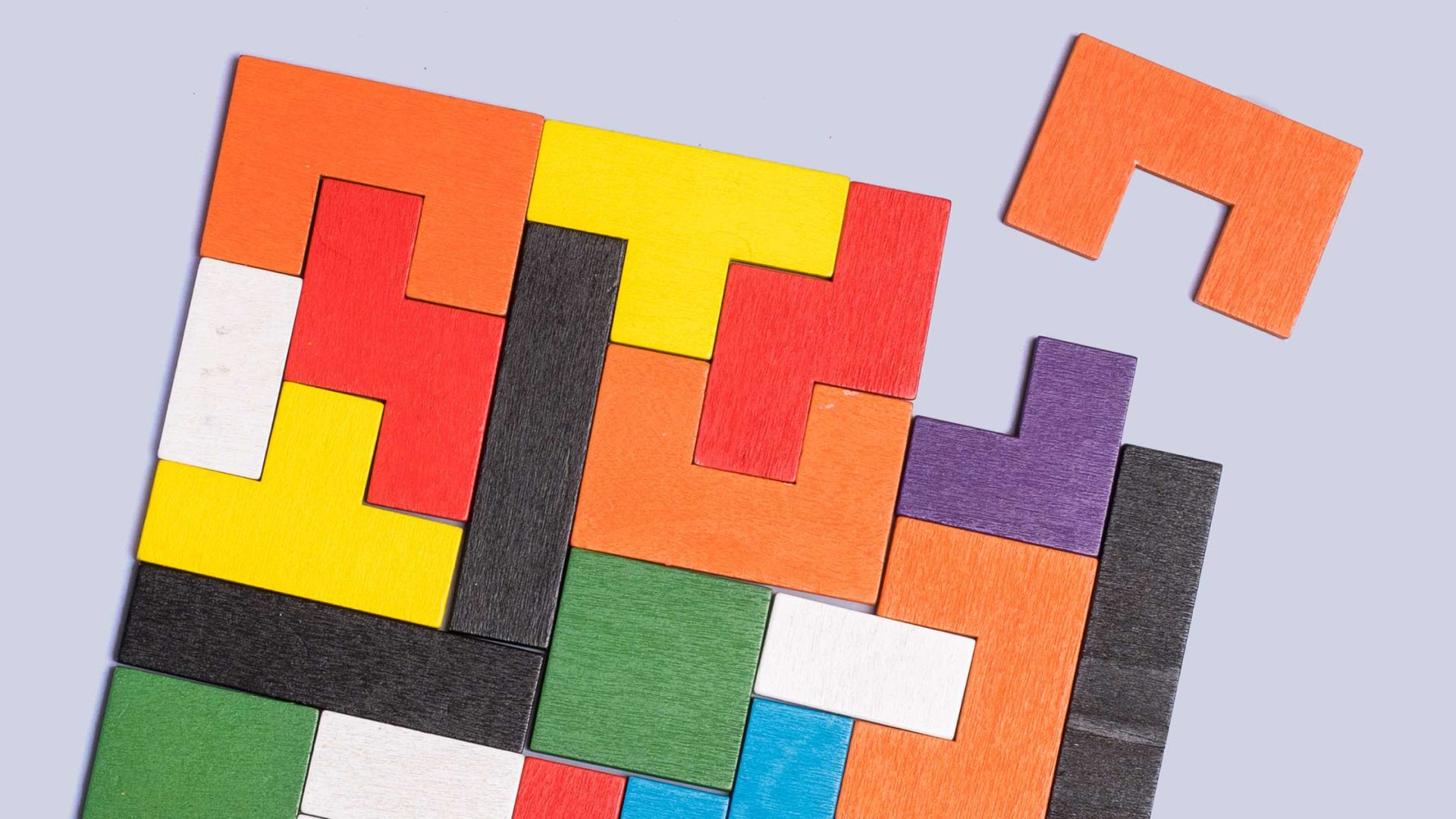
Tetris in Trauma Therapy
For kids of the 1990s, Tetris wasn’t just a video game; it was an obsession, glowing from Game Boys in back seats, classrooms and living rooms across America. Decades later, those same falling blocks are finding new purpose: helping researchers and therapists explore ways to ease the grip of trauma and painful memories.
In recent years, researchers have begun exploring whether Tetris can be an effective tool as part of a structured process known as Eye Movement Desensitization and Reprocessing Therapy, or EMDR.
Developed in the late 1980s to treat post-traumatic stress disorder, EMDR is guided by the Adaptive Information Processing model, which posits that the human brain has an innate, physiological system designed to process life experiences into adaptive, healthy memories.
Typically, this processing happens during the rapid eye movement stage of sleep, according to Wen Chang-Lit, an EMDR-certified, trauma-informed creative arts therapist. “While we are in the REM state, our brain is actually very, very active, sorting out everything that happened during the day; what is important to keep and what is not,” she explains. “But with trauma, or any kind of traumatic experience, it can be too big for the brain to process, so it gets stuck in our nervous system.”
As a result, the memory becomes like a wound your brain can’t heal. Flashbacks of the trauma are triggered by newer experiences, reopening that wound as if it were fresh.
Unlike other treatments that focus on altering the emotions and responses to traumatic experiences, EMDR focuses on the memory, changing the way it’s stored in the brain. One of the ways it does this is bilateral sensory stimulation.
The rapid eye movement we experience in sleep is just one example of bilateral stimulation, which consists of alternating left-right signals to the brain, and can be auditory, visual or tactile. The traditional method is for a therapist to hold up two fingers and move them from left to right, back and forth, while the patient tracks the movement with their eyes. In her practice, Chang-Lit has also used a light bar with lights that blink at alternating ends, sound cues through headphones and physical cues like tapping.
This stimulation, under the guidance of a licensed therapist, is thought to help the brain process and digest information while we’re awake, just like it does during REM sleep.
Where Tetris Fits In with Therapy
It is thought that Tetris, as a highly visual and spatial game, can disrupt the brain’s ability to solidify traumatic memories, potentially making it a preventative tool against PTSD.
In a study conducted by researchers at Karolinska Institute with colleagues at Oxford University and elsewhere, researchers were able to demonstrate how the survivors of motor vehicle crashes had fewer flashbacks in the week following the accident if they played Tetris in the hospital within six hours of admission after also having been asked to recall their memory of the accident. The authors of the study proposed that by completing a demanding visual/spatial task soon after the trauma, “the memory trace of a traumatic event is weakened because of competition for the cognitive resources required for consolidation.”
Tetris might also be a helpful tool in reducing intrusive memories for patients who already have PTSD. A separate study, conducted at the Max Planck Institute for Human Development with the Center for Military Mental Health in Germany, tested whether playing games like Tetris could serve as a brain-training intervention, like in EMDR. They recruited patients with combat-related PTSD, and while all received EMDR therapy, half of the group was also required to play 60 minutes of Tetris each day over six weeks. The participants who played Tetris showed greater reductions in PTSD symptoms and improvements in common biomarkers for PTSD and depression.
Could Tetris Help You?
As an early example of casual gaming (pre-smartphones!), Tetris is frequently cited as one of the greatest and most influential video games of all time. The addictive nature of easing those pixelated bricks into the right slot can be as engaging as it is soothing, but therapy it is not.
On its own, Tetris can be a helpful instrument for finding temporary relief from stress, and could mitigate anxiety for those who might normally be therapy-averse. “There are research studies that have shown it helps for men to be engaged in something else while talking about emotionally charged materials,” Chang-Lit says. “It helps provide regulation. And for teens, I would imagine this could help, too.” But regardless of the promising studies, Tetris alone cannot help people heal.
“I want to emphasize that tools like this do not replace the relational aspect of the trauma healing process,” Chang-Lit shared in a follow-up email. “Having another human being present to co-regulate, ‘undo’ the experience of aloneness, and guide the release of heightened energy stuck in the body after a traumatic event is crucial for healing.”
Top image source: Bianca Marie Arreola from corelens, via Canva.com