

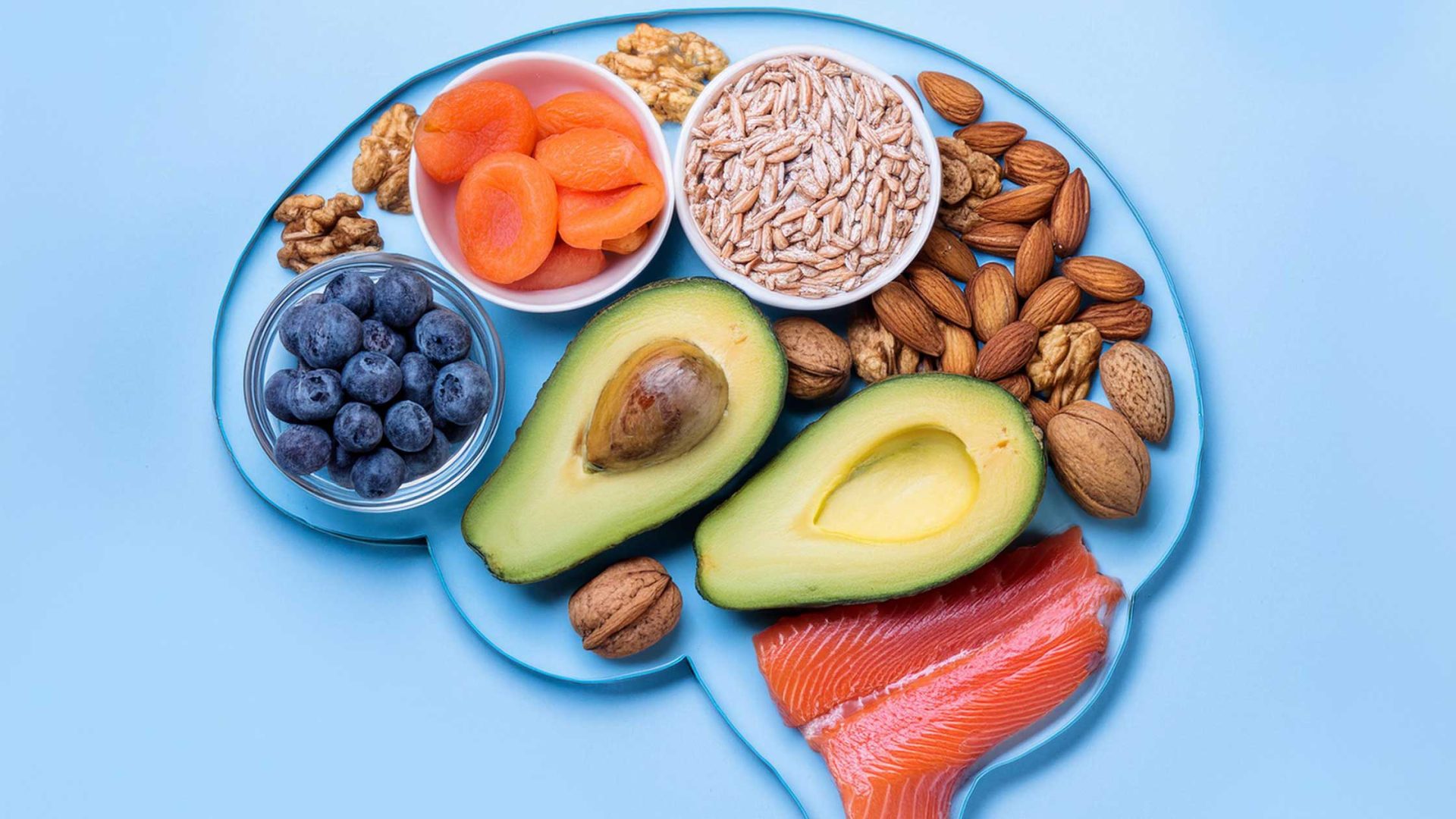
A few years ago, every other ad on TV seemed to be a person in a white lab coat telling us that taking Ginkgo biloba supplements were all you needed to nourish your brain to stave off dementia.
Unfortunately, that turns out to not be the case — the Mayo Clinic says that as of 2025, research doesn’t support taking ginkgo to prevent or slow dementia or cognitive decline — but these 6 nutrients have been proven to be more effective nourishing an aging brain.
Eating for Brain Health
No single supplement or food alone will be able to prevent cognitive decline associated with aging. Our bodies are complex machines, and nutrients often need to work in conjunction with others to provide the beneficial results we’re looking for.
In general, nutritionists emphasize that the most important strategy is to follow a healthy dietary pattern that includes a lot of fruits, vegetables, legumes, and whole grains, according to Harvard Health. Further, they recommend that you try to get protein from plant sources and fish, and choose healthy fats (such as olive oil or canola) rather than saturated fats. (Sound familiar? Those foods are largely what make up the Mediterranean Diet, which may slow cognitive decline.)
That said, some nutrients play an outsized role in keeping a brain functioning at its best. For example, a 2025 study conducted by South Dakota State University’s (SDSU) School of Health and Human Sciences showed that diets high in fiber, healthy unsaturated fats, and micronutrients such as vitamins A and E, magnesium, and potassium are linked with better brain health and memory.
A troubling insight the study revealed, however, was that nearly all the participants reported diets “lacking in overall nutrient adequacy for their age, including many vitamins, calcium, potassium, and dietary fiber.” Assistant professor Samitinjaya Dhakal, who led the study, told the SDSU newsletter that “our research highlights that even within a relatively healthy community, there is a significant ‘nutrition gap’ that could be impacting cognitive longevity.”
To help fill that “nutrition gap,” here are a few of the nutrients experts say we should be getting in order to properly feed our aging brains.
6 Nutrients That Nourish Your Brain
Magnesium
Magnesium’s potential neuroprotective properties have been gaining traction over the last few years. Deficiency in the mineral, which is known for deflecting cell damage and inflammation, has been associated with neurodegenerative diseases like Alzheimer’s and Parkinson’s. And, as we age, our body absorbs less of the magnesium we ingest, and loses more as well.
One study led by researchers from the Emory University School of Public Health, which followed over 12,000 participants over a 30-year period, found that low levels of serum magnesium (magnesium present in the blood stream) at mid-life was associated with an elevated risk of developing dementia.
A 2023 study of men and women 40 to 73 years old found that higher intake of dietary magnesium is linked to greater brain volume, and therefore better brain health.
There can be too much of a good thing, however. Annie Fenn, author of The Brain Health Kitchen: Preventing Alzheimer’s Through Food, told Next Avenue that “The brain’s defense mechanism relies on a just-right dose of magnesium.” The Recommended Daily Allowance (RDA) of magnesium for adults 19-51+ years is 400-420 mg daily for men, and 310-320 mg for women. However, according to Harvard’s The Nutrition Source, magnesium also has a Tolerable Upper Intake Level (UL) — the maximum daily intake unlikely to cause harmful effects on health — of 350 mg from supplements only. “High-dose supplements can lead to diarrhea, nausea, and cramping in some people. Extra magnesium from food is safe because the kidneys will eliminate excess amounts in urine.”
Foods high in magnesium, according to The Nutrition Source:
- Almonds, peanuts, and cashews
- Pumpkin seeds
- Peanut butter
- Beans (black, kidney)
- Cooked spinach, Swiss chard
- Brown rice
- Oatmeal
- Salmon
- Beef and Poultry
- Bananas
- Raisins
- Milk, yogurt
- And best of all: Dark chocolate (70% or higher)
Protein
Our bodies use the amino acids in food proteins to produce brain cells, neurotransmitters, and other compounds that support brain health.
But not all proteins provide the same kind of benefits. A Harvard study, which followed more than 77,000 men and women over the course of two decades, found that higher dietary protein intake was associated with less cognitive decline later in life. However, their data suggests that diets high in protein from processed meat products (like hot dogs) were related to poorer cognition, while diets high in protein from legumes, fish, and lean poultry proved superior in protecting brain function. “Beans and legumes had the strongest protective association. Peas and lima beans in particular were associated with a 28% lower risk of cognitive decline for every additional three servings per week,” Dr. Tian-Shin Yeh, lead author of the study, told Harvard Health.
Especially as we age, and our body stops processing protein as efficiently as it used to, it is important to try to include lean and low-fat protein foods at every meal.
Choline
Choline, which is found in foods like egg yolks, isn’t much of a household name, but it’s still an important nutrient for preserving brain health, researchers say. One observational study found that in people over 60, consuming between 187 and 400 mg of choline daily (from foods and supplements) reduced the risk of low cognitive function by about 50%, compared to getting less than 188 mg daily.
According to the online health resource, Healthline, choline helps shore up brain cell membranes — particularly those of neurons — thereby protecting against cell damage. Choline also serves as the raw material for acetylcholine, a critical neurotransmitter which is important for sustained attention and memory.
Choline is concentrated in high-protein foods, like eggs, chicken breasts, and soybeans, but you can easily boost your intake by taking a choline supplement, as well. (Choline is not found in significant amounts in most multivitamins, so be careful to check labels.)
Fiber
Fiber isn’t only good for your gut; improving your metabolic health may reduce risk factors associated with cognitive dysfunction.
According to Psychology Today, fiber-rich diets promote the growth of beneficial gut bacteria that produce short-chain fatty acids (SCFAs), which reduce inflammation and support blood-brain barrier integrity. Higher dietary fiber intake has been linked with better cognitive function in adults over the age of 60, and another study found that consuming more dietary fiber correlated with an over 25% lower risk of developing dementia over a 20-year period.
The soluble fiber in foods like oats, nuts, and legumes promotes normal levels of cholesterol and glucose in the blood, which helps protect the integrity of blood vessels and promotes better blood flow to the brain, according to experts interviewed by Next Avenue.
Most Americans don’t consume enough dietary fiber on a daily basis; the RDA is to get 28 g every day as part of a 2,000 calorie diet. The best way to up your fiber intake is to try and get at least 5 servings of fruits and vegetables and 3 servings of whole grain foods every day.
Omega-3 Fatty Acids
Omega-3 Fatty Acids are a form of unsaturated fatty acid present in our diet, and in high concentrations in our brain, according to Psychology Today. Docosahexaenoic acid (D.H.A.) and eicosapentaenoic acid (E.P.A.), which come primarily from marine dietary sources like fish and algae, are crucial for maintaining neuronal membrane integrity and keeping neuroinflammation in check. Alpha-linolenic acid, found in walnuts, can be converted in our body (to a certain degree) into D.H.A. and E.P.A.
According to the American Heart Association(AHA), higher amounts of omega-3s have been linked to lower blood levels of beta-amyloid (the protein that forms damaging clumps in the brains of people with Alzheimer’s disease). Higher levels of D.H.A. in the blood have also been shown to delay the onset of Alzheimer’s disease by nearly five years in people 65 and up.
Interestingly, in a 2014 study, higher blood D.H.A. and E.P.A. levels were associated with larger total brain volume and hippocampal volume in postmenopausal women. These results were then confirmed in a larger study in 2022, showing that higher levels of omega-3 fats in the blood correlated with better cognitive function.
The AHA reports that there aren’t any current guidelines from U.S. health agencies for how much E.P.A. and D.H.A. a person should include in their diet, but the National Academy of Medicine recommends that men get 1.6g of A.L.A. daily, and women 1.1g per day. The best way to do this, the AHA says, is to eat two servings (about 6 oz, cooked) of fatty fish per week, or if you don’t like fish, to supplement with omega-3 fish oil.
Foods high in omega-3s to include in your diet, from the AHA:
- Fatty fish like salmon, sardines, mackerel, herring, lake trout, and albacore tuna
- Oysters
- Walnuts
- Avocados
- Plant oils like flaxseed, soybean, and canola
- Fish Oil (supplements)
Caffeine
That’s right! It’s time to raise a cup of your favorite caffeinated beverage — coffee or tea, that is — because a large new study shows evidence they provide cognitive benefits and reduce the risk of developing dementia.
After following nearly 132,000 people for 40 years, researchers from the T.H. Chan School of Public Health, Harvard University, discovered that people who drank 2-3 cups of coffee or 1-2 cups of tea every day had lower chances of developing dementia than those who drank little or no caffeine. Researchers say caffeine might protect brain health because it contains components that reduce neuroinflammation or aid vascular function. Caffeine also improves insulin sensitivity, protecting against diabetes, which is a dementia risk factor according to the Alzheimer’s Society.
The study found that the benefits of drinking caffeinated tea or coffee plateaus at around 2 ½ cups daily, possibly because there is a limit to how much caffeine our bodies can metabolize. Other studies also suggest that exceeding moderate amounts can harm health by disrupting sleep or exacerbating anxiety, according to the New York Times. Additionally, fru-fru coffee drinkers beware: in a 2025 study linking caffeine consumption to lower mortality (yay!), researchers also found that adding a lot of milk and sugar nullified caffeine’s mortality benefits (boo!).
Top image source: Tatsiana Kalasouskaya, via Canva.com